Introduction of the Times Square Ball Drop - January 1, 1908
1908 · New York City, United States
New York City introduced the ball drop in Times Square for the first New Year's Eve celebration.
December 31, 1907
The first New Year's Eve celebration was held in Times Square, New York City, marking the beginning of a long-standing tradition.
New York City, United States | Times Square Alliance
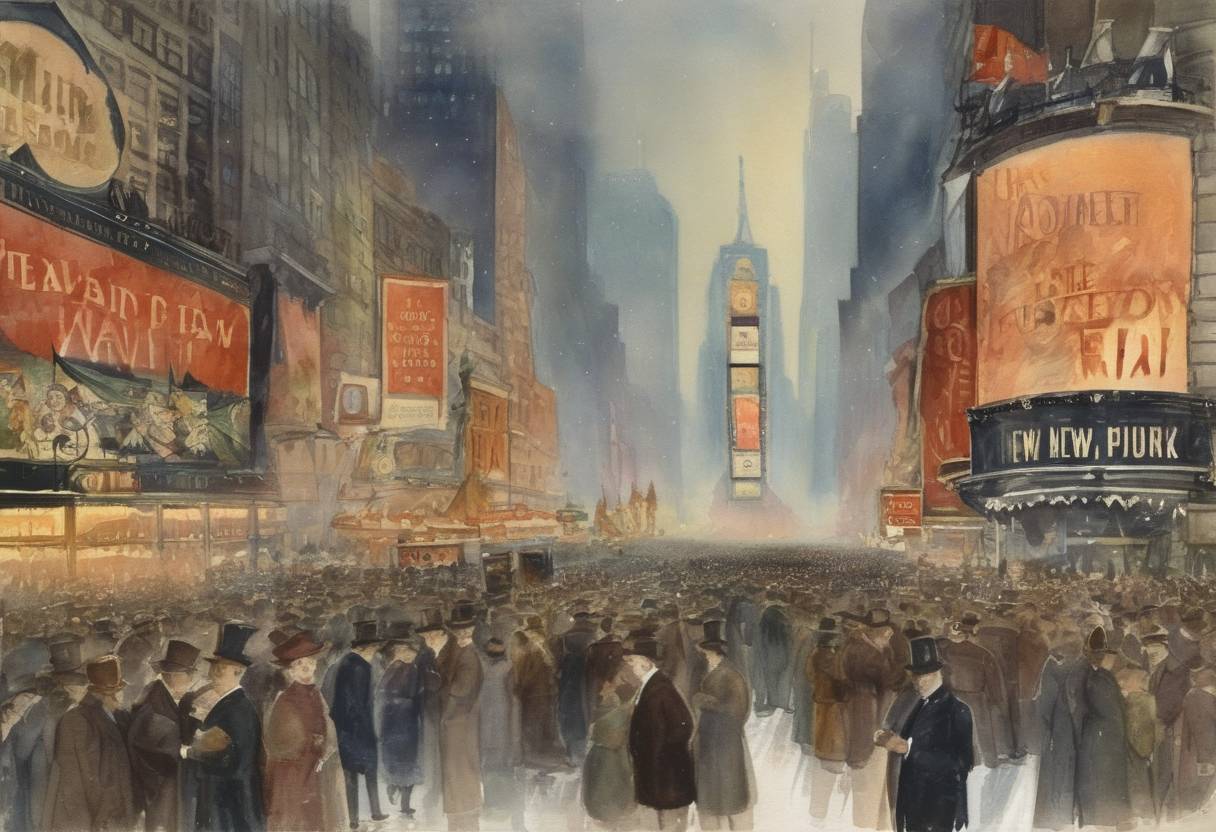
The inaugural New Year’s Eve celebration in Times Square, New York City, took place on December 31, 1907, marking the beginning of a tradition that has become a global symbol of the New Year. This event was significant not only for its immediate impact but also for its enduring legacy in popular culture.
Before 1907, New York City’s primary New Year’s Eve celebration was held at Trinity Church in Lower Manhattan, where crowds would gather to hear the ringing of the church bells at midnight. However, the shift to Times Square was driven by the growing prominence of the area as a commercial and entertainment hub.
Times Square, originally known as Longacre Square, was renamed in 1904 after The New York Times moved its headquarters to the newly erected Times Building (now One Times Square). The newspaper’s owner, Adolph Ochs, sought to promote the area and his publication by hosting a New Year’s Eve celebration.
The first Times Square New Year’s Eve celebration in 1907 featured a new and innovative spectacle: the lowering of a large, illuminated ball. This event was designed to draw attention and crowds to the area, capitalizing on the growing popularity of electric lighting and the burgeoning entertainment district.
The Ball: The original New Year’s Eve Ball was made of iron and wood, weighed 700 pounds, and was adorned with 100 25-watt light bulbs. It was lowered from the flagpole atop the Times Building at midnight, marking the transition from 1907 to 1908.
The Crowd: An estimated 200,000 people gathered in Times Square to witness the event, a remarkable turnout that underscored the success of the celebration and set the stage for future gatherings.
The success of the 1907 celebration established Times Square as the focal point for New Year’s Eve festivities in New York City. The event quickly became an annual tradition, growing in scale and spectacle over the years.
Cultural Impact: The Times Square New Year’s Eve celebration has become an iconic event, broadcast worldwide and attracting millions of viewers both in person and via television and online streaming.
Evolution of the Ball: The New Year’s Eve Ball has undergone numerous transformations, evolving from its original design to incorporate new technologies and materials. Today, the ball is a geodesic sphere, 12 feet in diameter, weighing nearly 12,000 pounds, and covered with 2,688 Waterford Crystal triangles.
Global Influence: The tradition of the ball drop has inspired similar celebrations in cities around the world, making it a universal symbol of the New Year.
The first New Year’s Eve celebration in Times Square on December 31, 1907, was a pivotal moment in the history of New York City and the broader cultural landscape. It transformed a local event into a global phenomenon, symbolizing hope, renewal, and the passage of time. The tradition continues to captivate audiences, reflecting the enduring appeal of communal celebration and the shared anticipation of a new beginning.
Source: en.wikipedia.org