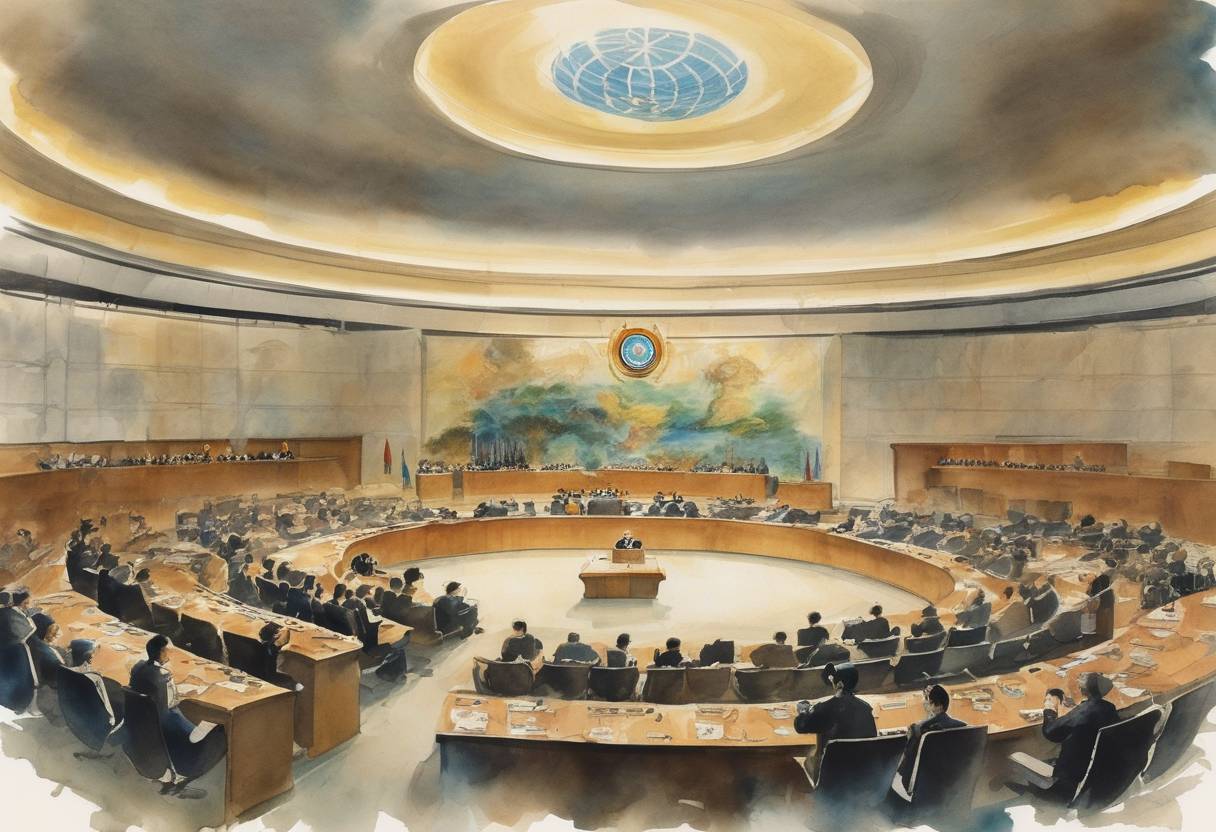
Admission of the People’s Republic of China to the United Nations
On October 25, 1971, a significant shift in international diplomacy occurred when the United Nations General Assembly voted to admit the People’s Republic of China (PRC) and expel the Republic of China (ROC), commonly known as Taiwan. This decision marked a pivotal moment in global politics, reflecting changing geopolitical dynamics and the growing influence of the PRC.
Background
- Post-World War II Context: After the end of World War II, the Republic of China was recognized as one of the founding members of the United Nations and held a permanent seat on the UN Security Council.
- Chinese Civil War: The Chinese Civil War, which concluded in 1949, resulted in the Communist Party of China, led by Mao Zedong, establishing the People’s Republic of China on the mainland. The ROC government, led by Chiang Kai-shek, retreated to Taiwan.
- Cold War Dynamics: During the early years of the Cold War, the United States and its allies continued to recognize the ROC as the legitimate government of China, largely due to anti-communist sentiments.
The Vote
- Resolution 2758: The UN General Assembly adopted Resolution 2758, which recognized the PRC as “the only legitimate representative of China to the United Nations” and expelled the representatives of Chiang Kai-shek from the organization.
- Vote Outcome: The resolution was passed with 76 votes in favor, 35 against, and 17 abstentions. This reflected a shift in international opinion, as more countries began to recognize the PRC over the ROC.
Key Factors Leading to the Vote
- Diplomatic Efforts by the PRC: The PRC had been actively lobbying for recognition and admission to the UN, leveraging its growing economic and political influence.
- Changing Global Alliances: Many countries, particularly in the developing world, began to view the PRC as a more legitimate representative of China due to its control over the mainland and its large population.
- U.S. Policy Shift: Although the United States initially opposed the PRC’s admission, by the early 1970s, it began to reconsider its stance, culminating in President Nixon’s historic visit to China in 1972.
Consequences and Significance
- Diplomatic Recognition: The vote effectively shifted diplomatic recognition from Taipei to Beijing, leading many countries to establish formal relations with the PRC.
- Impact on Taiwan: The ROC was left diplomatically isolated, losing its seat in the UN and its ability to participate in many international organizations.
- Broader Implications: This event underscored the PRC’s rising influence on the global stage and marked a significant realignment in international relations during the Cold War.
The admission of the PRC to the United Nations remains a landmark event in international diplomacy, illustrating the complex interplay of politics, power, and recognition in the global arena.