1952 · London, United Kingdom
Elizabeth II becomes Queen of the United Kingdom and other Commonwealth realms after the death of her father, King George VI, marking the beginning of her long reign.
October 25, 1760
King George III ascends to the throne of Great Britain following the death of his grandfather, King George II.
London, United Kingdom | British Monarchy
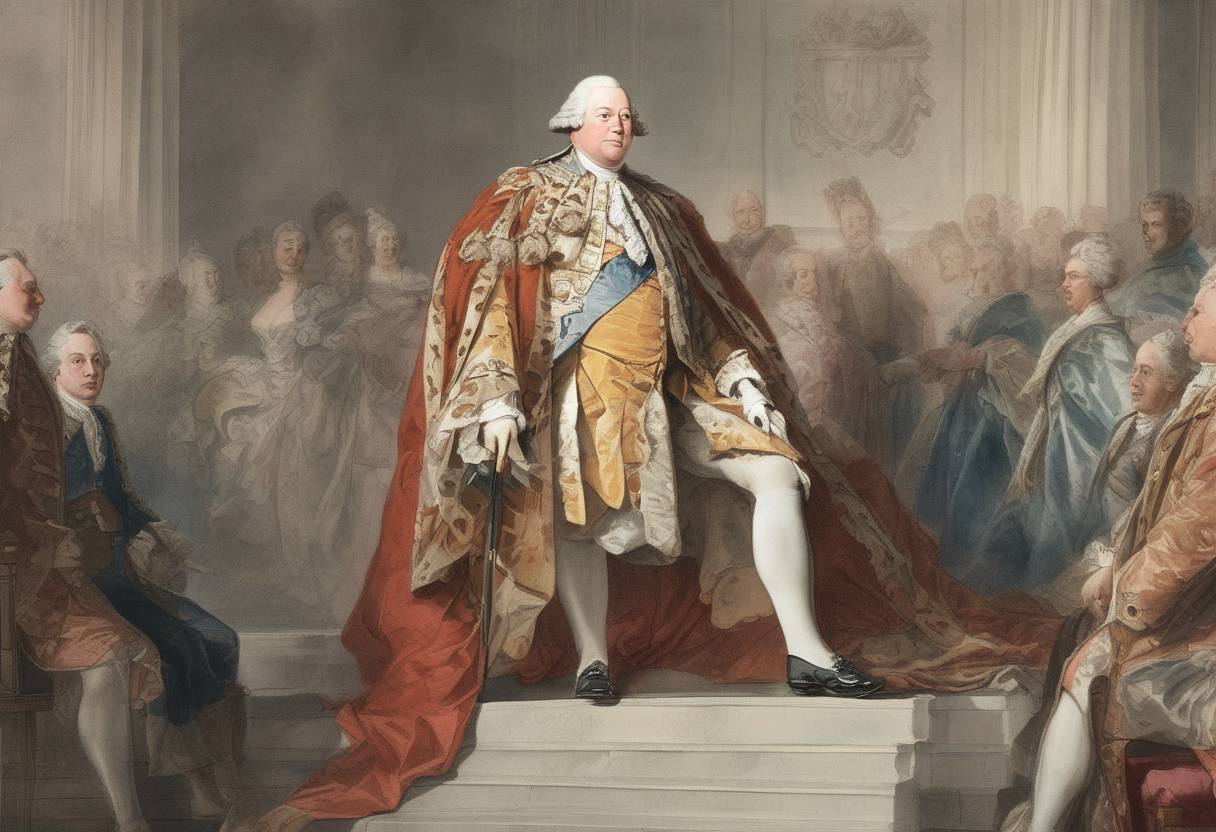
On October 25, 1760, King George III ascended to the throne of Great Britain following the death of his grandfather, King George II. This marked a significant transition in British history, as George III would become one of the longest-reigning monarchs, with a reign that lasted until 1820.
George II’s Reign: King George II had been on the throne since 1727. His reign was marked by numerous military conflicts, including the War of the Austrian Succession and the Seven Years’ War, which was ongoing at the time of his death.
George III’s Early Life: Born on June 4, 1738, George III was the son of Frederick, Prince of Wales, and Princess Augusta of Saxe-Gotha. His father died unexpectedly in 1751, making George the heir apparent at a young age.
Education and Preparation: George III was well-educated, with a focus on the arts, sciences, and languages, preparing him for his future role as king. His upbringing was heavily influenced by his mother and his tutor, the Earl of Bute.
Death of George II: King George II died suddenly on October 25, 1760, at Kensington Palace. His death was attributed to an aortic dissection.
Immediate Succession: As the direct heir, George III ascended to the throne without contest. His accession was met with optimism, as he was seen as a young and energetic monarch who could bring new vigor to the kingdom.
Domestic Policies: George III’s reign saw significant changes in British politics, including the rise of the office of the Prime Minister and the strengthening of the parliamentary system.
American Revolution: One of the most notable events during his reign was the American Revolution (1775-1783), which resulted in the loss of the American colonies. This was a pivotal moment in British history, reshaping the empire and its global influence.
Napoleonic Wars: Later in his reign, George III faced the challenges of the Napoleonic Wars, which dominated European politics and military affairs.
Mental Health: George III’s later years were marked by episodes of mental illness, which led to the Regency Crisis of 1788-89 and eventually the establishment of the Regency Act in 1811, allowing his son, the future George IV, to rule as Prince Regent.
Long Reign: George III’s reign lasted for 59 years, making him one of the longest-reigning British monarchs. His reign saw both the expansion and contraction of the British Empire.
Cultural Impact: Despite the challenges, his reign was a period of significant cultural and scientific advancement, including the Industrial Revolution.
Historical Perception: Historically, George III has been viewed in various lights, from a tyrant in American revolutionary narratives to a misunderstood monarch in more recent historical assessments.
George III’s ascension to the throne marked the beginning of a complex and transformative period in British history, with lasting impacts on both the nation and the world.
Source: en.wikipedia.org