Marcos Pontes: First Brazilian Astronaut in Space
2006 · Baikonur, Kazakhstan
Marcos Pontes became the first Brazilian astronaut to go to space, launching aboard Soyuz TMA-8 to the International Space Station.
December 24, 2012
A Russian-built Soyuz spacecraft successfully delivered a three-member crew to the International Space Station, continuing international cooperation in space exploration.
Baikonur, Kazakhstan | Roscosmos
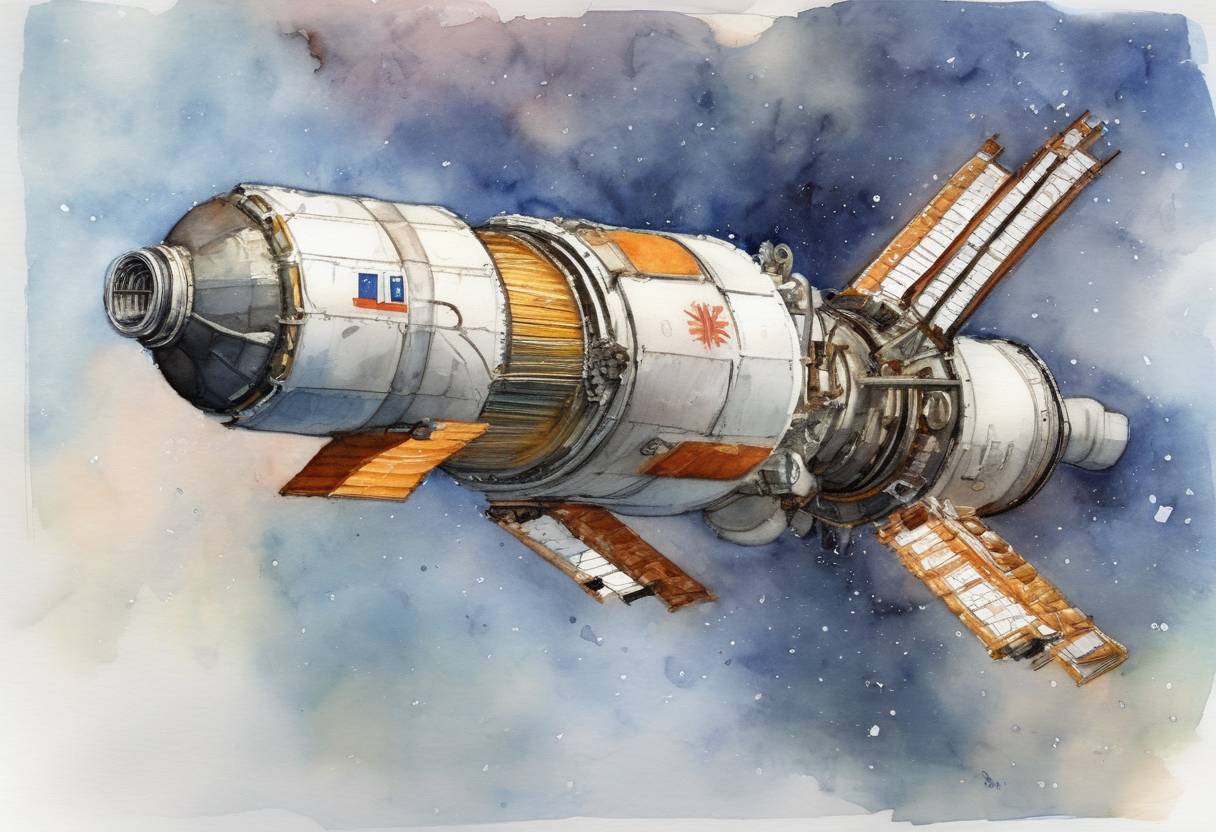
On December 24, 2012, a Russian-built Soyuz spacecraft successfully delivered a three-member crew to the International Space Station (ISS), marking another milestone in international cooperation in space exploration. This mission underscored the collaborative efforts between various space agencies to maintain and operate the ISS, a symbol of peaceful international partnership in space.
Launch Vehicle: The mission utilized the Soyuz TMA-07M spacecraft, a reliable workhorse for crewed missions to the ISS. The Soyuz series has been a cornerstone of human spaceflight since the 1960s.
Launch Site: The spacecraft was launched from the Baikonur Cosmodrome in Kazakhstan, a historic site for space exploration, being the world’s first and largest operational space launch facility.
Crew Members:
The primary objective of the mission was to transport the crew safely to the ISS, where they would join the existing Expedition 34 crew. Their tasks included conducting scientific research, performing maintenance on the station, and preparing for future missions.
International Collaboration: The mission highlighted the ongoing collaboration between NASA, Roscosmos (the Russian space agency), and other international partners. This cooperation is crucial for the continued success and operation of the ISS.
Scientific Research: The crew’s work on the ISS contributed to a wide range of scientific experiments, from biology and physics to Earth sciences, benefiting humanity’s understanding of space and life on Earth.
Cultural Impact: Chris Hadfield’s presence on the mission gained significant public attention, particularly for his social media engagement and musical performances from space, which helped to popularize space exploration.
The successful docking of the Soyuz TMA-07M with the ISS ensured the continuation of vital research and international collaboration aboard the station. The mission reinforced the Soyuz program’s reputation for reliability and underscored the importance of multinational partnerships in advancing human space exploration.
The crew’s work and interactions during their time on the ISS contributed to the station’s legacy as a hub for scientific discovery and international unity in space.
Source: www.nasa.gov