The End of the Battle of the Bulge: January 25, 1945
1945 · Ardennes, Belgium
The Battle of the Bulge ended with an Allied victory which repelled the last major German offensive of World War II.
June 7, 1917
The Battle of Messines began during World War I, with the detonation of 19 mines under the German lines, resulting in a significant Allied victory.
Messines, Belgium | British Army
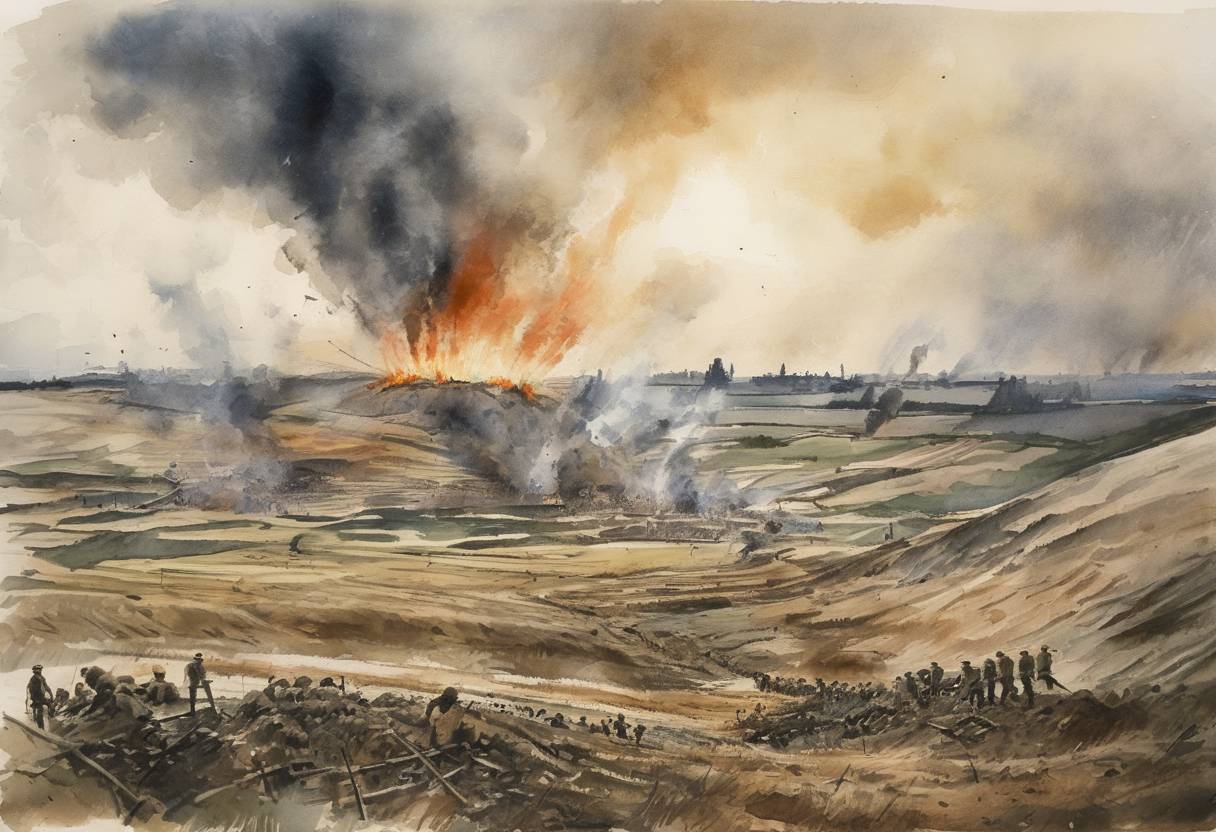
The Battle of Messines, a pivotal engagement during World War I, commenced on June 7, 1917. This battle was part of the larger Allied strategy to break the stalemate on the Western Front and was notable for its innovative use of underground mining operations.
The Messines Ridge, located in Belgium, was a strategically important high ground held by the German Army. Control of this ridge provided a vantage point over the surrounding areas, making it a critical objective for the British forces. The battle was part of the broader Ypres Salient operations, aimed at securing the region and preparing for the larger Third Battle of Ypres, also known as the Battle of Passchendaele.
The British forces, under the command of General Sir Herbert Plumer, meticulously planned the assault on Messines Ridge. One of the most remarkable aspects of this battle was the extensive mining operation conducted by the British. Over the course of more than a year, British tunneling companies dug a series of tunnels beneath the German lines, placing 21 large mines filled with explosives.
At 3:10 AM on June 7, 1917, 19 of these mines were detonated simultaneously. The explosion was one of the largest non-nuclear explosions in history, reportedly heard as far away as London and Dublin. The detonation obliterated the German front lines, creating massive craters and causing significant German casualties.
Following the explosion, British, Australian, and New Zealand troops launched a well-coordinated infantry assault. The shock and devastation caused by the mines allowed the Allied forces to advance rapidly and secure the ridge with relatively low casualties compared to previous offensives.
The Battle of Messines was a significant tactical victory for the Allies. It demonstrated the effectiveness of meticulous planning and the use of innovative tactics, such as mining, in overcoming entrenched positions. The success at Messines boosted Allied morale and set the stage for the subsequent Third Battle of Ypres.
The battle also highlighted the evolving nature of warfare during World War I, where technology and engineering played increasingly crucial roles in achieving military objectives. The lessons learned from Messines influenced future operations and underscored the importance of preparation and surprise in military strategy.
In summary, the Battle of Messines was a testament to the ingenuity and determination of the Allied forces, marking a rare and significant victory during the protracted and grueling conflict of World War I.
Source: en.wikipedia.org