The Libyan Coup of September 1, 1969
1969 · Tripoli, Libya
A coup in Libya led by Muammar Gaddafi overthrows King Idris I, establishing a new Libyan Arab Republic.
October 19, 2011
Libya's National Transitional Council declared the liberation of Libya, following the death of Muammar Gaddafi. This marked the end of the Libyan Civil War and the fall of Gaddafi's regime.
Tripoli, Libya | National Transitional Council
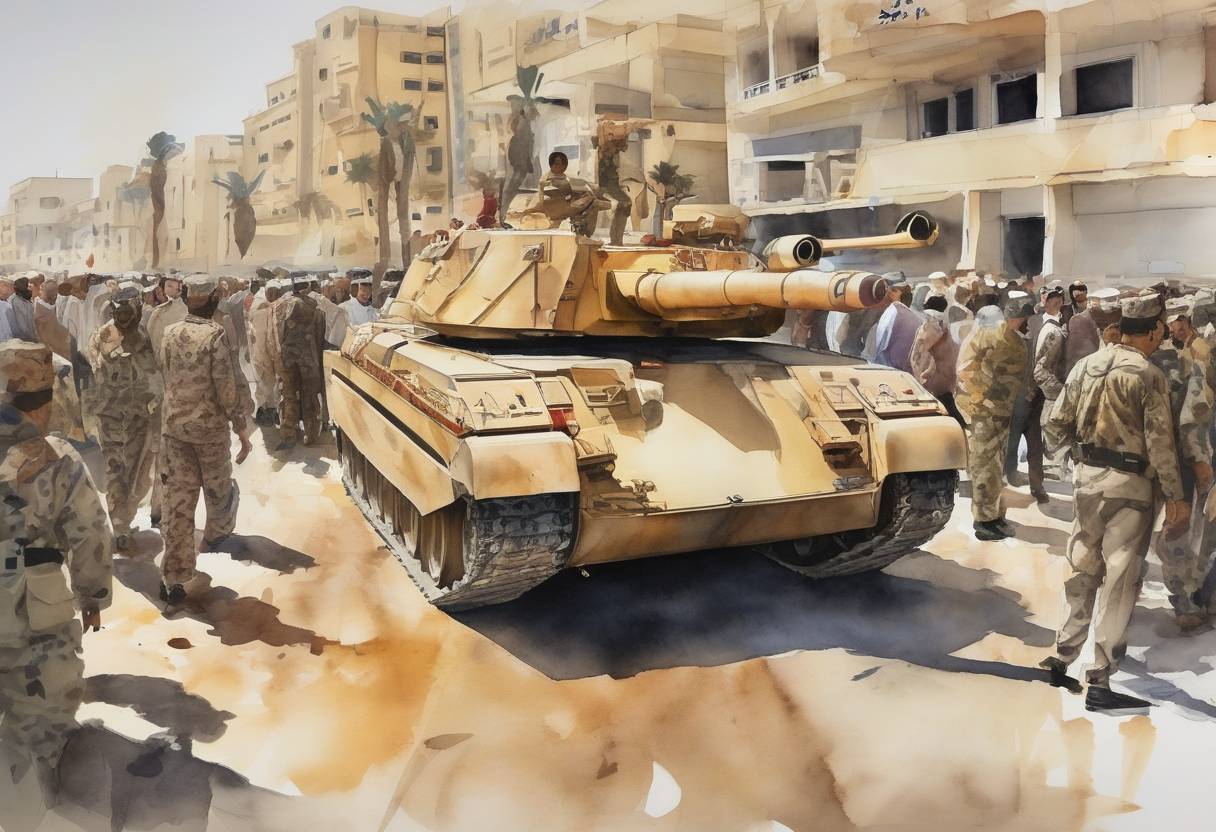
On October 23, 2011, the National Transitional Council (NTC) of Libya officially declared the liberation of the country, marking the end of the Libyan Civil War and the fall of Muammar Gaddafi’s regime. This declaration came just days after Gaddafi’s death on October 20, 2011, in his hometown of Sirte, which was the last major stronghold of his loyalist forces.
Muammar Gaddafi had ruled Libya for over 42 years, having seized power in a coup d’état in 1969. His regime was characterized by authoritarian rule, suppression of dissent, and a complex system of governance that concentrated power in his hands. The 2011 Libyan Civil War was part of the wider wave of the Arab Spring, where protests and uprisings spread across the Arab world, demanding democratic reforms and the end of autocratic regimes.
The conflict in Libya began in February 2011, when protests erupted in Benghazi and quickly spread across the country. The situation escalated into a full-scale civil war between Gaddafi’s forces and various rebel groups, which later coalesced under the banner of the NTC. The international community, led by NATO, intervened militarily in March 2011, enforcing a no-fly zone and conducting airstrikes against Gaddafi’s forces under the mandate of United Nations Security Council Resolution 1973.
The declaration of liberation was made in Benghazi, the cradle of the revolution, by Mustafa Abdul Jalil, the chairman of the NTC. The announcement was met with widespread celebrations across Libya, as it symbolized the end of decades of Gaddafi’s rule and the beginning of a new era for the country.
The fall of Gaddafi’s regime left Libya in a state of political and social upheaval. The NTC faced the enormous task of rebuilding the nation, establishing a stable government, and addressing the deep-seated divisions among various factions and tribes. The power vacuum and lack of a strong central authority led to ongoing instability, with various militias vying for control and influence.
The post-Gaddafi era in Libya has been marked by continued conflict, political fragmentation, and challenges in establishing a cohesive national government. The country has struggled with issues such as the proliferation of weapons, human rights abuses, and the rise of extremist groups.
The declaration of Libya’s liberation was a pivotal moment in the Arab Spring, demonstrating both the potential for change and the complexities of post-revolutionary transitions. It highlighted the challenges of nation-building in the aftermath of authoritarian rule and underscored the importance of international involvement in conflict resolution and reconstruction efforts.
The events in Libya continue to serve as a case study in the dynamics of revolution, intervention, and the long-term impacts of regime change in the Middle East and North Africa.
Source: www.reuters.com