The Landing of the Mayflower Pilgrims at Plymouth Rock
1620 · Plymouth, United States
The Mayflower Pilgrims landed at Plymouth Rock in present-day Massachusetts, marking a significant event in the early colonization of North America.
August 5, 1620
The Mayflower departed from Southampton, England, on its first attempt to reach North America.
Southampton, England | Pilgrims
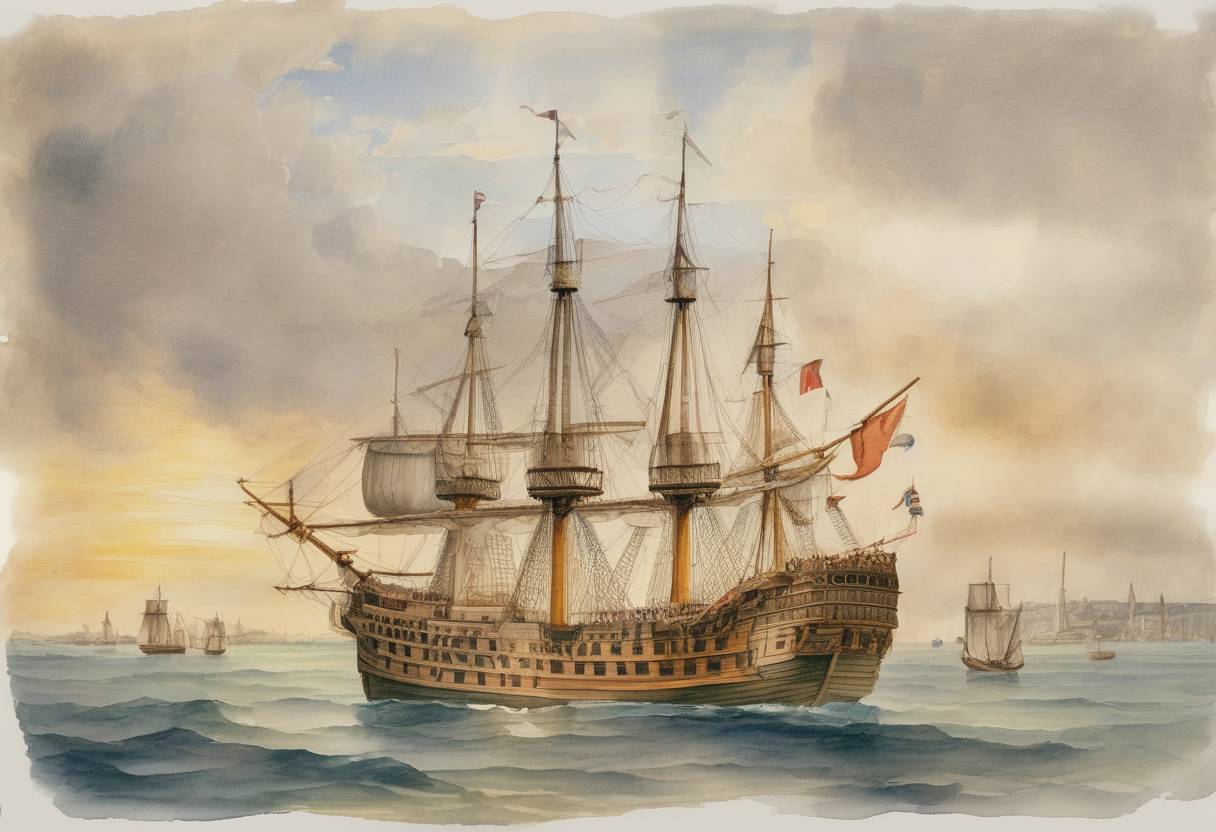
On August 5, 1620, the Mayflower, a historic English ship, embarked on its first attempt to reach North America from Southampton, England. This voyage is one of the most significant events in early American colonial history, marking the beginning of a journey that would lead to the establishment of one of the first permanent European settlements in the New World.
The Mayflower was a merchant ship, approximately 100 feet long, typically used for transporting goods such as wine and wool. In 1620, it was chartered to carry a group of English Puritans, known as the Pilgrims, who sought religious freedom and a new life across the Atlantic. These Pilgrims were part of a larger movement of Separatists who had initially fled to the Netherlands to escape religious persecution in England.
The Mayflower was initially accompanied by another ship, the Speedwell. The plan was for both ships to transport the Pilgrims and other settlers to the New World. However, the Speedwell encountered numerous issues, including leaks, which forced both ships to return to port twice for repairs. The first departure from Southampton on August 5 was part of these initial attempts.
The repeated failures of the Speedwell to remain seaworthy led to significant delays. After the second return to port, the decision was made to abandon the Speedwell. Consequently, the Mayflower set sail alone from Plymouth, England, on September 6, 1620, carrying 102 passengers and a crew of approximately 30.
The Mayflower’s journey, despite its rocky start, culminated in the landing at Plymouth Rock in present-day Massachusetts on November 21, 1620. This event is celebrated as a foundational moment in American history, leading to the establishment of Plymouth Colony. The Mayflower Compact, signed aboard the ship, became a pioneering document for self-governance and democratic principles in the New World.
The successful crossing of the Mayflower and the establishment of Plymouth Colony had profound implications. It set a precedent for future waves of English colonization and contributed to the cultural and political development of what would become the United States. The Pilgrims’ story, including their struggles and eventual Thanksgiving celebration with Native Americans, has become an enduring part of American folklore and identity.
In summary, the Mayflower’s first departure on August 5, 1620, was a crucial step in a journey that would have lasting impacts on the history of North America and the world.
Source: en.wikipedia.org