1941 · Nyeri, Kenya
Robert Baden-Powell, the founder of the Boy Scouts, dies in Nyeri, Kenya.
August 11, 1906
The first official Boy Scout camp ends on Brownsea Island in England.
Brownsea Island, England | Boy Scouts
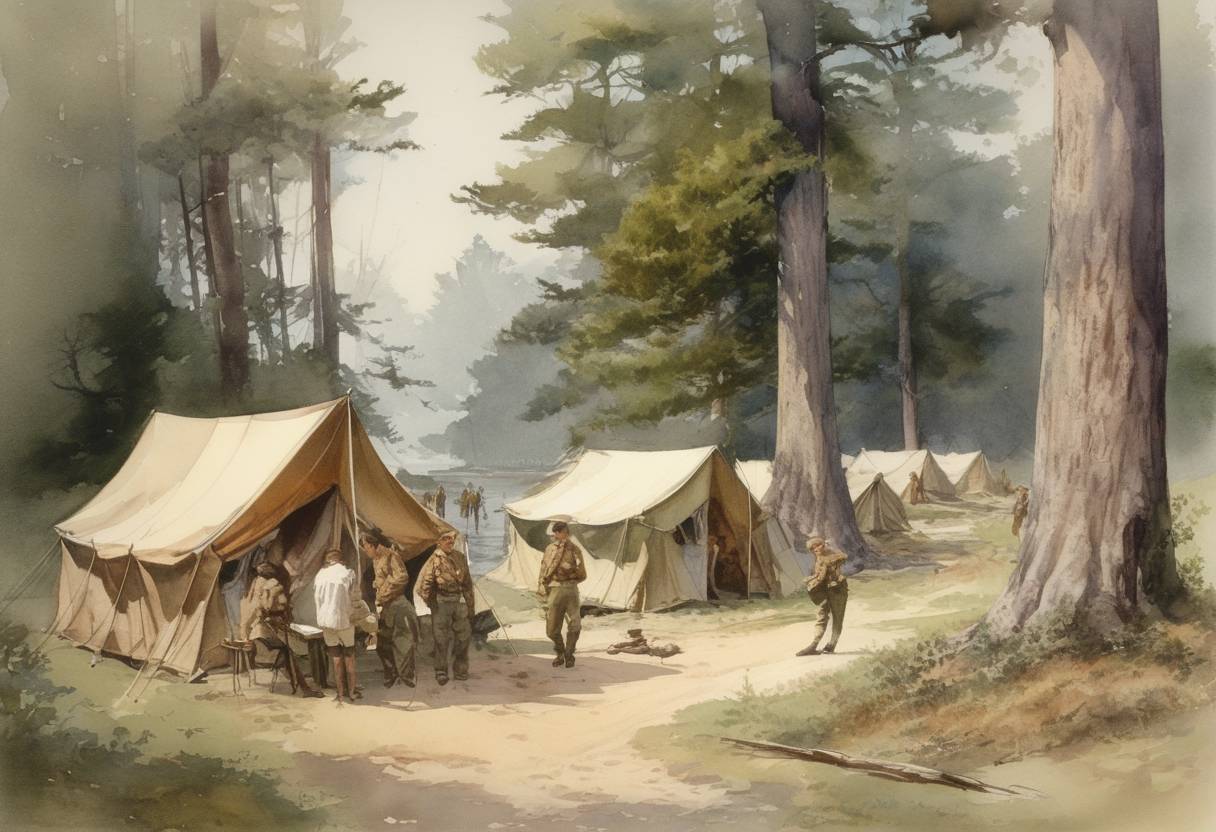
The first official Boy Scout camp, held on Brownsea Island in England, concluded on August 11, 1907. This camp is widely regarded as the experimental foundation of the global Scouting movement, which would later become one of the largest youth organizations in the world.
Robert Baden-Powell: The camp was organized by Lieutenant General Robert Baden-Powell, a British Army officer. Baden-Powell had gained fame for his defense of Mafeking during the Second Boer War and had written a military training manual, “Aids to Scouting,” which became popular among boys and youth organizations.
Concept of Scouting: Inspired by the enthusiasm for his manual, Baden-Powell envisioned a program that would teach boys practical outdoor skills, self-reliance, and good citizenship. He aimed to create a structured yet adventurous environment for young boys to learn and grow.
Location: Brownsea Island, located in Poole Harbour, Dorset, England, was chosen for its secluded and natural environment, ideal for outdoor activities and experiments in Scouting.
Participants: The camp hosted 20 boys from diverse backgrounds, including public school boys and boys from working-class families. This mix was intentional, reflecting Baden-Powell’s vision of inclusivity.
Activities: Over the course of the camp, the boys engaged in various activities such as camping, woodcraft, chivalry, lifesaving, and patriotism. These activities were designed to instill values of teamwork, leadership, and self-discipline.
Structure: The camp was divided into four patrols, each led by a patrol leader. This structure became a fundamental aspect of the Scouting organization, emphasizing leadership and responsibility.
Scouting Movement: The success of the Brownsea Island camp led to the formal establishment of the Boy Scouts in 1908, with the publication of Baden-Powell’s “Scouting for Boys.” This book laid the groundwork for the Scouting movement, which quickly spread internationally.
Legacy: The principles and methods developed during the Brownsea Island camp have had a lasting impact on youth education and development worldwide. The Scouting movement has grown to include millions of members across various countries, promoting values of community service, environmental stewardship, and personal development.
The conclusion of the first official Boy Scout camp on August 11, 1907, marked the beginning of a transformative movement in youth education. Robert Baden-Powell’s innovative approach to character building and outdoor education continues to influence generations of young people globally.
Source: en.wikipedia.org