The Battle of Camden: August 16, 1780
1780 · Camden, United States
The Battle of Camden occurred during the American Revolutionary War, resulting in a decisive British victory over the American forces.
September 11, 1777
The Battle of Brandywine occurred during the American Revolutionary War, resulting in a British victory.
Chadds Ford Township, United States | British Army
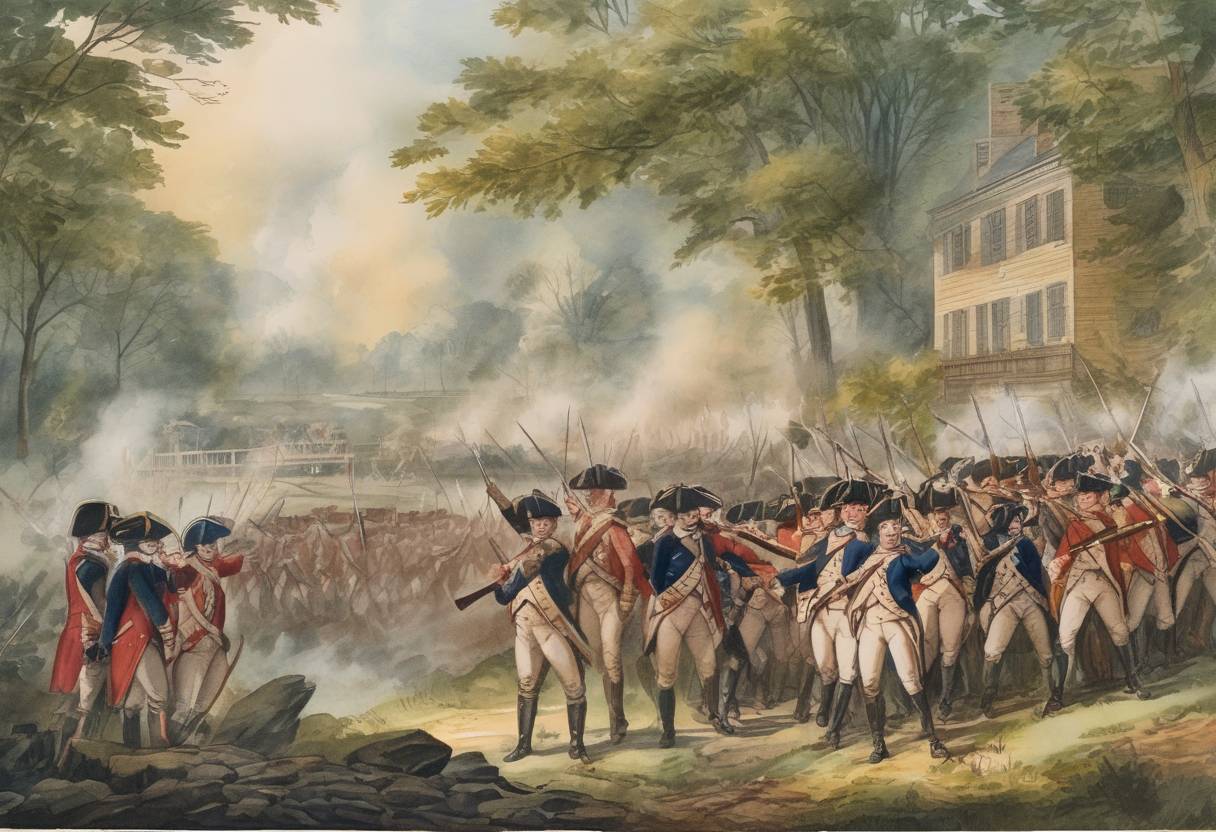
The Battle of Brandywine was a significant engagement during the American Revolutionary War, taking place on September 11, 1777. This battle marked a pivotal moment in the British campaign to capture Philadelphia, the American capital at the time.
British Strategy: The British, under General Sir William Howe, aimed to seize Philadelphia to demoralize the American cause and disrupt the Continental Congress. Howe’s forces had recently evacuated New Jersey and sailed from New York City, landing at the head of the Chesapeake Bay in late August 1777.
American Defense: General George Washington, commanding the Continental Army, sought to defend Philadelphia by positioning his troops along the Brandywine River in Pennsylvania. Washington’s strategy was to block the British advance and protect the capital.
Initial Positions: Washington’s army, numbering around 11,000 men, was stationed along the Brandywine River, with key positions at Chadds Ford. Howe’s forces, approximately 15,500 strong, planned a flanking maneuver to outmaneuver the Americans.
British Flanking Maneuver: Howe executed a well-coordinated flanking attack. While a portion of the British forces engaged the Americans at Chadds Ford, a larger contingent, led by General Charles Cornwallis, marched north and crossed the river at unguarded fords, attacking the American right flank.
American Response: Despite being outflanked, Washington attempted to reorganize his forces. However, the British assault was overwhelming, and the American lines eventually collapsed.
Retreat and Aftermath: The Continental Army was forced to retreat toward Chester, Pennsylvania. The British victory at Brandywine allowed them to continue their advance toward Philadelphia, which they captured later that month on September 26, 1777.
Impact on American Morale: Although a tactical defeat, the battle did not crush American resolve. Washington’s army remained largely intact and continued to engage British forces in subsequent battles.
Strategic Outcome: The British occupation of Philadelphia did not yield the strategic advantage they had hoped. The Continental Congress relocated, and the war effort continued unabated.
Long-term Effects: The battle demonstrated the challenges faced by the Continental Army in terms of training and coordination but also highlighted their resilience. It underscored the need for foreign assistance, which would later come in the form of French support following the American victory at Saratoga.
The Battle of Brandywine remains a testament to the complexities of the Revolutionary War, illustrating both the tactical prowess of the British and the enduring spirit of the American forces.
Source: en.wikipedia.org