Pope Leo XIII and the Encyclical 'Rerum Novarum'
1891 · Vatican City, Vatican City
Pope Leo XIII issued the encyclical 'Rerum Novarum', addressing the condition of the working classes and marking the beginning of modern Catholic social teaching.
June 18, 2015
Pope Francis released his second encyclical, 'Laudato si',' which focused on environmental issues and climate change.
Vatican City, Vatican City | Catholic Church
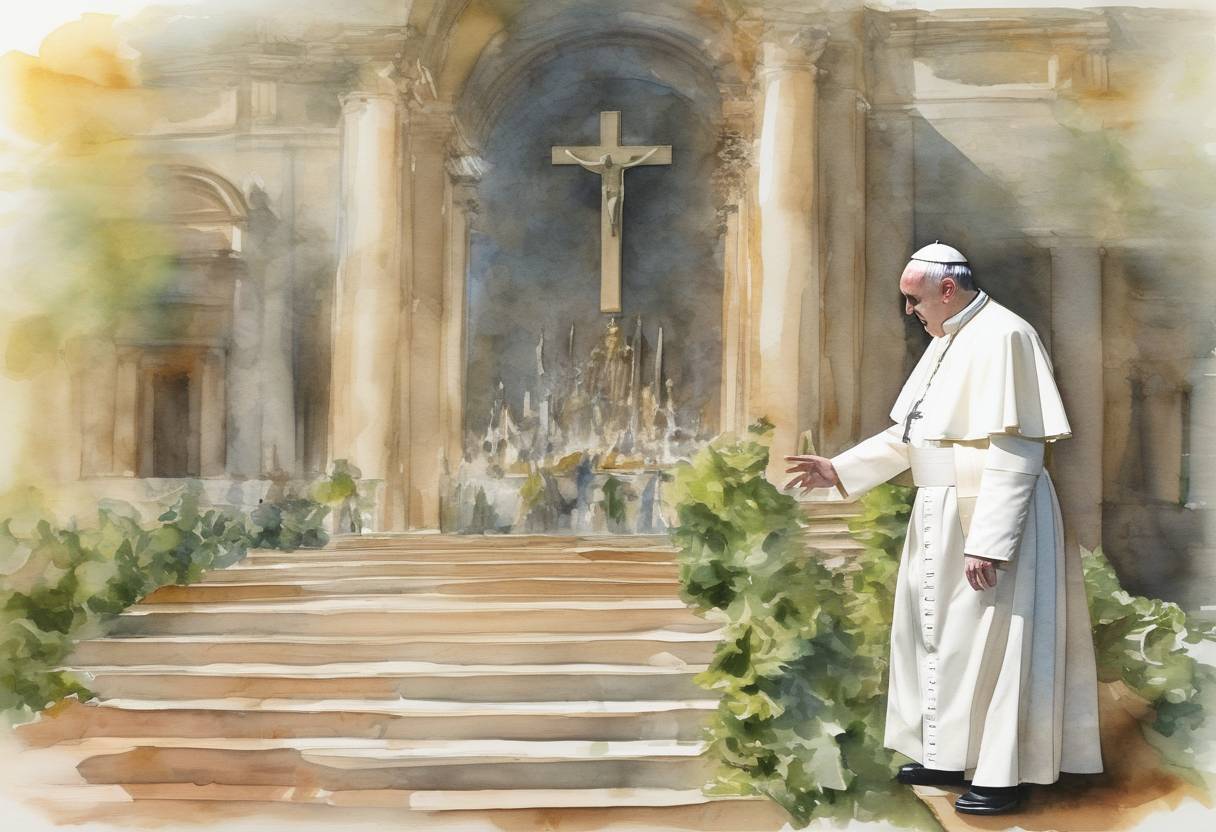
On June 18, 2015, Pope Francis released his second encyclical, titled Laudato si’: On Care for Our Common Home. This significant document marked a pivotal moment in the Catholic Church’s engagement with environmental issues and climate change.
Laudato si’ is named after a phrase from Saint Francis of Assisi’s Canticle of the Sun, which praises God for the creation of the earth and its elements. The encyclical reflects Pope Francis’s deep concern for the environment and the urgent need for action to address ecological degradation and climate change.
The release of Laudato si’ came at a time when global awareness of environmental issues was increasing. The encyclical was published just months before the United Nations Climate Change Conference (COP21) in Paris, where the landmark Paris Agreement was adopted.
Integral Ecology: Pope Francis emphasizes the interconnectedness of all creation, advocating for an “integral ecology” that considers environmental, economic, social, and cultural dimensions. He argues that environmental degradation and social injustice are deeply linked.
Critique of Consumerism and Technology: The encyclical critiques the modern consumerist lifestyle and the uncritical reliance on technology, which often lead to environmental harm and social inequality.
Call for Global Action: Pope Francis calls for a collective global response to combat climate change, urging nations to transition to renewable energy sources and reduce carbon emissions. He stresses the moral obligation to protect the planet for future generations.
Focus on the Poor and Vulnerable: The encyclical highlights the disproportionate impact of environmental degradation on the poor and marginalized, advocating for their rights and well-being.
Spiritual and Ethical Dimensions: Pope Francis invites people of all faiths and beliefs to reflect on their relationship with the environment, promoting an ethical and spiritual awakening to foster a more sustainable and just world.
Laudato si’ has had a profound impact on both religious and secular communities. It has been praised for its comprehensive approach to environmental issues and its call for urgent action. The encyclical has influenced discussions on climate policy and has been cited by leaders and activists worldwide as a moral and ethical framework for addressing environmental challenges.
The document also reinforced the Catholic Church’s role in global environmental advocacy, encouraging dialogue and collaboration among different faiths and sectors of society.
In summary, Laudato si’ is a landmark encyclical that underscores the moral imperative to care for the environment and highlights the interconnectedness of ecological and social issues. Its release on June 18, 2015, continues to resonate in ongoing efforts to address climate change and promote sustainability.
Source: www.vatican.va