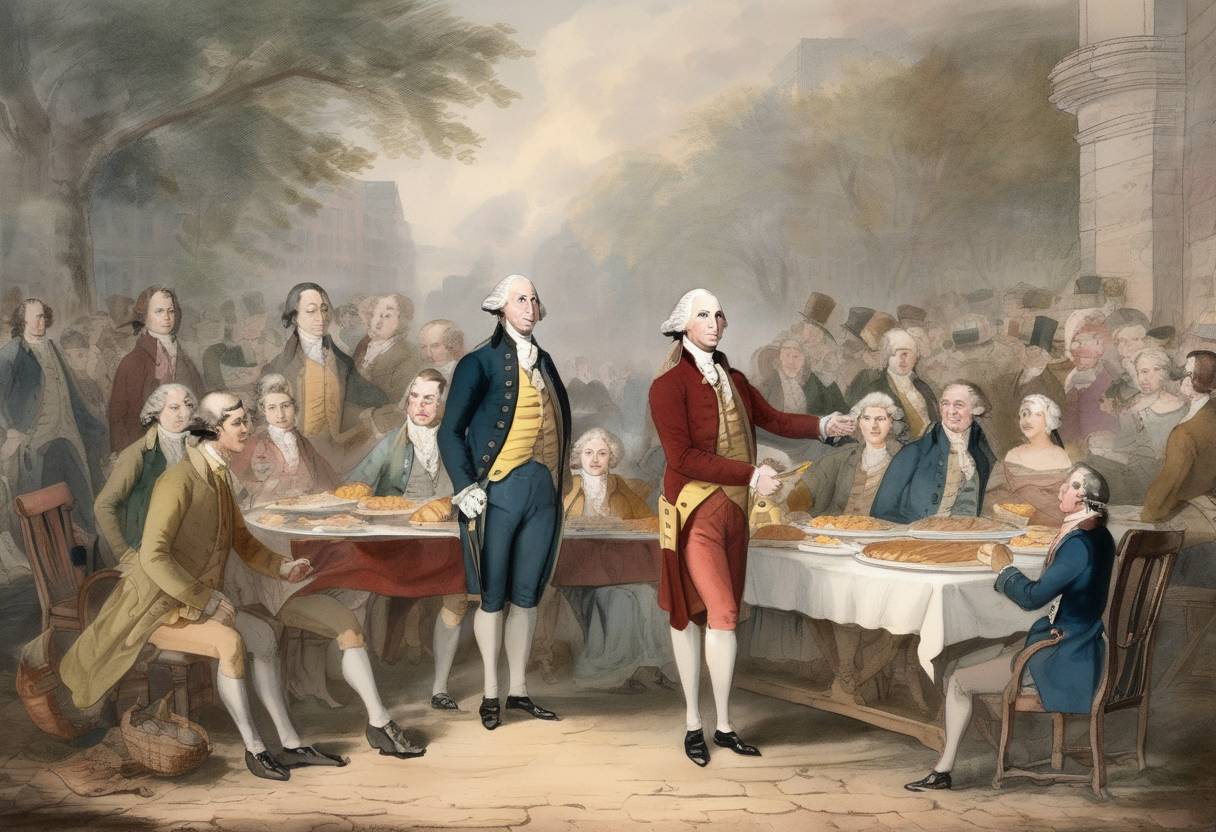
National Thanksgiving Day Proclamation - November 26, 1789
On November 26, 1789, the United States observed its first national Thanksgiving Day as proclaimed by President George Washington. This event marked a significant moment in American history, reflecting the nation’s early efforts to establish a sense of unity and gratitude following the Revolutionary War and the ratification of the U.S. Constitution.
Context and Background
The Revolutionary War: The United States had recently emerged victorious from the Revolutionary War, gaining independence from British rule. The war had left the new nation in need of unity and healing.
The Constitution: The U.S. Constitution was ratified in 1788, and George Washington was inaugurated as the first President of the United States in April 1789. The new government was in its formative stages, seeking to establish traditions and national identity.
Congressional Request: On September 28, 1789, Congress passed a resolution requesting President Washington to recommend a day of public thanksgiving and prayer. The aim was to acknowledge the providence of Almighty God in the nation’s affairs.
The Proclamation
Date: President Washington issued the proclamation on October 3, 1789, designating Thursday, November 26, 1789, as a day of thanksgiving.
Purpose: The proclamation called for a day of public thanksgiving and prayer, urging Americans to express gratitude for the successful conclusion of the war, the establishment of the Constitution, and the nation’s prosperity.
Content: Washington’s proclamation emphasized the importance of acknowledging divine providence, fostering national unity, and reflecting on the nation’s blessings. It encouraged citizens to perform acts of kindness and charity.
Significance
National Unity: The proclamation was an early effort to promote national unity and identity, encouraging citizens to come together in gratitude and reflection.
Tradition: This observance laid the groundwork for the Thanksgiving holiday as a national tradition, eventually leading to its establishment as a federal holiday by President Abraham Lincoln in 1863.
Cultural Impact: Thanksgiving has since evolved into a significant cultural and historical event in the United States, celebrated with family gatherings, feasting, and expressions of gratitude.
Aftermath
Annual Celebrations: While not immediately an annual tradition, the idea of a national day of thanksgiving persisted, with various states and presidents declaring days of thanksgiving in subsequent years.
Federal Holiday: Thanksgiving became an official federal holiday in 1863, during the Civil War, when President Lincoln proclaimed a national day of “Thanksgiving and Praise to our beneficent Father who dwelleth in the Heavens.”
The 1789 Thanksgiving proclamation by President George Washington remains a foundational moment in American history, symbolizing the nation’s early efforts to foster unity and gratitude.