Boris Yeltsin and the Declaration of Russian Sovereignty
1991 · Moscow, Russia
Boris Yeltsin declares Russia's independence from the Soviet Union.
June 12, 1991
Boris Yeltsin was elected as the first President of the Russian Federation, marking a significant shift in Russian politics post-Soviet Union.
Moscow, Russia | Russian Federation
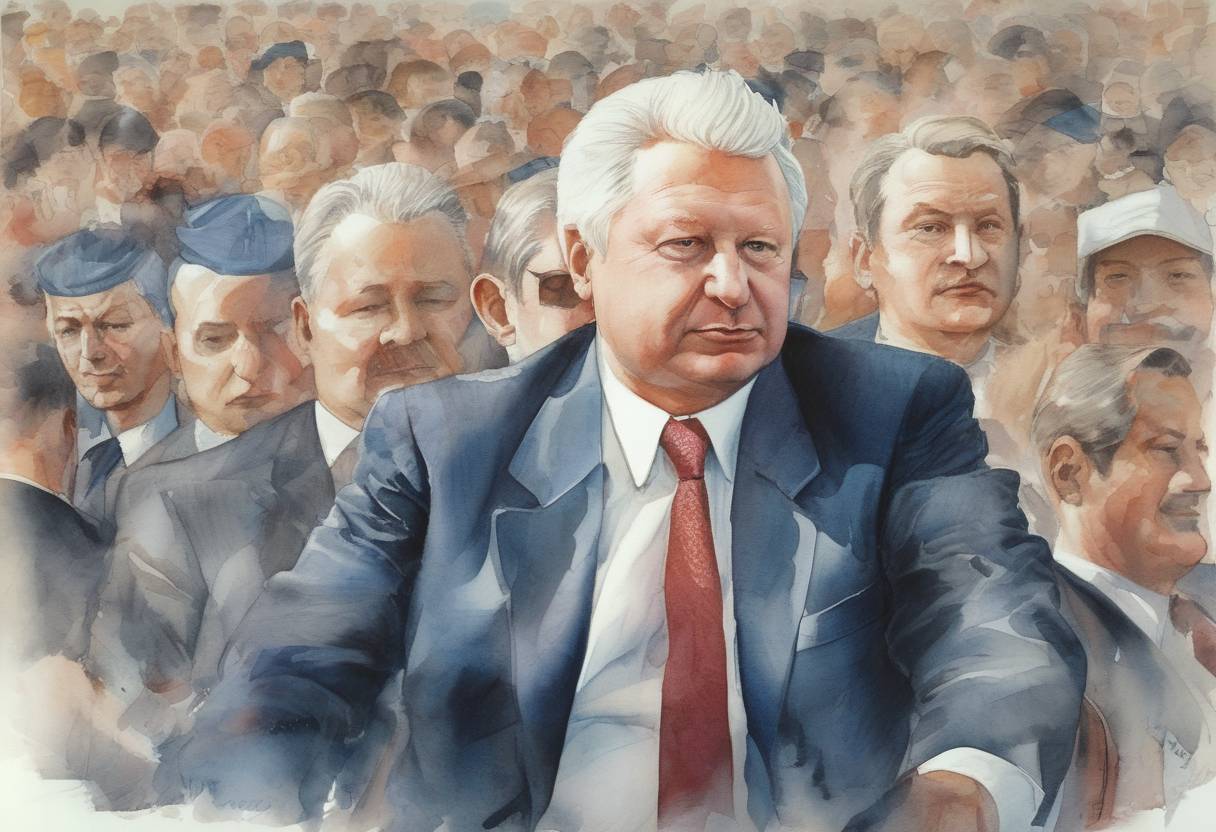
On June 12, 1991, Boris Yeltsin was elected as the first President of the Russian Federation, a landmark event in the history of Russia and a pivotal moment in the post-Soviet political landscape.
The election of Boris Yeltsin came at a time of significant upheaval and transformation within the Soviet Union. The late 1980s and early 1990s were marked by the policies of glasnost (openness) and perestroika (restructuring) initiated by Mikhail Gorbachev, the General Secretary of the Communist Party of the Soviet Union. These reforms aimed to revitalize the Soviet economy and society but also led to increased political instability and demands for greater autonomy among the Soviet republics.
In this climate of change, Boris Yeltsin emerged as a prominent political figure. A former member of the Communist Party, Yeltsin became a vocal critic of the party’s hardline elements and advocated for more radical reforms. His popularity grew as he positioned himself as a champion of democratic and economic reforms.
The presidential election held on June 12, 1991, was the first of its kind in Russia, allowing citizens to directly elect their leader. Yeltsin ran as an independent candidate, capitalizing on his reputation as a reformer and his appeal to those disillusioned with the Communist Party’s rule.
Yeltsin won a decisive victory, securing approximately 57% of the vote in a field of six candidates. His election was a clear indication of the public’s desire for change and a move away from the centralized control of the Soviet era.
Yeltsin’s election marked a significant shift in Russian politics. It symbolized the decline of Communist Party dominance and the rise of a new political order focused on democratic governance and market-oriented reforms. As President, Yeltsin played a crucial role in the dissolution of the Soviet Union later that year, on December 26, 1991, when the Soviet Union officially ceased to exist, and the Russian Federation emerged as an independent state.
Yeltsin’s presidency was characterized by efforts to transition Russia to a market economy, though this period was also marked by economic turmoil, political challenges, and social unrest. His leadership style and policies laid the groundwork for the future of post-Soviet Russia, influencing the nation’s trajectory in the years to come.
The election of Boris Yeltsin was a defining moment in the history of Russia and the broader post-Soviet space. It represented a break from the past and the beginning of a new era in Russian politics, characterized by attempts to integrate with the global economy and establish democratic institutions. Despite the challenges and controversies of his presidency, Yeltsin’s election remains a symbol of the transformative changes that reshaped Russia at the end of the 20th century.
Source: en.wikipedia.org