The Battle of Pressburg Begins: May 12, 907
907 · Pressburg, East Francia
The Battle of Pressburg begins, marking a significant conflict between the Frankish Empire and the Hungarian forces.
May 1, 0880
The Battle of Thimeon takes place, where the Frankish army under Charles the Fat defeats the Viking forces.
Thimeon, Frankish Empire | Frankish Empire
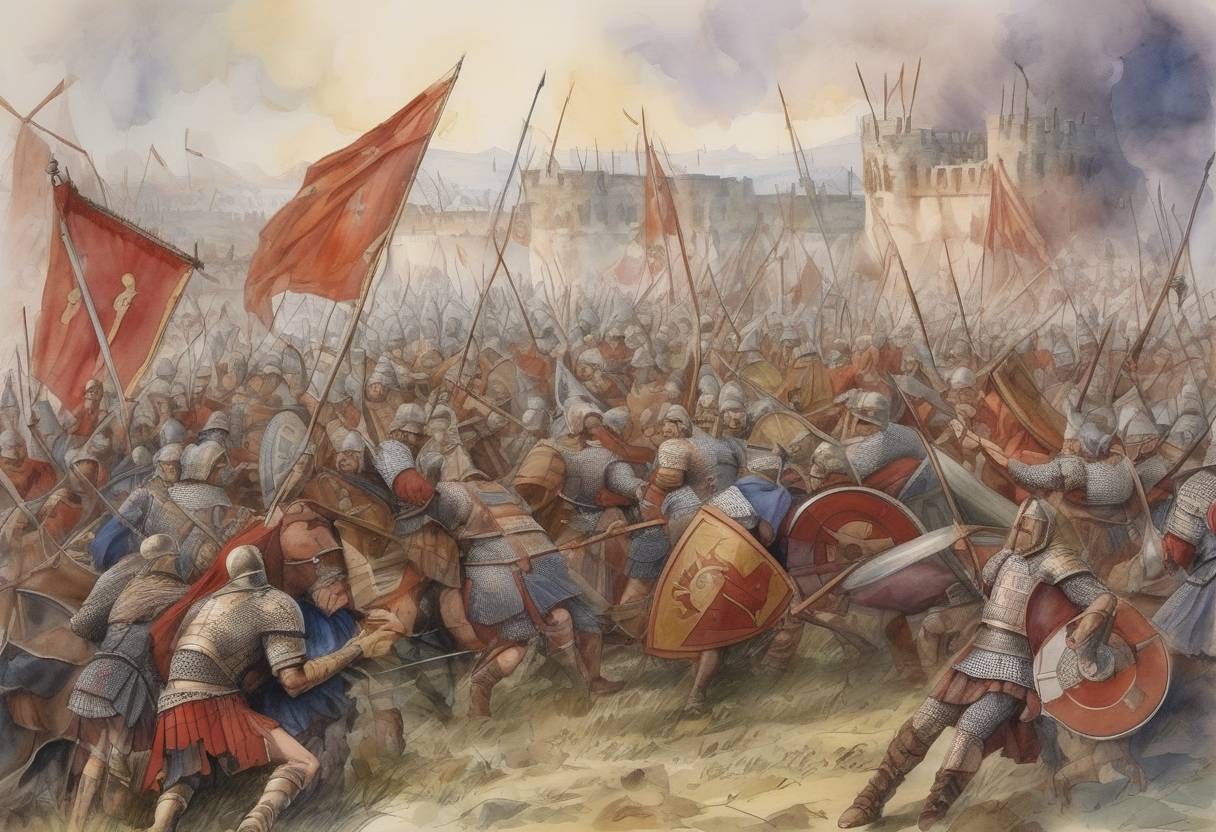
The Battle of Thimeon, fought on May 1, 880, was a significant military engagement between the Frankish forces led by Charles the Fat and Viking invaders. This battle is a notable event in the series of conflicts during the Viking Age, which saw Norse warriors frequently raiding and settling in parts of Europe.
During the late 9th century, Europe was frequently subjected to Viking raids. The Frankish Empire, a major power in Western Europe, was particularly targeted due to its wealth and fragmented political structure. Charles the Fat, a Carolingian ruler, was the King of West Francia and later became the Holy Roman Emperor. His reign was marked by efforts to defend his territories from Viking incursions.
In the years leading up to the Battle of Thimeon, Viking forces had been increasingly aggressive in their raids across the Frankish territories. The Vikings, known for their swift and brutal attacks, had established several bases along the rivers of Europe, from which they launched their raids.
Charles the Fat, recognizing the threat posed by the Vikings, sought to consolidate his power and organize a defense. His strategy involved both military engagements and diplomatic efforts, including paying tribute to some Viking leaders to deter attacks.
The Battle of Thimeon took place near the village of Thimeon, in present-day Belgium. The Frankish army, under the command of Charles the Fat, engaged a Viking force that had been conducting raids in the region. The exact details of the battle are sparse, but it is known that the Frankish forces achieved a decisive victory.
This victory was significant as it temporarily halted the Viking raids in the area and demonstrated the capability of the Frankish military under Charles’s leadership. It also helped to bolster Charles’s reputation as a ruler capable of defending his realm against external threats.
The victory at Thimeon was a short-term success for Charles the Fat. However, it did not permanently end the Viking threat, as raids continued in other parts of the Frankish Empire. Charles’s reign was later marked by internal strife and challenges to his authority, leading to his eventual deposition in 887.
The battle is an example of the ongoing struggle between European kingdoms and Viking invaders during this period. It highlights the challenges faced by rulers like Charles the Fat in maintaining control over their territories amidst external threats and internal divisions.
The Viking Age had a profound impact on Europe, leading to significant cultural and political changes. The raids and settlements by Norse warriors contributed to the eventual formation of new political entities and influenced the development of medieval European society.
The Battle of Thimeon, while a relatively small engagement in the grand scope of the Viking incursions, is a testament to the resilience and adaptability of European powers in the face of external pressures. It underscores the complex dynamics of power, warfare, and diplomacy during this tumultuous period in history.
Source: en.wikipedia.org