Death of Pope Honorius III and Subsequent Papal Transition
1223 · Rome, Papal States
Upon the death of Pope Honorius III, the papal conclave to elect his successor began, ultimately leading to the election of Pope Gregory IX in March 1227.
January 8, 1198
Lotario de' Conti di Segni was elected as Pope Innocent III, one of the most influential popes of the Middle Ages, known for his role in the Fourth Crusade and the Albigensian Crusade.
Rome, Papal States | Catholic Church
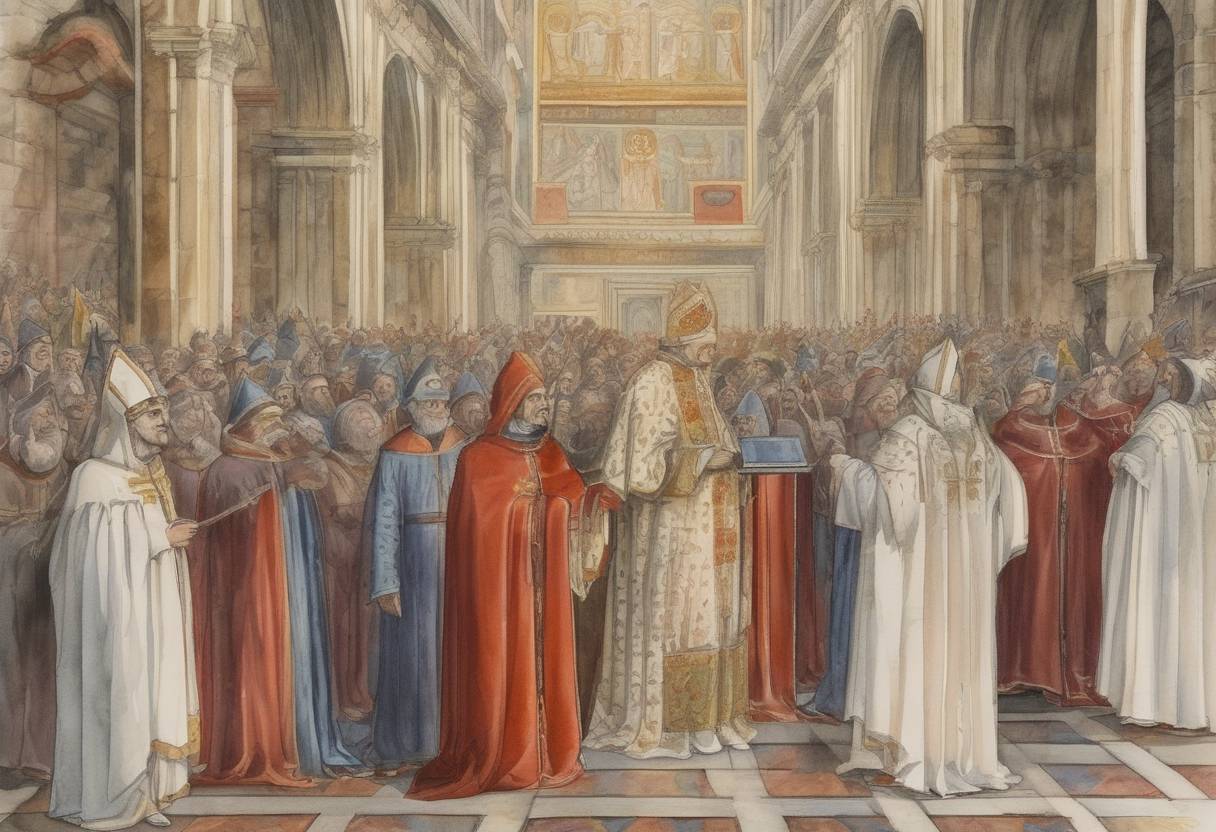
On January 8, 1198, Lotario de’ Conti di Segni was elected as Pope Innocent III, marking the beginning of one of the most influential papacies in the history of the Catholic Church. His election took place following the death of Pope Celestine III, and Innocent III would go on to serve as pope until his death in 1216.
Lotario de’ Conti di Segni was born around 1160 into a noble family in Gavignano, near Anagni, Italy. He was well-educated, studying theology in Paris and law in Bologna, which equipped him with the intellectual tools necessary for his future role as a church leader. Before his election as pope, Lotario served as a cardinal-deacon and was known for his administrative skills and theological acumen.
Pope Innocent III is often regarded as one of the most powerful and influential popes of the Middle Ages. His papacy is noted for several key initiatives and events:
Pope Innocent III’s papacy significantly shaped the medieval church and European politics. His efforts to expand papal authority and influence were pivotal in the development of the Catholic Church’s role in medieval society. His actions during the Fourth and Albigensian Crusades, as well as his reforms, left a lasting legacy on the church and European history.
Innocent III’s tenure as pope is often seen as a high point of papal power, demonstrating the complex interplay between religious and secular authority during the Middle Ages.
Source: en.wikipedia.org