The Russo-Turkish War of 1828–1829: Russia Declares War
1828 · Saint Petersburg, Russia
Russia declares war on the Ottoman Empire, marking the start of the Russo-Turkish War of 1828–1829.
November 16, 1849
A Russian court sentences writer Fyodor Dostoevsky to death for anti-government activities linked to a radical intellectual group. His sentence is later commuted to a term of exile in Siberia.
Saint Petersburg, Russia | Russian Empire
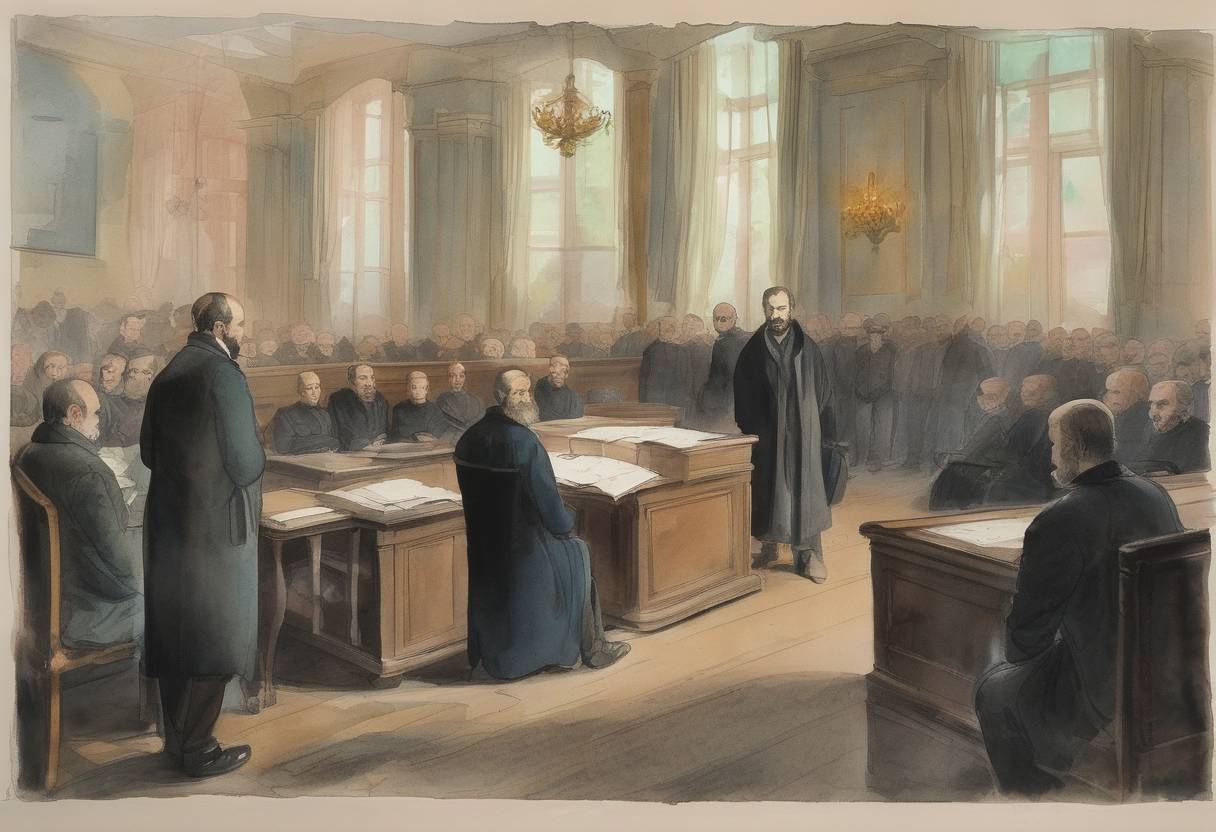
On November 16, 1849, the renowned Russian writer Fyodor Dostoevsky was sentenced to death for his involvement in anti-government activities. This dramatic event was a pivotal moment in Dostoevsky’s life and had significant implications for his future works and philosophical outlook.
Fyodor Dostoevsky, born in 1821, was a prominent literary figure in Russia. By the late 1840s, he had already gained recognition for his novels and short stories. However, during this period, Russia was under the autocratic rule of Tsar Nicholas I, and the political climate was tense, with increasing censorship and suppression of dissent.
Dostoevsky became involved with the Petrashevsky Circle, a group of intellectuals and progressives who gathered to discuss Western philosophy and critique the Tsarist regime. The group was named after Mikhail Petrashevsky, a utopian socialist and the host of these meetings. The discussions often touched upon radical ideas, including the abolition of serfdom and the need for political reform in Russia.
In 1849, the Tsarist authorities, wary of any potential revolutionary activity, cracked down on the Petrashevsky Circle. Dostoevsky and several other members were arrested in April of that year. They were charged with subversion and spreading anti-government propaganda.
The trial was swift and harsh. Dostoevsky and his co-defendants were found guilty of participating in activities deemed dangerous to the state. On November 16, 1849, Dostoevsky was sentenced to death by firing squad, a punishment that underscored the severity with which the Tsarist regime viewed dissent.
In a dramatic turn of events, Dostoevsky’s death sentence was commuted at the last moment. As he and his fellow prisoners stood on the execution ground, a messenger arrived with a reprieve from the Tsar. Instead of facing execution, Dostoevsky was sentenced to four years of hard labor in a Siberian penal camp, followed by compulsory military service.
This experience profoundly affected Dostoevsky. The years in Siberia exposed him to the harsh realities of life among the oppressed and the criminal classes, themes that would later permeate his literary works. His time in exile also led to a deepening of his religious faith and a reevaluation of his political beliefs.
Dostoevsky’s experiences in Siberia and his subsequent return to St. Petersburg in 1859 marked a turning point in his career. He went on to write some of his most influential novels, including “Crime and Punishment,” “The Idiot,” and “The Brothers Karamazov,” which explored complex themes of morality, redemption, and the human condition.
The events of November 16, 1849, and Dostoevsky’s subsequent exile had a lasting impact on Russian literature and thought. His works continue to be celebrated for their psychological depth and philosophical insights, reflecting the tumultuous era in which he lived.
Dostoevsky’s life and writings remain a testament to the enduring power of literature to challenge and reflect upon societal norms and human nature.
Source: en.wikipedia.org