31 · Rome, Roman Empire
The Roman Emperor Augustus died. His death became widely recognized on September 2, the day when his successor, Tiberius, was publicly declared the Emperor of Rome.
August 23, 0030
The Roman general and statesman Gaius Julius Caesar Octavianus, later known as Augustus, was declared the first Roman Emperor by the Senate, marking the end of the Roman Republic and the beginning of the Roman Empire.
Rome, Roman Empire | Roman Senate
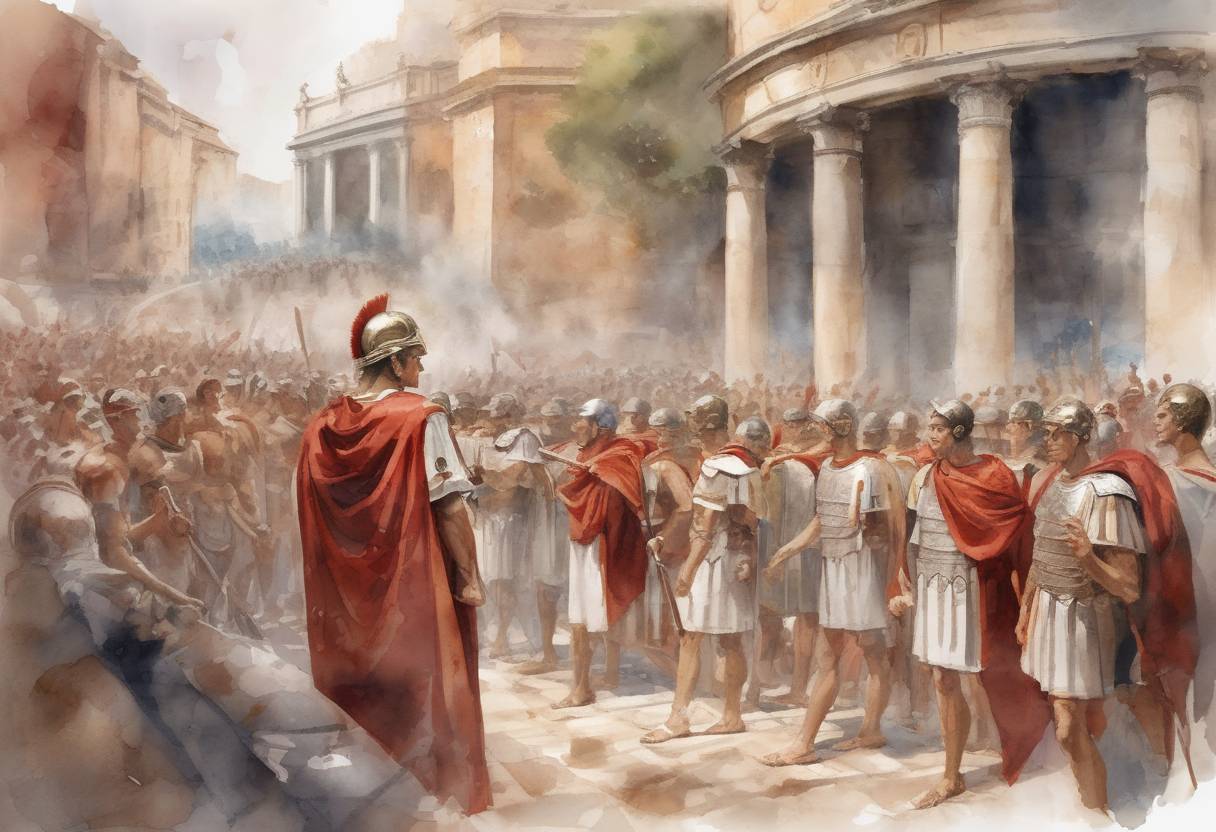
On August 23, 30 BCE, Gaius Julius Caesar Octavianus, later known as Augustus, was declared the first Roman Emperor by the Senate, marking a pivotal moment in Roman history. This event signified the end of the Roman Republic and the beginning of the Roman Empire, a transformation that would shape the future of Rome and the Western world.
Julius Caesar’s Assassination (44 BCE): The assassination of Julius Caesar led to a power vacuum and a series of civil wars. Octavian, Caesar’s adopted heir, emerged as a key player in the subsequent power struggles.
The Second Triumvirate (43 BCE): Octavian formed the Second Triumvirate with Mark Antony and Marcus Aemilius Lepidus to defeat Caesar’s assassins. This alliance was marked by political maneuvering and military campaigns.
Battle of Actium (31 BCE): Octavian’s decisive victory over Mark Antony and Cleopatra at the Battle of Actium solidified his power. Antony and Cleopatra’s subsequent suicides left Octavian as the uncontested ruler of Rome.
Senate’s Declaration: The Roman Senate granted Octavian unprecedented powers and titles, effectively making him the first Roman Emperor. Although he retained the title of “Princeps” (first citizen), his authority was absolute.
Title of Augustus: In 27 BCE, Octavian was granted the honorific title “Augustus,” meaning “the revered one,” further cementing his status and the transition from Republic to Empire.
Pax Romana: Augustus’ reign initiated the Pax Romana, a period of relative peace and stability across the Roman Empire that lasted for over two centuries.
Administrative Reforms: Augustus implemented significant administrative reforms, including the reorganization of the military, the establishment of a standing army, and the creation of a network of roads and infrastructure.
Cultural Flourishing: The Augustan Age was marked by a flourishing of Roman literature, art, and architecture, with figures like Virgil, Horace, and Ovid contributing to Rome’s cultural legacy.
Legacy: Augustus’ establishment of the Roman Empire laid the foundation for centuries of Roman dominance in the Mediterranean world. His reign set precedents for future emperors and shaped the political landscape of the ancient world.
Augustus’ declaration as the first Roman Emperor was a turning point that not only transformed Roman governance but also had lasting impacts on the history and culture of Europe and the Mediterranean region.
Source: www.britannica.com