1945 · Okinawa, Japan
The Battle of Okinawa began between American and Japanese forces in the Pacific Theater of World War II.
April 1, 1945
The Battle of Okinawa began during World War II, one of the largest amphibious assaults in the Pacific Theater, lasting until June 22, 1945.
Okinawa, Japan | United States Armed Forces
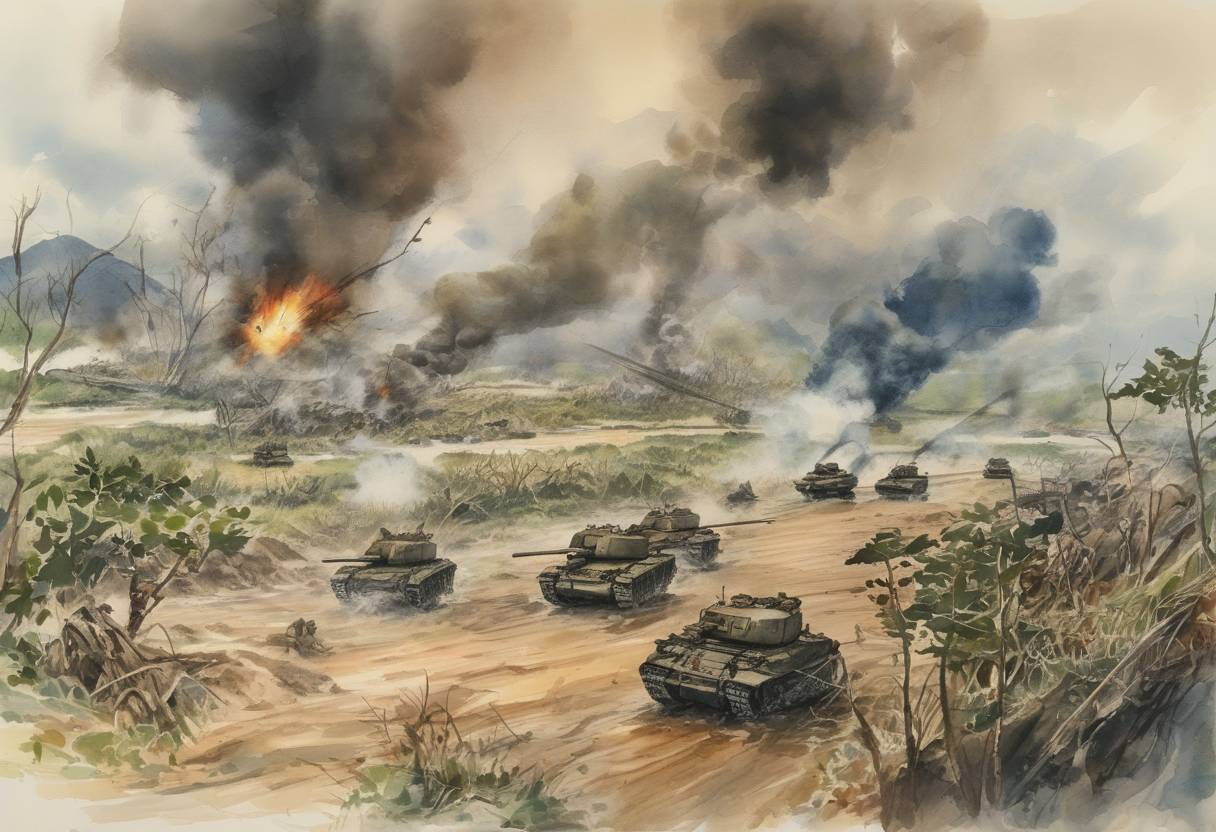
The Battle of Okinawa, which began on April 1, 1945, was one of the largest and bloodiest battles in the Pacific Theater during World War II. This significant military campaign was a pivotal moment in the Allied efforts to defeat Japan, marking the last major battle of the war.
Strategic Importance: Okinawa was strategically crucial due to its proximity to Japan, serving as a potential staging ground for a planned invasion of the Japanese mainland. Its capture was essential for the Allies to establish air bases for operations against Japan.
Allied Forces: The operation was primarily conducted by the United States, with the Tenth Army, commanded by Lieutenant General Simon Bolivar Buckner Jr., leading the assault. The force included both Army and Marine Corps units, totaling around 180,000 troops.
Japanese Defense: The Japanese 32nd Army, commanded by Lieutenant General Mitsuru Ushijima, was tasked with defending the island. The Japanese strategy focused on a protracted defense, utilizing the island’s rugged terrain to their advantage.
Initial Assault: The battle commenced with a massive amphibious landing on April 1, 1945, known as “L-Day.” The initial landings were met with surprisingly light resistance, as Japanese forces had withdrawn to fortified positions inland.
Intense Combat: As the Allies advanced, they encountered fierce resistance, particularly in the southern part of the island. The battle was characterized by brutal ground combat, with significant casualties on both sides.
Kamikaze Attacks: The Japanese employed kamikaze tactics extensively, launching suicide attacks against Allied naval forces. These attacks inflicted severe damage and casualties, highlighting the desperation of the Japanese defense.
Casualties: The Battle of Okinawa resulted in heavy casualties, with over 12,000 American troops killed and more than 36,000 wounded. Japanese military and civilian casualties were even higher, with estimates of over 100,000 military personnel and tens of thousands of civilians killed.
Impact on Japan: The battle demonstrated the potential cost of a mainland invasion, influencing the decision to use atomic weapons in an effort to bring a swift end to the war.
Legacy: The Battle of Okinawa is remembered for its intensity and the high human cost. It underscored the devastating nature of modern warfare and the complexities of amphibious operations.
The battle officially ended on June 22, 1945, with the capture of the island by Allied forces. The victory at Okinawa paved the way for the eventual Allied victory in the Pacific and remains a significant chapter in the history of World War II.
Source: www.history.com