The Launch of BBC Radio Service on November 14, 1922
1922 · London, United Kingdom
The British Broadcasting Company (BBC) begins radio service in the United Kingdom.
February 5, 1924
The Royal Greenwich Observatory begins broadcasting the hourly time signals known as the Greenwich Time Signal or the 'BBC pips.'
London, United Kingdom | Royal Greenwich Observatory
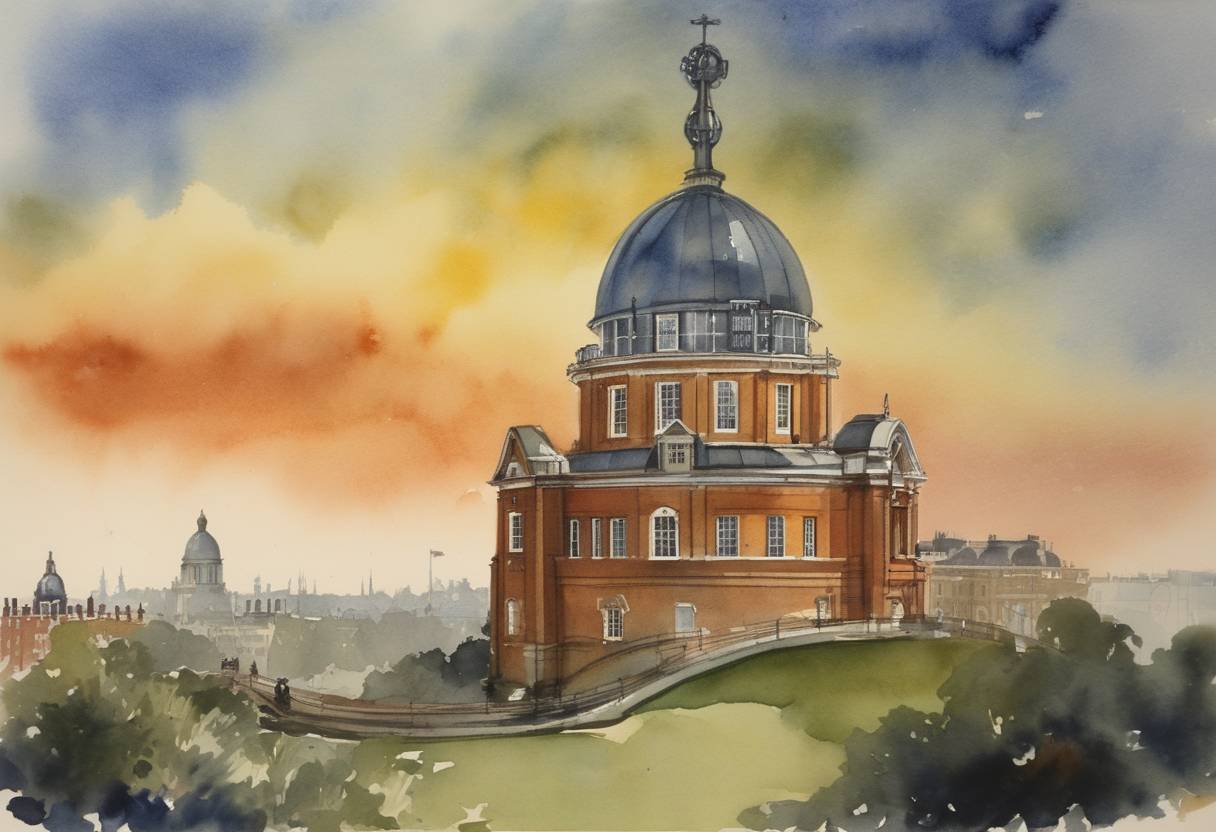
On February 5, 1924, the Royal Greenwich Observatory began broadcasting the hourly time signals known as the Greenwich Time Signal, commonly referred to as the “BBC pips.” This event marked a significant development in the standardization and dissemination of timekeeping, which had profound implications for both broadcasting and daily life in the United Kingdom and beyond.
The need for precise timekeeping became increasingly important with the advent of the industrial age and the expansion of railway networks, which required synchronized schedules. The Royal Greenwich Observatory, established in 1675, had long been a central authority in timekeeping, providing the standard time for the United Kingdom.
The Greenwich Time Signal was introduced as a series of six short tones broadcast at the top of each hour. The first five pips are each one second long, and the sixth pip marks the exact start of the new hour. This auditory signal was designed to provide an accurate time reference for listeners, ensuring that clocks could be set precisely.
The BBC, which had been established only two years earlier in 1922, collaborated with the Royal Greenwich Observatory to broadcast these signals. The introduction of the pips was a technological innovation that underscored the BBC’s commitment to providing accurate and reliable information to the public.
The pips quickly became an iconic feature of BBC radio broadcasts, symbolizing precision and reliability. They played a crucial role during World War II, helping to synchronize operations and broadcasts across different time zones.
The introduction of the Greenwich Time Signal was not just a technical achievement but also a cultural one. It highlighted the importance of standardized time in an increasingly connected world. The pips became a trusted auditory cue for millions, reinforcing the role of the BBC and the Royal Greenwich Observatory as authoritative sources of information.
The broadcasting of the Greenwich Time Signal on February 5, 1924, was a landmark moment in the history of timekeeping and broadcasting. It exemplified the intersection of science, technology, and media, and its legacy continues to be felt today, as the pips remain a familiar sound to radio listeners around the world.
Source: en.wikipedia.org