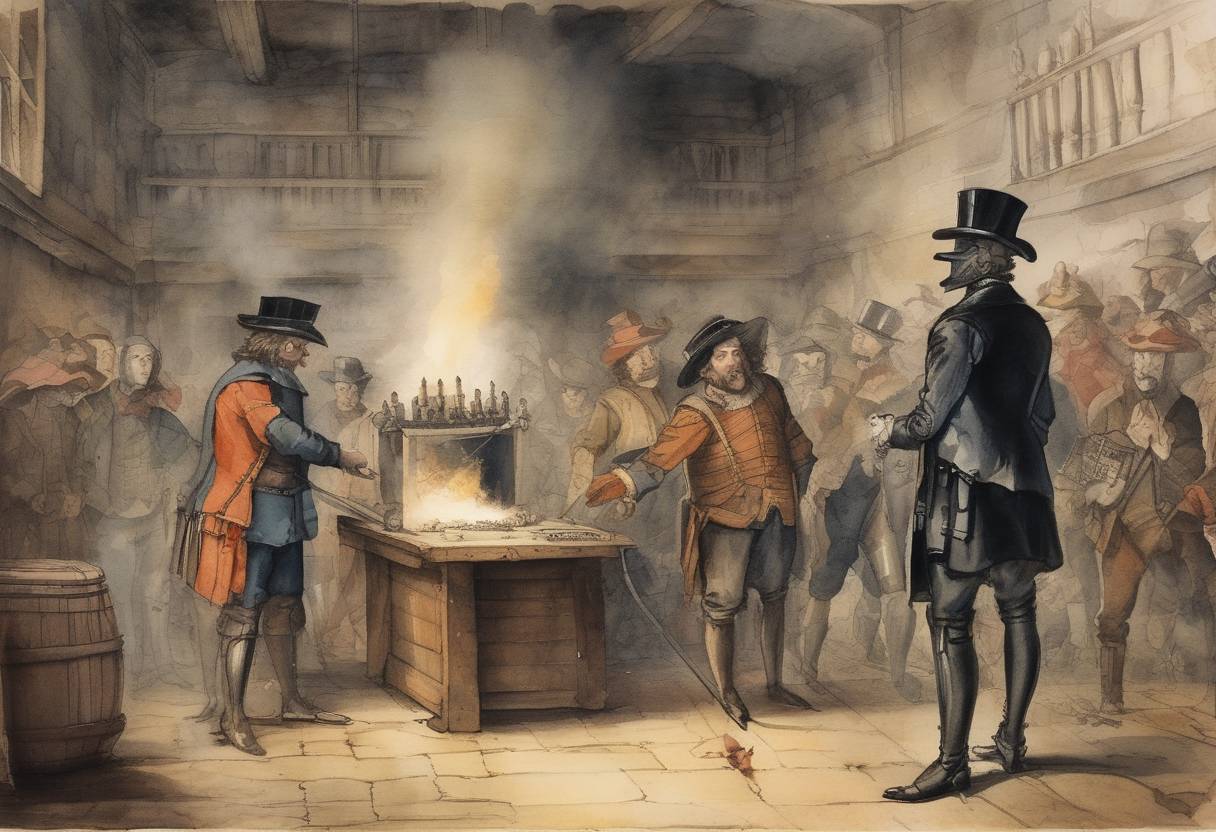
The Gunpowder Plot: Foiling of a Conspiracy on November 5, 1605
The Gunpowder Plot was a significant event in English history, marking a failed attempt by a group of English Catholics to assassinate King James I and blow up the House of Lords. The plot was intended to end Protestant rule in England and replace it with Catholic leadership. The foiling of this conspiracy on November 5, 1605, is commemorated annually as Guy Fawkes Night or Bonfire Night.
Background
In the early 17th century, England was rife with religious tension. Following the Protestant Reformation, Catholics faced persecution under Protestant monarchs. When James I ascended to the throne in 1603, many Catholics hoped for more lenient treatment. However, James continued the enforcement of anti-Catholic laws, leading to disillusionment among some Catholic factions.
The Conspirators
The plot was orchestrated by a group of 13 conspirators, led by Robert Catesby. The plan was to blow up the House of Lords during the State Opening of Parliament, thereby killing the king, his heir, and many members of the Protestant aristocracy. The conspirators aimed to incite a Catholic uprising and install James’s daughter, Princess Elizabeth, as a Catholic monarch.
Guy Fawkes and the Discovery
Guy Fawkes, a Catholic convert and experienced soldier, was tasked with guarding the explosives. The plot involved placing 36 barrels of gunpowder in a cellar beneath the House of Lords. However, the plan was compromised when an anonymous letter, warning a Catholic lord to avoid the opening of Parliament, reached the authorities.
On the night of November 4, 1605, a search of the cellars beneath the House of Lords was conducted. In the early hours of November 5, Guy Fawkes was discovered guarding the explosives. He was arrested, and the gunpowder was seized, effectively foiling the plot.
Aftermath
Following his arrest, Fawkes was tortured and eventually revealed the names of his co-conspirators. The majority of the plotters were captured or killed while resisting arrest. Those who survived were tried and executed for treason in January 1606.
The failure of the Gunpowder Plot had significant repercussions. It led to increased persecution of Catholics in England and the implementation of stricter anti-Catholic laws. The event also reinforced the Protestant establishment and heightened suspicion and fear of Catholic conspiracies.
Historical Significance
The Gunpowder Plot is remembered as a pivotal moment in British history. It is commemorated annually on November 5th with fireworks, bonfires, and the burning of effigies of Guy Fawkes. The event has become a symbol of the struggle between religious factions and the lengths to which individuals might go to achieve political and religious goals.
The phrase “Remember, remember, the Fifth of November” serves as a reminder of the plot and its implications for religious tolerance and political stability in England.