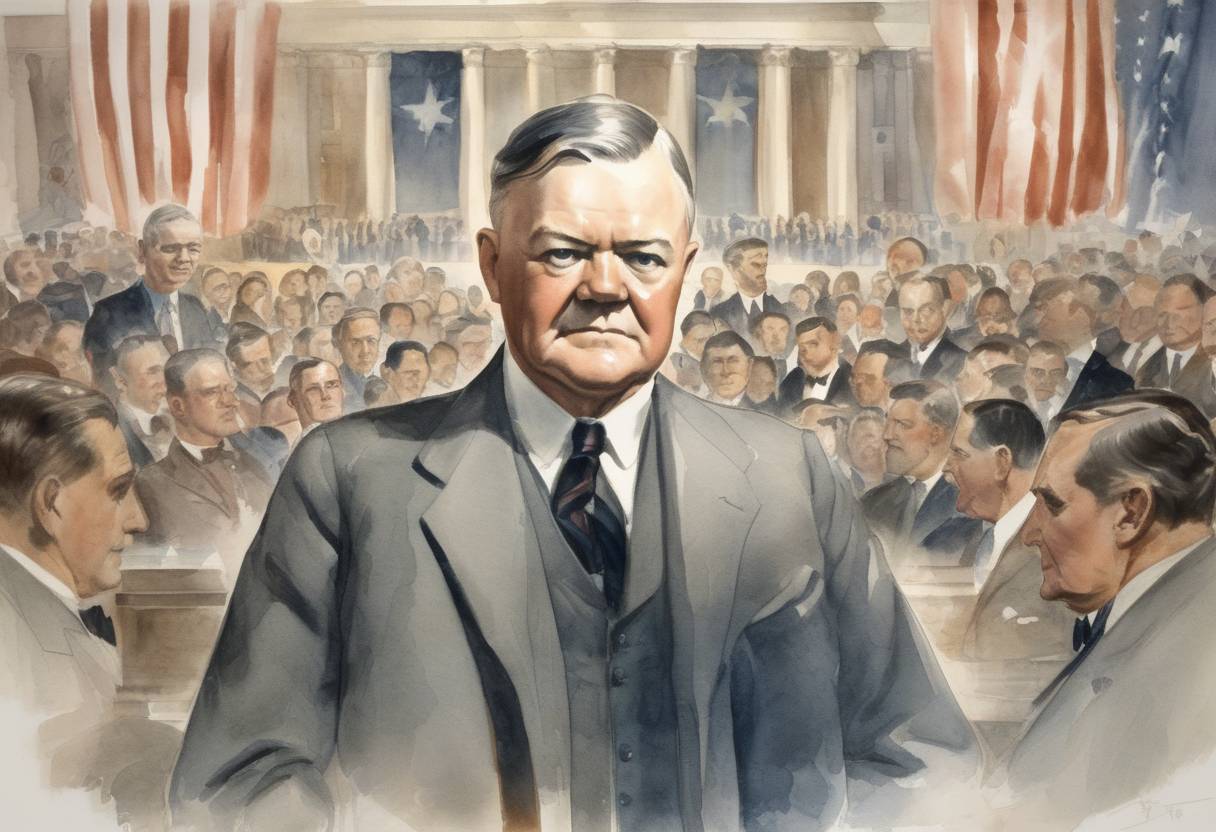
Herbert Hoover Elected as the 31st President of the United States
On November 6, 1928, Herbert Hoover, the Republican candidate, was elected as the 31st President of the United States, defeating the Democratic candidate, Al Smith. This election marked a significant moment in American political history, reflecting the nation’s economic optimism and the cultural tensions of the era.
Background
Herbert Hoover was a well-known figure before his presidential campaign, having served as the Secretary of Commerce under Presidents Warren G. Harding and Calvin Coolidge. His reputation as a successful businessman and humanitarian, particularly for his relief efforts during World War I, bolstered his image as a competent and efficient leader.
Al Smith, the Democratic candidate, was the Governor of New York and the first Roman Catholic to be nominated for the presidency by a major party. His candidacy highlighted the cultural and religious divides in the United States, as Smith faced significant anti-Catholic sentiment during the campaign.
Key Issues and Campaign
The 1928 election occurred during a period of economic prosperity known as the “Roaring Twenties.” The Republican Party, under the leadership of Calvin Coolidge, had presided over a booming economy, and Hoover’s campaign capitalized on this success with the slogan “A chicken in every pot and a car in every garage.”
Hoover’s platform emphasized continued economic growth, technological innovation, and a commitment to maintaining the prosperity of the 1920s. In contrast, Al Smith’s campaign focused on issues such as labor rights, government intervention in the economy, and the repeal of Prohibition, which was a contentious issue at the time.
Election Results
Herbert Hoover won a decisive victory in the 1928 election, securing 444 electoral votes to Al Smith’s 87. Hoover carried 40 states, while Smith won only 8. The popular vote also reflected Hoover’s dominance, with him receiving approximately 58% of the vote compared to Smith’s 41%.
Aftermath and Historical Significance
Hoover’s election was initially seen as a continuation of the economic prosperity of the 1920s. However, his presidency would soon be overshadowed by the onset of the Great Depression, which began with the stock market crash of 1929. Despite his efforts to combat the economic downturn, Hoover’s policies were largely seen as ineffective, leading to widespread criticism and setting the stage for Franklin D. Roosevelt’s New Deal.
The 1928 election also highlighted the cultural and religious tensions in America, as Al Smith’s candidacy faced significant opposition due to his Catholic faith. This election underscored the challenges of religious and cultural diversity in American politics, issues that would continue to evolve throughout the 20th century.
In summary, Herbert Hoover’s election as the 31st President was a reflection of the economic optimism of the late 1920s, but it also foreshadowed the challenges that would soon confront the nation.