1840 · Kaitaia, New Zealand
The Treaty of Waitangi was signed in New Zealand by Māori chiefs and representatives of the British Crown.
January 22, 1840
British colonists reach New Zealand, establishing the settlement of Wellington.
Wellington, New Zealand | British Empire
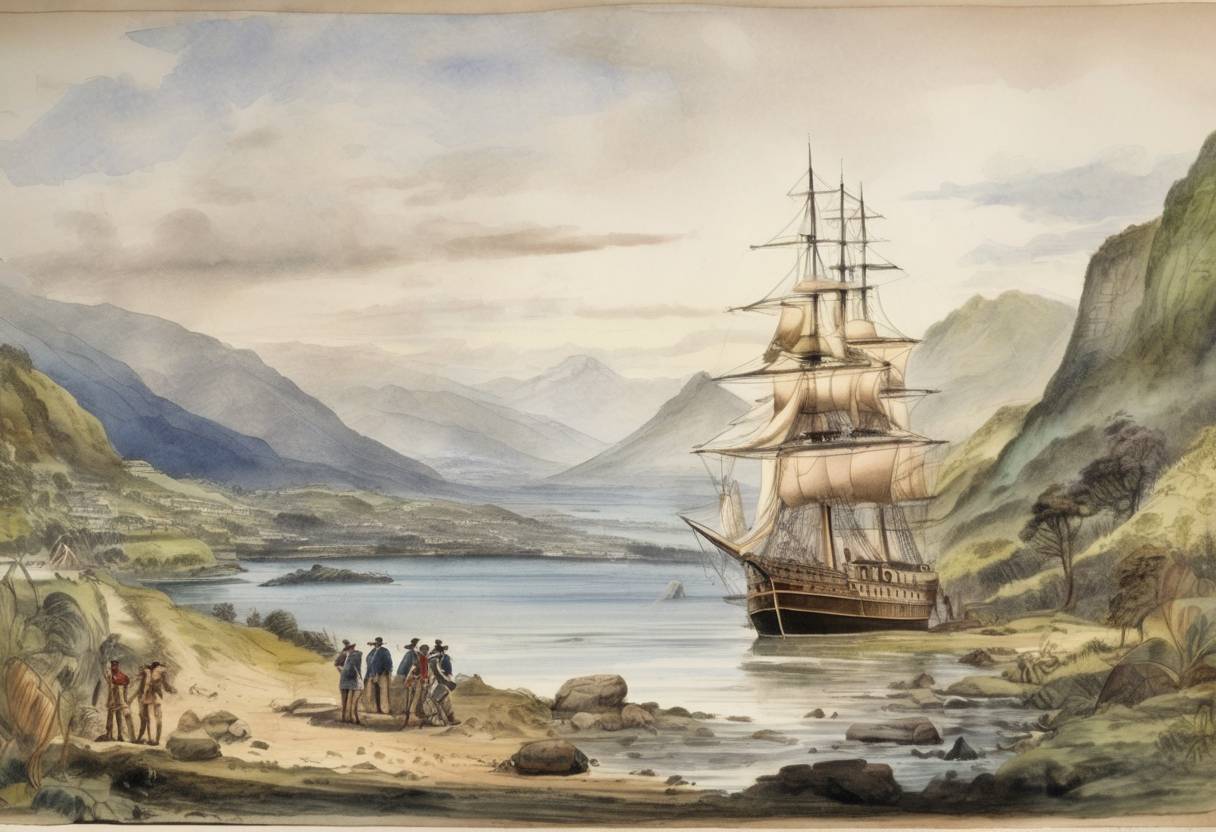
On January 22, 1840, British colonists arrived in New Zealand, marking the establishment of the settlement of Wellington. This event was a significant moment in the history of New Zealand, as it laid the groundwork for the development of one of the country’s major cities.
New Zealand Company: The colonization of Wellington was orchestrated by the New Zealand Company, a British organization founded in 1839 with the aim of promoting the systematic colonization of New Zealand. The company was led by Edward Gibbon Wakefield, who advocated for the planned settlement of British emigrants.
Te Whanganui-a-Tara: Before the arrival of British settlers, the area known today as Wellington was inhabited by the indigenous Māori people. The region was called Te Whanganui-a-Tara, and it was an important site for several Māori iwi (tribes), including the Te Āti Awa, Ngāti Toa, and Ngāti Raukawa.
The Tory: The first ship sent by the New Zealand Company was the Tory, which arrived in New Zealand in September 1839. It was tasked with preparing the way for settlers by negotiating land purchases with Māori chiefs.
The Aurora: On January 22, 1840, the ship Aurora arrived in Port Nicholson (now Wellington Harbour) carrying the first group of British settlers. This marked the official establishment of the settlement that would become Wellington.
Land Purchases: The New Zealand Company negotiated with local Māori chiefs to acquire land for the settlement. However, these transactions were often fraught with misunderstandings and disputes over land ownership, leading to tensions between settlers and Māori.
Growth of Wellington: Despite initial challenges, Wellington grew rapidly. It became a key port and commercial center due to its strategic location on the southern tip of the North Island. The settlement attracted more settlers, contributing to its expansion.
Treaty of Waitangi: Just a few weeks after the establishment of Wellington, the Treaty of Waitangi was signed on February 6, 1840. This treaty between the British Crown and various Māori chiefs aimed to establish British sovereignty while recognizing Māori land rights. However, its interpretation and implementation led to significant legal and social challenges.
Capital City: Wellington was later chosen as the capital of New Zealand in 1865, due to its central location and growing importance as a political and economic hub.
Cultural Impact: The establishment of Wellington marked a significant moment in the colonial history of New Zealand, influencing the cultural and demographic landscape of the region. It also set the stage for ongoing interactions and negotiations between Māori and European settlers.
The founding of Wellington is a pivotal chapter in New Zealand’s history, reflecting the complexities of colonial expansion and its enduring impact on the nation’s development.
Source: en.wikipedia.org