1116 · Shaizar, Syria
King Baldwin I of Jerusalem defeated Turkish forces at the Battle of Shaizar.
December 4, 1110
The Crusaders capture Sidon, a city in modern-day Lebanon, during the First Crusade.
Sidon, Lebanon | Crusaders
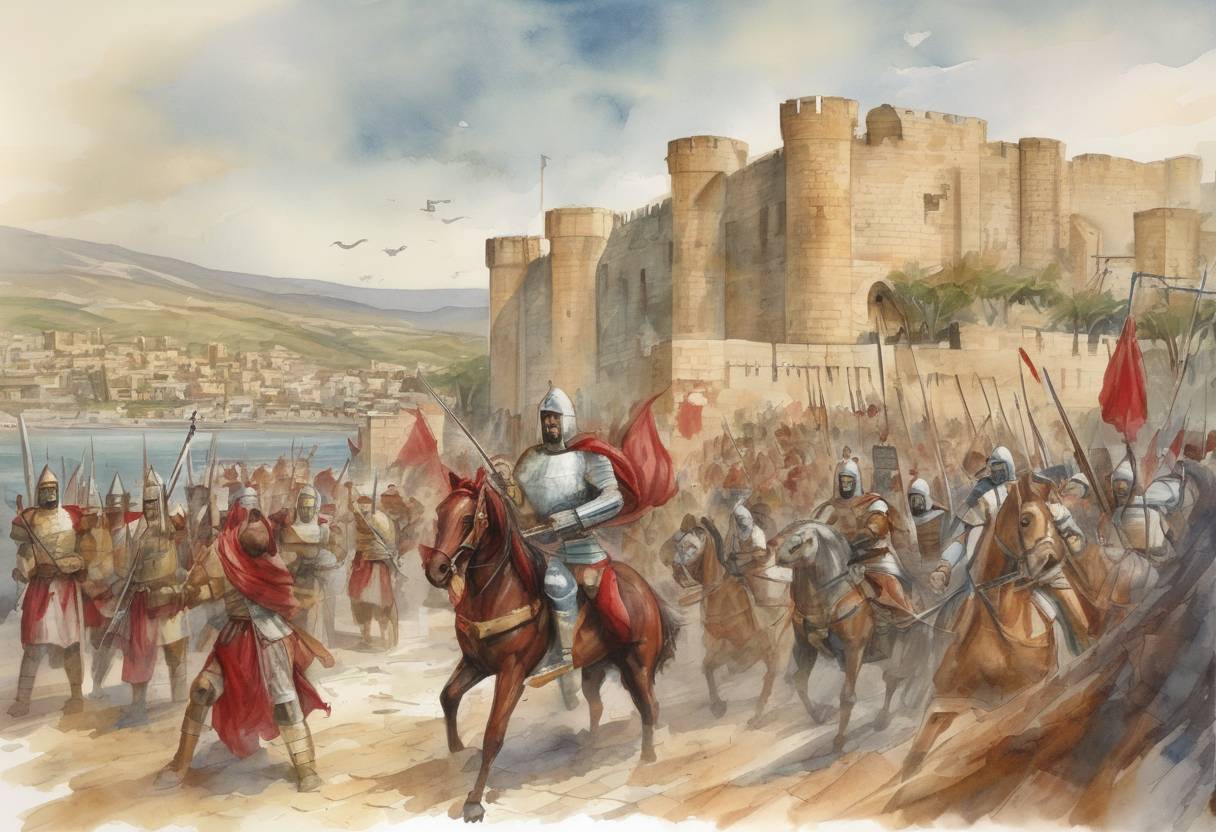
On December 4, 1110, during the period of the Crusades, the city of Sidon, located in present-day Lebanon, fell to the Crusaders. This event was part of the broader context of the First Crusade, which was a series of military campaigns initiated by Western European Christians to reclaim the Holy Land from Muslim control.
The First Crusade began in 1096, following Pope Urban II’s call to aid the Byzantine Empire against Turkish expansion and to reclaim Jerusalem. By 1099, the Crusaders had successfully captured Jerusalem, establishing several Crusader states in the Levant, including the Kingdom of Jerusalem.
The capture of Sidon was part of the Crusaders’ efforts to secure their holdings along the Mediterranean coast. Control of coastal cities was crucial for maintaining supply lines and ensuring the arrival of reinforcements and pilgrims from Europe.
The siege of Sidon was a coordinated effort involving both land and naval forces. The Crusader army, led by King Baldwin I of Jerusalem, was supported by a fleet provided by the Norwegian king, Sigurd I, who had arrived in the region with a contingent of Norsemen. The naval blockade played a critical role in cutting off Sidon’s access to supplies and reinforcements from the sea.
The siege lasted for approximately a month. The defenders, primarily Muslim forces, were unable to withstand the combined assault from both land and sea. On December 4, 1110, Sidon capitulated to the Crusaders.
The capture of Sidon was significant for several reasons:
Strategic Importance: Sidon’s fall further secured the Crusader states’ control over the Levantine coast, enhancing their ability to receive support from Europe and maintain their presence in the region.
Political Alliances: The successful cooperation between Baldwin I and King Sigurd I of Norway exemplified the international nature of the Crusades, with various European powers contributing to the effort.
Impact on Local Populations: As with many sieges during the Crusades, the capture of Sidon had dire consequences for its inhabitants, including displacement and changes in governance.
Broader Crusader Campaigns: The capture of Sidon was part of a series of campaigns aimed at consolidating Crusader control over key coastal cities, which included the earlier capture of Acre in 1104 and the subsequent capture of Tyre in 1124.
The capture of Sidon marked another step in the Crusaders’ efforts to establish a lasting presence in the Holy Land, although their hold on the region would face numerous challenges in the ensuing decades.
Source: en.wikipedia.org