Henry I Crowned King of England
1100 · London, England
Henry I was crowned King of England at Westminster Abbey.
September 26, 1087
William II is crowned King of England, succeeding his father, William the Conqueror.
Westminster, England | Kingdom of England
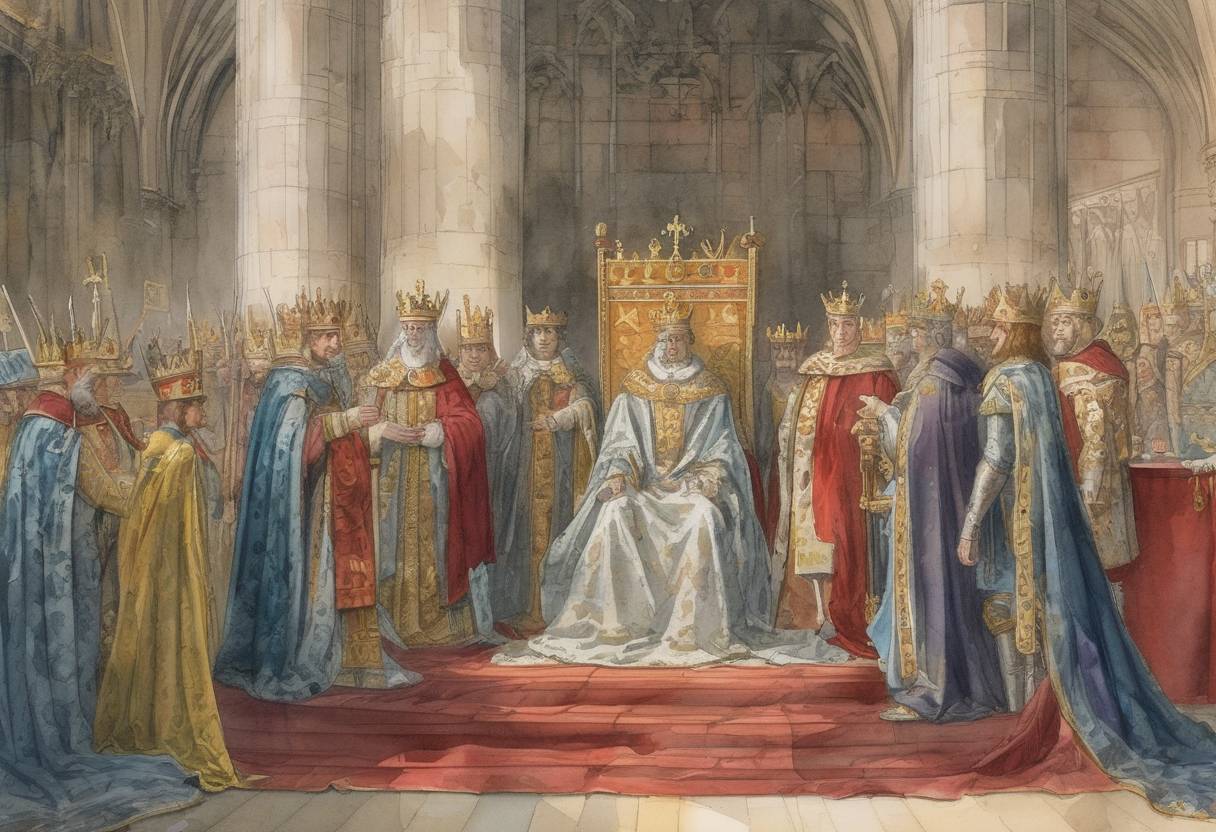
On September 26, 1087, William II, also known as William Rufus, was crowned King of England at Westminster Abbey. He succeeded his father, William the Conqueror, who had established Norman rule in England following his victory at the Battle of Hastings in 1066.
William the Conqueror’s Reign: William I, known as William the Conqueror, was the first Norman King of England. His reign marked significant changes in English society, including the introduction of Norman feudalism and the construction of numerous castles to consolidate his power.
Succession: Upon William the Conqueror’s death on September 9, 1087, his vast territories were divided among his sons. William Rufus was granted the Kingdom of England, while his elder brother, Robert Curthose, received the Duchy of Normandy. Their younger brother, Henry, received a monetary inheritance.
Ceremony: William II’s coronation took place at Westminster Abbey, a significant site for English coronations. The ceremony was conducted by Lanfranc, the Archbishop of Canterbury, who had been a close advisor to William the Conqueror.
Challenges: William’s accession was not without challenges. His brother Robert Curthose contested his right to the English throne, leading to tensions between the two siblings. This rivalry would later result in conflicts over control of Normandy and England.
Governance: Known for his red hair and ruddy complexion, earning him the nickname “Rufus,” William II’s reign was marked by efforts to consolidate royal power and expand his influence over the church and nobility.
Military Campaigns: William II engaged in several military campaigns to assert control over his territories, including efforts to subdue rebellions in England and assert dominance over Wales and Scotland.
Church Relations: His reign was characterized by strained relations with the church, particularly due to his attempts to exert control over ecclesiastical appointments and revenues.
Death: William II’s reign ended abruptly when he died under mysterious circumstances on August 2, 1100, during a hunting expedition in the New Forest. His death was officially recorded as an accident, but suspicions of foul play have persisted.
Succession: William II was succeeded by his younger brother, Henry I, who quickly seized the throne and worked to stabilize the kingdom.
Historical Impact: William II’s reign is often viewed as a period of consolidation following the Norman Conquest, setting the stage for the continued development of the English monarchy and its institutions.
William II’s coronation and subsequent reign were pivotal in shaping the early Norman influence in England, continuing the legacy of his father while navigating the complex dynamics of medieval European politics.
Source: en.wikipedia.org