The Treaty of Plessis-les-Tours - June 26, 1579
1579 · Plessis-les-Tours, France
The Treaty of Plessis-les-Tours was signed, forming the foundation of the Union of Utrecht that would lead to the independence of the Dutch Republic from Spanish rule.
January 25, 1579
The Treaty of Utrecht is signed, marking the foundation of the Dutch Republic.
Utrecht, Netherlands | Dutch Republic
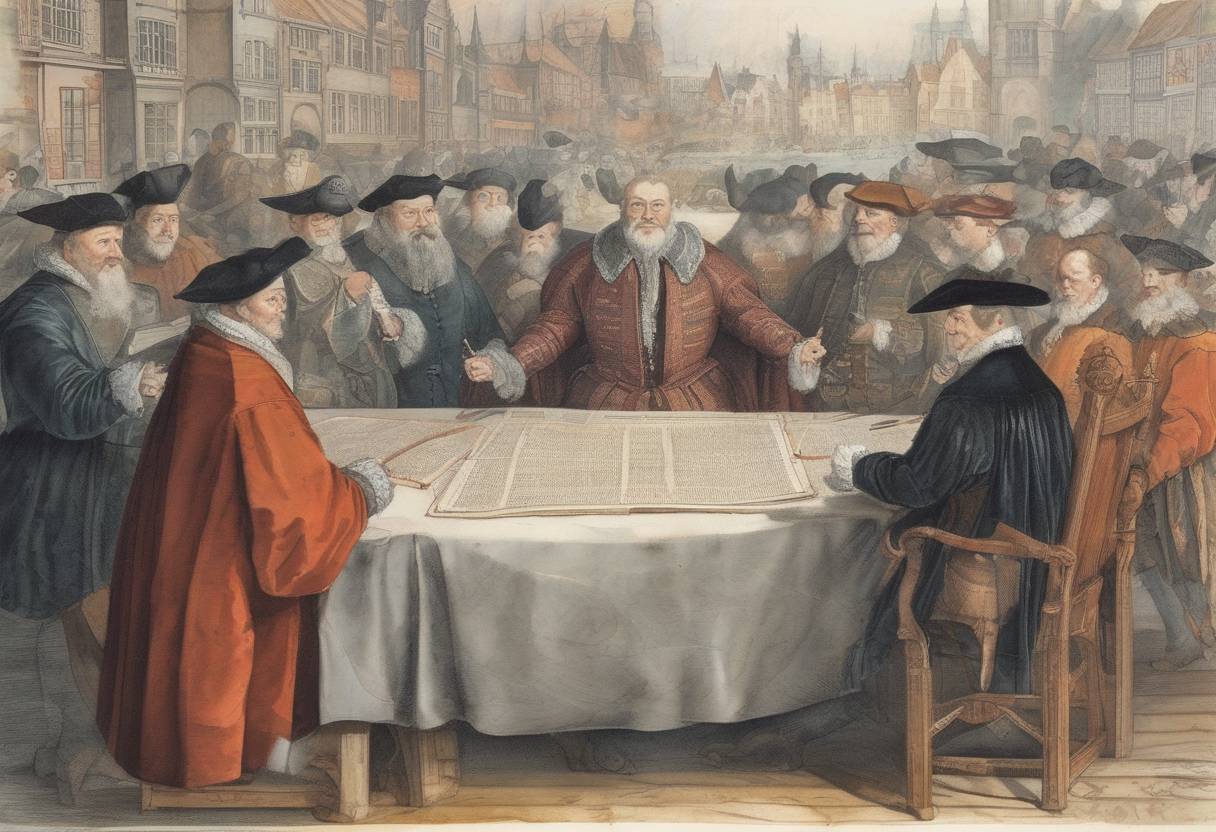
On January 25, 1579, the Treaty of Utrecht was signed, marking a pivotal moment in European history as it laid the foundation for the Dutch Republic. This treaty was a crucial step in the Eighty Years’ War (1568–1648), a protracted conflict between the Spanish Empire and the provinces of the Low Countries.
The Low Countries, comprising modern-day Belgium, Luxembourg, and the Netherlands, were under the rule of the Spanish Habsburgs. The region was experiencing growing discontent due to heavy taxation, religious persecution of Protestants by the Catholic Spanish monarchy, and a desire for greater political autonomy.
The Eighty Years’ War began as a revolt against Spanish rule, with the northern provinces seeking independence. The Union of Utrecht, which resulted from the treaty, was a response to the earlier Union of Arras (January 1579), where southern provinces pledged loyalty to the Spanish crown.
Alliance Formation: The Treaty of Utrecht established a defensive alliance among several northern provinces, including Holland, Zeeland, Utrecht, Gelderland, and Friesland. This alliance was primarily aimed at resisting Spanish control and promoting Protestantism.
Religious Tolerance: While the treaty favored Protestantism, it also allowed for a degree of religious tolerance, which was a significant departure from the religious uniformity enforced by the Spanish.
Political Autonomy: The treaty laid the groundwork for a confederation of provinces, each retaining significant autonomy but united in their struggle against Spanish rule.
Foundation of the Dutch Republic: The Union of Utrecht is often considered the founding document of the Dutch Republic, which would later become a major European power, known for its economic prosperity and cultural achievements during the Dutch Golden Age.
Prolonged Conflict: The treaty did not immediately end the conflict with Spain. The Eighty Years’ War continued until the Peace of Westphalia in 1648, which finally recognized the independence of the Dutch Republic.
Influence on European Politics: The Union of Utrecht set a precedent for federalism and religious tolerance, influencing political thought and future governance models in Europe.
The Treaty of Utrecht was a significant step towards the independence of the Dutch Republic, shaping the political landscape of Europe and contributing to the decline of Spanish dominance in the region.
Source: en.wikipedia.org