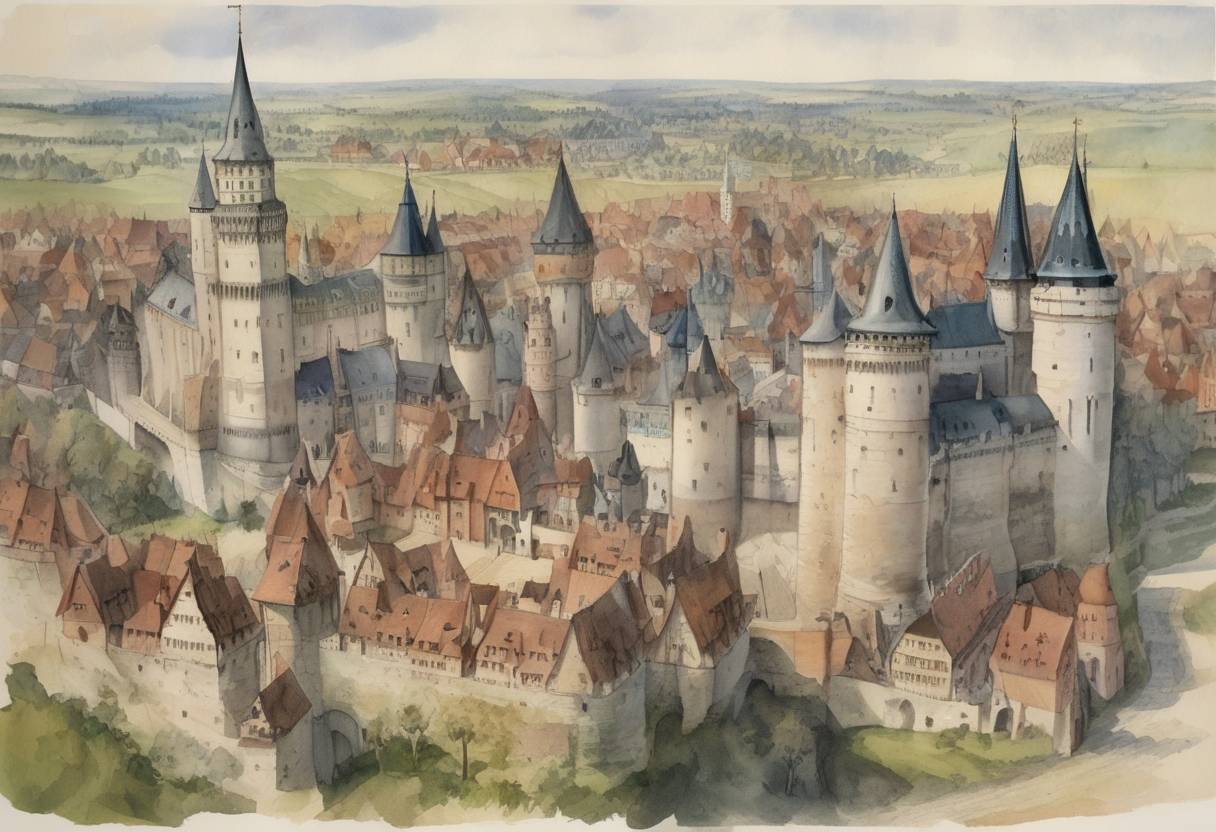
On September 15, 1440, a significant political alliance known as the Prussian Confederation was formed. This coalition consisted of various Prussian cities and members of the gentry who united in opposition to the rule of the Teutonic Knights, a powerful military and religious order that had dominated the region for over a century.
Historical Context
The Teutonic Knights, originally established during the Crusades, had established a formidable state in the Baltic region by the 13th century. They controlled large swathes of territory in what is now modern-day Poland and the Baltic states. Over time, their rule became increasingly autocratic and burdensome, leading to widespread discontent among the local populace, including the cities and the nobility.
Key Grievances
- Economic Strain: The Teutonic Knights imposed heavy taxes and trade restrictions, which stifled the economic prosperity of the cities.
- Political Oppression: The Knights maintained strict control over political affairs, limiting the autonomy of local leaders and the gentry.
- Cultural Tensions: There was a growing sense of national identity among the Prussian people, who felt culturally distinct from their Teutonic rulers.
The Prussian Confederation was formed as a response to these grievances. It was a coalition of various stakeholders, including:
- Cities: Major urban centers such as Danzig (Gdańsk), Elbing (Elbląg), and Thorn (Toruń) played a crucial role in the confederation.
- Nobility: Local nobles who were dissatisfied with the Knights’ rule joined forces with the cities to push for greater autonomy and rights.
The confederation sought to negotiate better terms with the Teutonic Order, aiming for more self-governance and economic freedoms. However, their demands were largely ignored, setting the stage for further conflict.
Consequences and Historical Significance
The formation of the Prussian Confederation marked the beginning of a significant power struggle in the region. It eventually led to the Thirteen Years’ War (1454–1466) between the Prussian Confederation, supported by the Kingdom of Poland, and the Teutonic Knights. The war concluded with the Second Peace of Thorn in 1466, which significantly reduced the power of the Teutonic Order and resulted in the incorporation of western Prussia into the Kingdom of Poland.
Broader Impact
- Shift in Power: The decline of the Teutonic Knights marked a shift in the balance of power in the Baltic region, paving the way for the rise of Poland and Lithuania as dominant forces.
- Cultural Integration: The events contributed to the cultural and political integration of Prussian territories into the Polish-Lithuanian Commonwealth.
- Legacy of Resistance: The Prussian Confederation is remembered as an early example of collective resistance against oppressive rule, highlighting the importance of civic and noble alliances in shaping regional politics.
In summary, the formation of the Prussian Confederation on September 15, 1440, was a pivotal moment in the history of the Baltic region, setting off a chain of events that would reshape the political landscape of Eastern Europe.