1831 · Southampton County, United States
Nat Turner's slave rebellion begins in Southampton County, Virginia, leading to the deaths of approximately 60 white people and the execution of about 55 black people.
October 30, 1831
In Southampton County, Virginia, Nat Turner, leader of a slave rebellion, is captured and arrested.
Southampton County, United States | local authorities
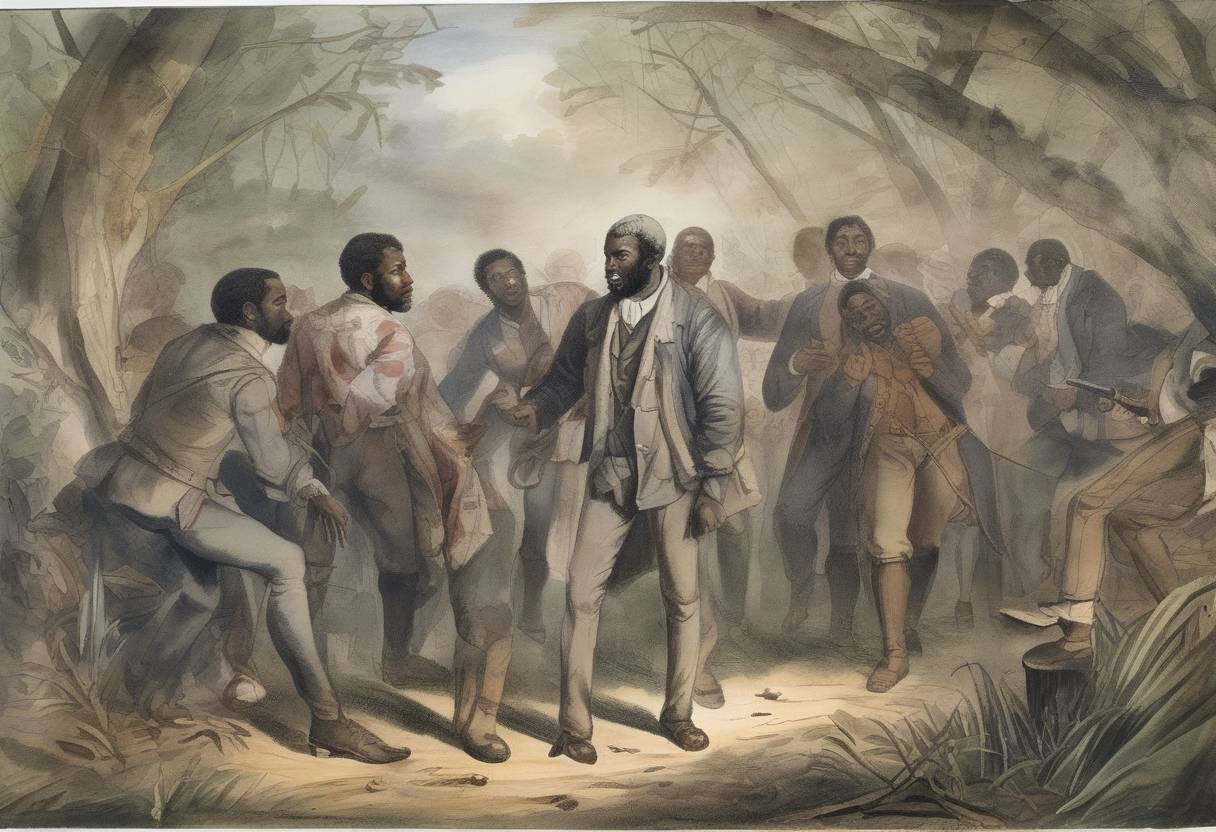
On October 30, 1831, Nat Turner, the leader of a significant slave rebellion, was captured and arrested in Southampton County, Virginia. This event marked a pivotal moment in the history of American slavery and resistance.
Nat Turner was an enslaved African American preacher who believed he was chosen by God to lead his people out of bondage. On August 21, 1831, Turner initiated a rebellion that became one of the most notable slave uprisings in American history. The revolt began in Southampton County, Virginia, and involved a group of enslaved and free Black men who moved from plantation to plantation, freeing slaves and killing approximately 55 to 65 white people.
The rebellion lasted for two days before being suppressed by local militias and federal troops. In the aftermath, widespread panic ensued among the white population, leading to the execution of many African Americans, some of whom were not involved in the rebellion. The state of Virginia, and other Southern states, responded by enacting stricter laws governing the behavior of enslaved and free Black people, including prohibiting education, restricting assembly, and curtailing religious practices.
After the rebellion was quashed, Nat Turner managed to evade capture for over two months. His arrest on October 30, 1831, occurred after he was discovered hiding in a hole covered with fence rails. Following his capture, Turner was tried and convicted of “conspiring to rebel and making insurrection.” He was executed by hanging on November 11, 1831.
Nat Turner’s rebellion had profound effects on the United States. It intensified the national debate over slavery, contributing to the growing tensions between the Northern and Southern states. The rebellion also inspired future generations of African Americans to fight for freedom and justice, becoming a symbol of resistance against the oppressive system of slavery.
In summary, the capture of Nat Turner on October 30, 1831, marked the end of a significant chapter in the struggle against slavery in America, highlighting the desperate and courageous efforts of those who resisted their subjugation.
Source: en.wikipedia.org