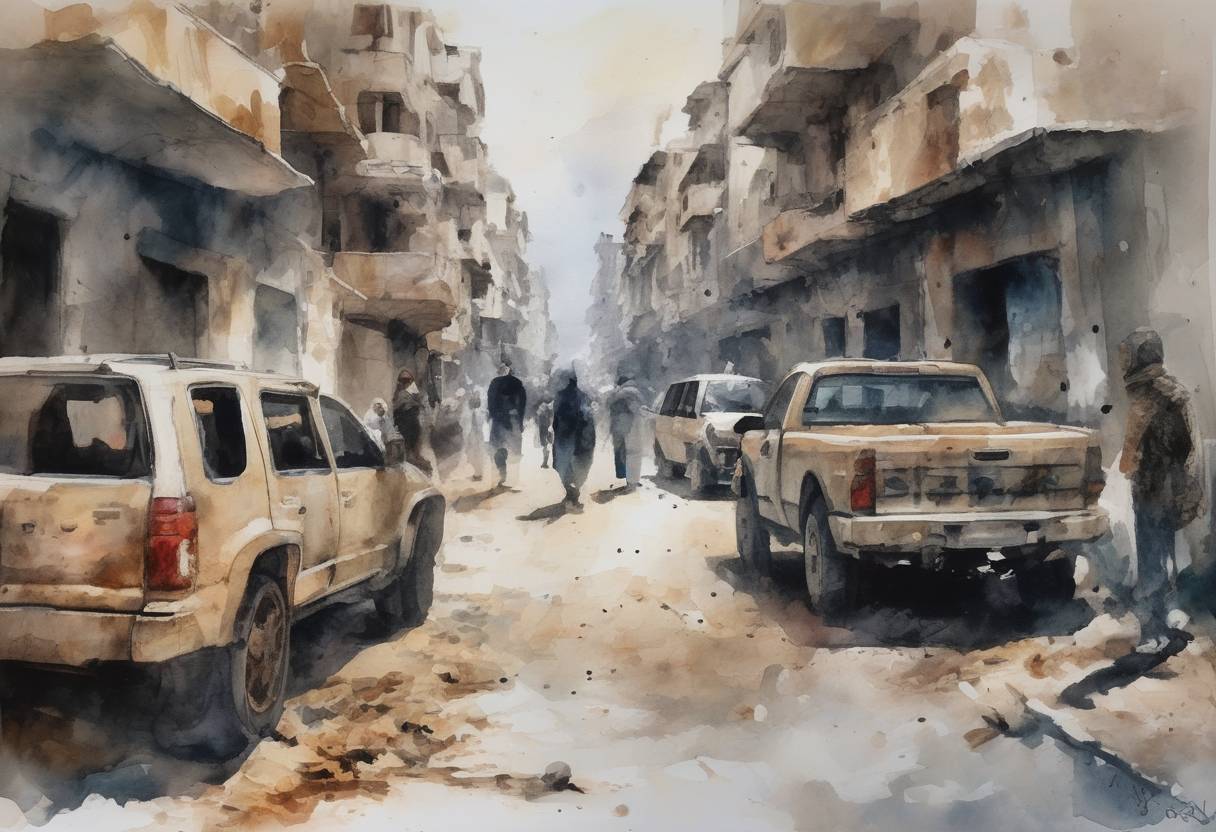
Syrian Civil War Death Toll Surpasses 191,000 - August 26, 2014
On August 26, 2014, the United Nations released a report indicating that the death toll from the Syrian Civil War had exceeded 191,000 people. This grim milestone underscored the severe humanitarian crisis that had been unfolding in Syria since the conflict began in 2011.
Background
The Syrian Civil War erupted in March 2011, following a wave of protests against the government of President Bashar al-Assad. These protests were part of the broader Arab Spring movement, which saw citizens across the Middle East and North Africa demand political reform and greater freedoms. In Syria, the government’s harsh crackdown on demonstrators quickly escalated into a full-scale civil war, drawing in various domestic and international actors.
Key Events Leading to the Report
Escalation of Violence: The conflict rapidly evolved from peaceful protests to an armed rebellion, with numerous factions emerging, including the Free Syrian Army, Kurdish groups, and Islamist factions such as ISIS and the Al-Nusra Front.
International Involvement: The war attracted significant international involvement, with countries like Russia and Iran supporting the Assad regime, while the United States, Turkey, and several Gulf states provided varying levels of support to opposition groups.
Humanitarian Impact: By 2014, the war had caused widespread destruction and displacement, with millions of Syrians fleeing their homes. The humanitarian situation was dire, with shortages of food, water, and medical supplies.
The UN Report
The UN report, based on data collected from various sources, highlighted the staggering human cost of the conflict. It noted that the actual death toll was likely higher due to underreporting and the difficulty of verifying casualties in a war-torn country.
- Civilian Casualties: A significant portion of the casualties were civilians, including women and children, who were caught in the crossfire or targeted in attacks.
- War Crimes and Human Rights Violations: The report also documented numerous instances of war crimes and human rights violations committed by all parties involved in the conflict.
Aftermath and Broader Significance
The report served as a stark reminder of the urgent need for a political solution to the conflict. Despite international efforts, including peace talks and ceasefire agreements, the war continued to rage on, with devastating consequences for the Syrian population.
- Continued Conflict: The war persisted for several more years, with fluctuating levels of violence and shifting alliances.
- Global Refugee Crisis: The conflict contributed significantly to the global refugee crisis, with millions of Syrians seeking asylum in neighboring countries and beyond.
The UN’s report on August 26, 2014, highlighted the immense human suffering caused by the Syrian Civil War and underscored the challenges of achieving peace in a deeply divided region.