The Battle of Chrysopolis: Constantine's Consolidation of Power
324 · Chrysopolis, Roman Empire
Constantine the Great defeated Licinius in the Battle of Chrysopolis, consolidating his control over the Roman Empire.
July 1, 0251
The Battle of Abrittus takes place, where the Goths defeat the Roman army and kill Emperor Decius.
Abrittus, Roman Empire | Roman Army
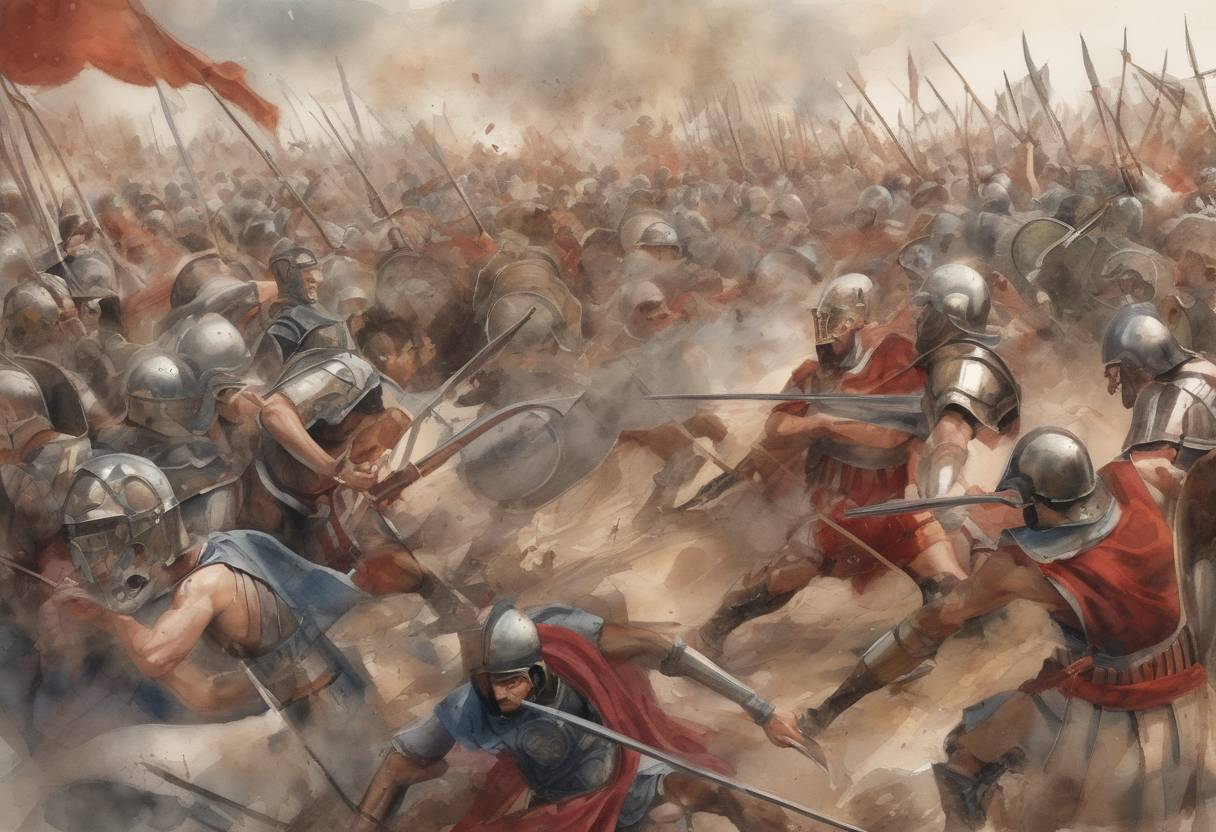
The Battle of Abrittus, fought on July 1, 251, was a significant conflict between the Roman Empire and the Gothic tribes. This battle marked a pivotal moment in Roman history, as it resulted in the defeat of the Roman army and the death of Emperor Decius, making him the first Roman emperor to die in battle against a foreign enemy.
During the mid-3rd century, the Roman Empire was experiencing a period of crisis characterized by political instability, economic troubles, and external threats. The Goths, a confederation of Germanic tribes, had been pressuring the Roman borders, particularly along the Danube River. In response to these incursions, Emperor Decius, who had ascended to the throne in 249, sought to restore stability and assert Roman dominance.
The battle unfolded disastrously for the Romans. The Gothic forces managed to lure the Roman army into a swampy area, where the Roman legions found themselves at a disadvantage. During the chaotic engagement, both Emperor Decius and his son were killed. The loss of the emperor on the battlefield was a severe blow to Roman morale and leadership.
The Battle of Abrittus remains a significant event in Roman history, illustrating the challenges faced by the empire during a time of profound transformation and turmoil.
Source: en.wikipedia.org