Establishment of the Republic of China
1912 · Nanjing, China
The Republic of China was officially established, marking the end of the Qing Dynasty.
October 10, 1911
The Xinhai Revolution begins in China with the Wuchang Uprising, leading to the fall of the Qing Dynasty and the establishment of the Republic of China.
Wuchang, China | Revolutionary Alliance
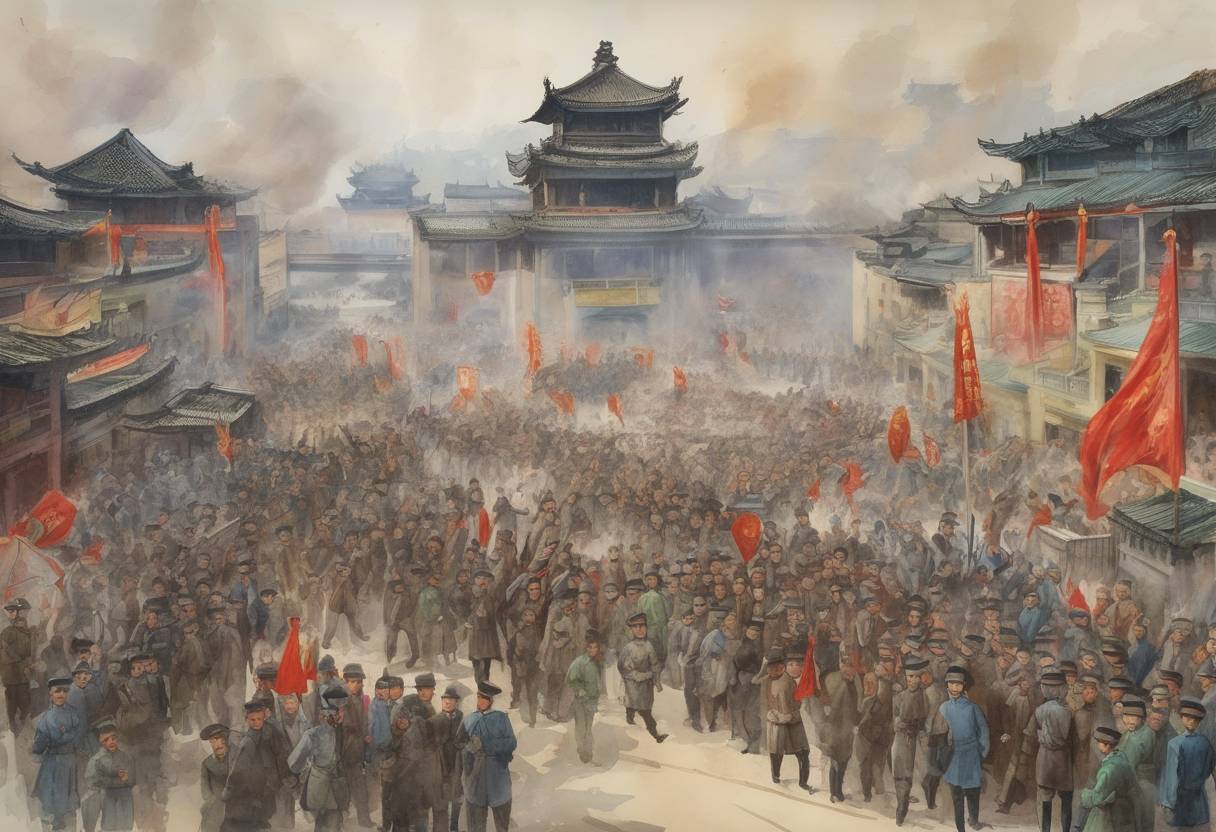
The Xinhai Revolution, which began with the Wuchang Uprising on October 10, 1911, was a pivotal event in Chinese history that led to the fall of the Qing Dynasty and the establishment of the Republic of China. The Qing Dynasty, which had ruled since 1644, faced numerous internal and external challenges by the early 20th century. These included:
The Wuchang Uprising was the catalyst for the Xinhai Revolution. It occurred in the city of Wuchang, which is part of modern-day Wuhan, Hubei Province. The uprising was initiated by members of the New Army, a military force that had been influenced by revolutionary ideas. Key factors leading to the uprising included:
On October 10, 1911, the revolutionaries in Wuchang seized control of the city, marking the beginning of a series of uprisings across China.
The Wuchang Uprising quickly spread to other provinces, leading to a nationwide revolution. Key outcomes included:
The Xinhai Revolution was a turning point in Chinese history, as it marked the transition from imperial rule to a republic. It laid the groundwork for future political developments in China, including the rise of the Nationalist Party (Kuomintang) and the Chinese Communist Party. The revolution also inspired other anti-colonial and nationalist movements across Asia.
In summary, the Wuchang Uprising on October 10, 1911, was a crucial event that set in motion the end of the Qing Dynasty and the establishment of the Republic of China, reshaping the political landscape of the nation and influencing the course of 20th-century Chinese history.
Source: en.wikipedia.org