Capture of Fort Donelson: February 16, 1862
1862 · Fort Donelson, United States
American Civil War: General Ulysses S. Grant captures Fort Donelson, Tennessee.
June 3, 1861
The Battle of Philippi, known as the first organized land action of the American Civil War, takes place in present-day West Virginia.
Philippi, United States | Union Army
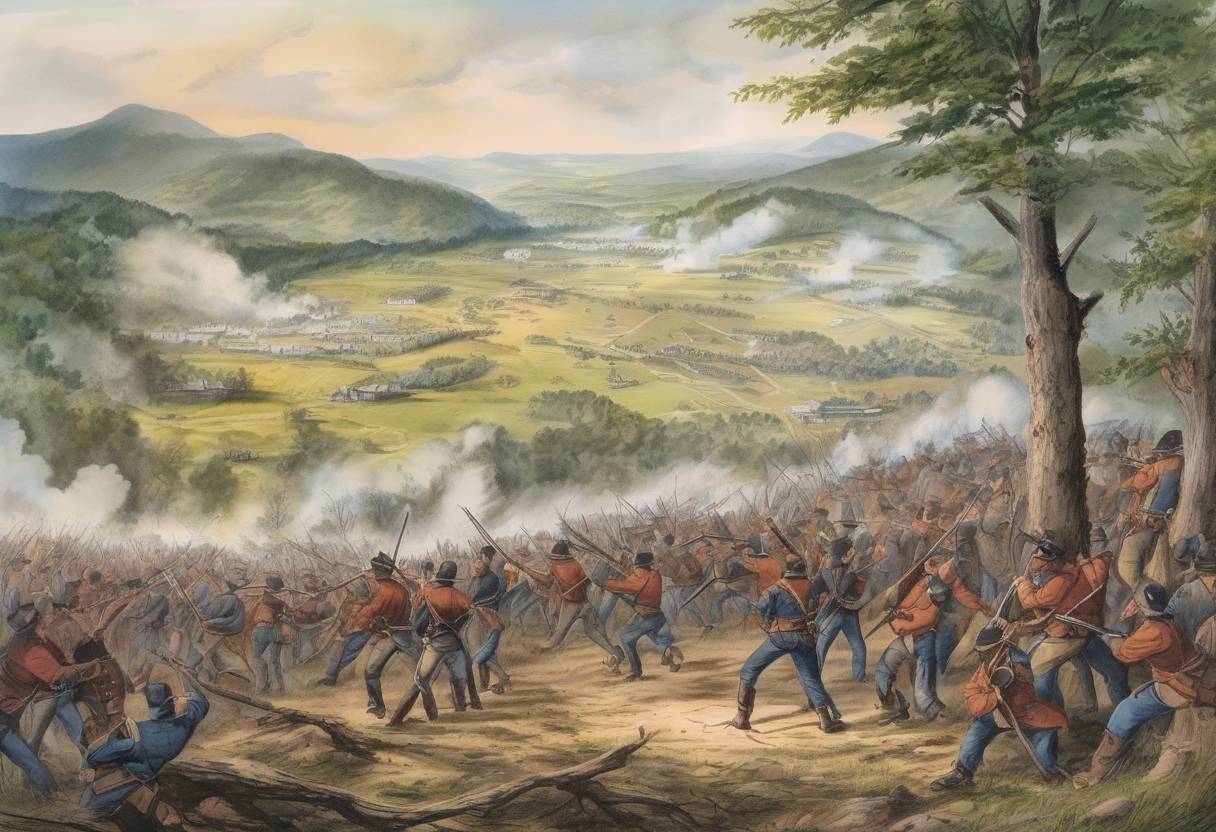
The Battle of Philippi, often referred to as the “Philippi Races,” was a significant early engagement in the American Civil War. It took place on June 3, 1861, in what is now West Virginia. This battle is notable for being one of the first organized land actions of the Civil War, setting the stage for future conflicts.
Secession and Tensions: Following the secession of Southern states and the attack on Fort Sumter in April 1861, tensions were high across the United States. Virginia, a key state due to its strategic location and resources, seceded from the Union on April 17, 1861.
Western Virginia’s Unionist Sentiment: The western region of Virginia, however, harbored strong Unionist sentiments. Many residents opposed secession and sought to remain loyal to the Union, leading to the eventual creation of West Virginia in 1863.
Strategic Importance: The town of Philippi was strategically important due to its location on the Baltimore and Ohio Railroad, a vital supply line for the Union. Control of this area was crucial for both Union and Confederate forces.
Union Forces: The Union forces were led by Colonel Benjamin Franklin Kelley and Colonel Ebenezer Dumont. They comprised approximately 3,000 troops, including the 1st West Virginia Infantry and the 16th Ohio Infantry.
Confederate Forces: The Confederate forces, numbering around 800, were under the command of Colonel George A. Porterfield. They were primarily composed of newly recruited and poorly equipped soldiers.
The Engagement: The Union forces executed a surprise attack on the Confederate camp at Philippi in the early morning hours of June 3. The attack was well-coordinated, with Union troops advancing from multiple directions.
Outcome: The Confederate forces, caught off guard, quickly retreated in disarray. The rapid withdrawal of Confederate troops led to the engagement being dubbed the “Philippi Races.” The Union forces suffered minimal casualties, while the Confederates had a few wounded and captured.
Union Victory: The Union victory at Philippi bolstered morale and demonstrated the effectiveness of coordinated military action. It also helped secure the region for the Union and paved the way for further operations in western Virginia.
Impact on West Virginia: The battle contributed to the Union’s control over the region, which was crucial in the formation of the state of West Virginia in 1863.
Military Lessons: The engagement highlighted the importance of logistics, communication, and surprise in military operations, lessons that would be applied in subsequent battles throughout the Civil War.
The Battle of Philippi, while small in scale, played a crucial role in the early stages of the Civil War and had lasting implications for the region and the broader conflict.
Source: en.wikipedia.org