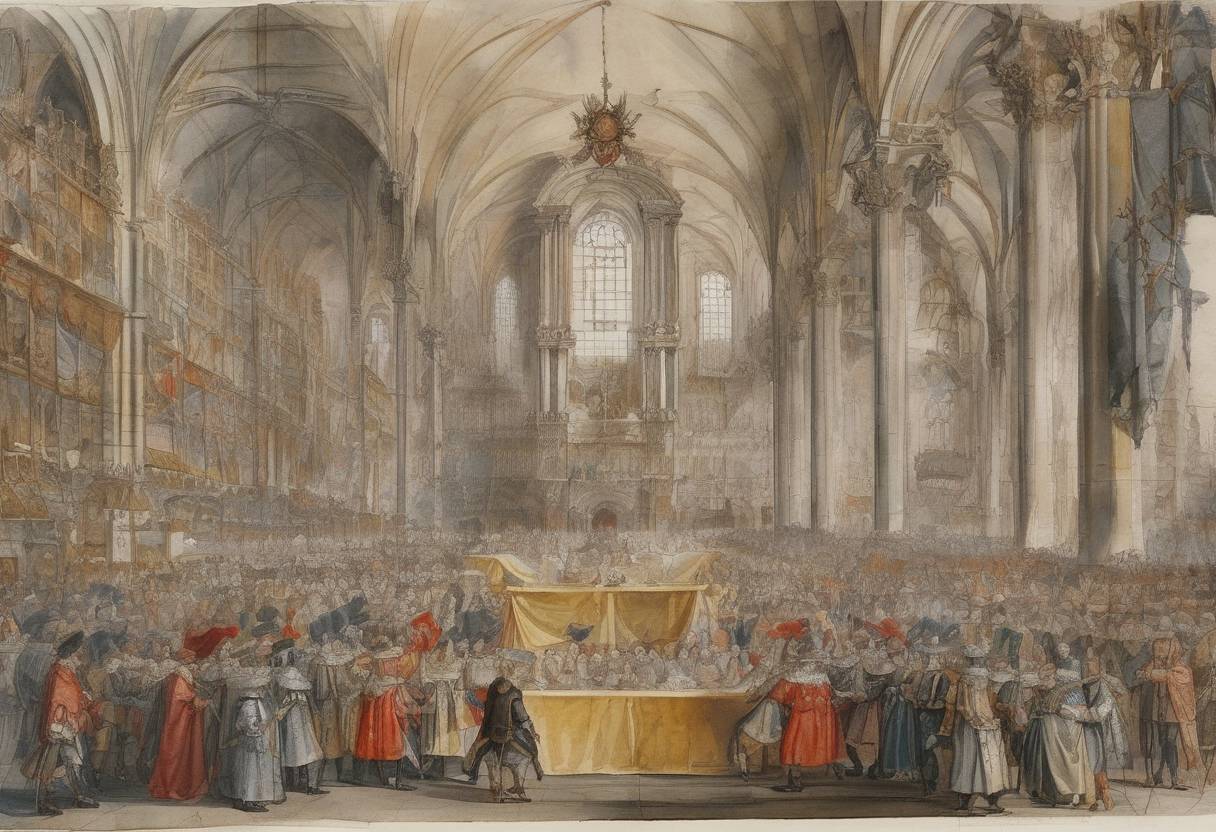
The Treaty of Münster: Ending the Eighty Years’ War
On May 15, 1648, the Treaty of Münster was signed, marking a significant milestone in European history by ending the Eighty Years’ War between Spain and the Dutch Republic. This treaty was part of the broader Peace of Westphalia, which also concluded the Thirty Years’ War, reshaping the political landscape of Europe.
Context and Background
The Eighty Years’ War (1568-1648): This protracted conflict was primarily a struggle for independence by the Dutch provinces against Spanish rule. The war was driven by religious, economic, and political factors, with the Protestant Dutch seeking freedom from the Catholic Habsburg monarchy of Spain.
The Peace of Westphalia: A series of treaties that ended both the Thirty Years’ War in the Holy Roman Empire and the Eighty Years’ War. The negotiations took place in the Westphalian cities of Münster and Osnabrück.
Key Provisions of the Treaty
Recognition of Independence: The treaty formally recognized the sovereignty of the Dutch Republic, marking its emergence as an independent nation-state.
Territorial Adjustments: The treaty confirmed the territorial status quo, with the Spanish retaining control over the Southern Netherlands (modern-day Belgium), while the Dutch Republic maintained its territories in the north.
Economic and Trade Agreements: The treaty included provisions for the resumption of trade between the two nations, which had been severely disrupted by the war.
Significance and Consequences
End of Spanish Dominance: The treaty marked a decline in Spanish influence in Northern Europe and a shift in power towards the Dutch Republic, which would become a major economic and maritime power in the 17th century.
Religious and Political Implications: The treaty contributed to the recognition of religious and political pluralism in Europe, setting a precedent for the coexistence of Protestant and Catholic states.
Foundation for Modern Diplomacy: The Peace of Westphalia, including the Treaty of Münster, is often cited as the beginning of the modern international system of sovereign states, emphasizing the principles of territorial integrity and non-interference.
The Treaty of Münster was a pivotal moment in European history, not only bringing an end to decades of conflict but also laying the groundwork for the development of the modern state system and international law.