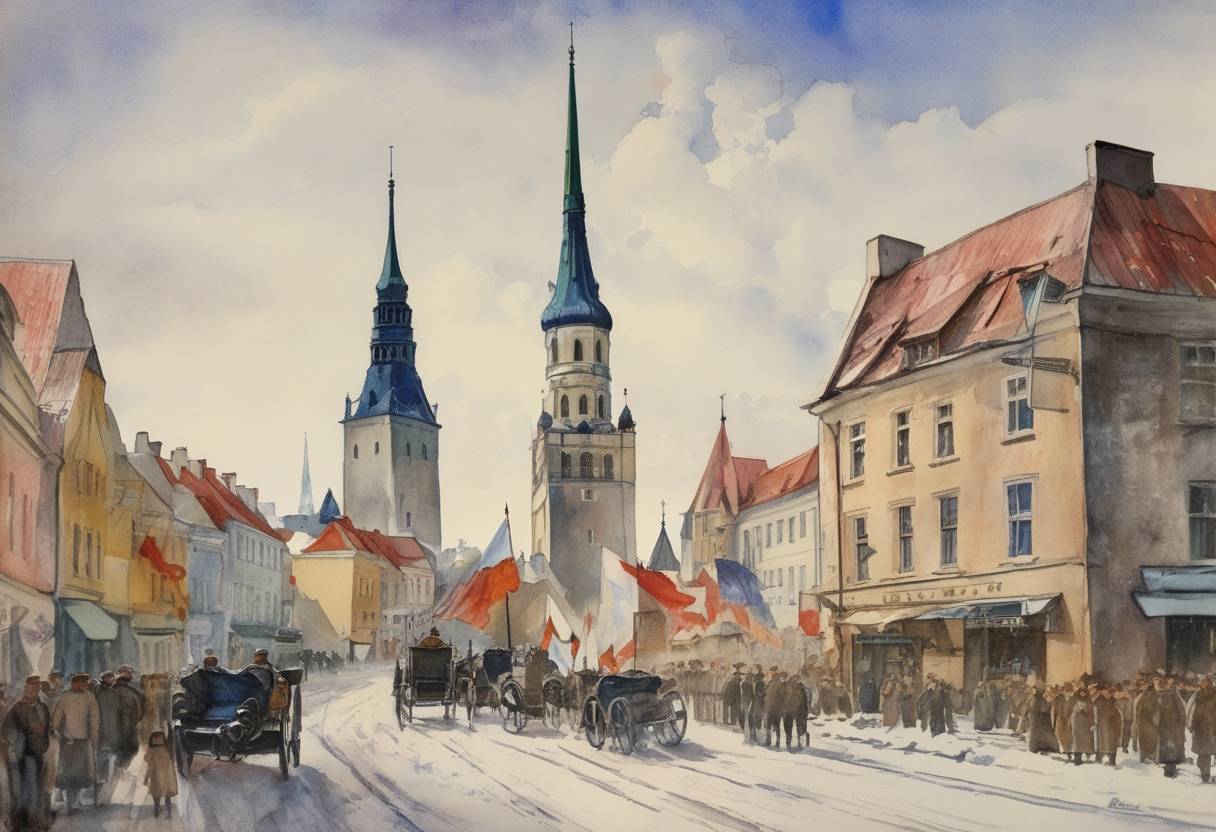
Estonia Declares Independence: February 24, 1918
On February 24, 1918, Estonia declared its independence from Russia, a pivotal moment that marked the beginning of the Estonian War of Independence. This declaration came amidst the tumultuous backdrop of World War I and the Russian Revolution, which had significantly weakened Russian control over its territories.
Historical Context
World War I and the Russian Revolution
- World War I (1914-1918): The war had a profound impact on the Russian Empire, draining its resources and destabilizing its political structure.
- Russian Revolution (1917): The February Revolution led to the abdication of Tsar Nicholas II, and the October Revolution brought the Bolsheviks to power. These events caused significant upheaval and created a power vacuum in the Baltic region.
Estonia’s Path to Independence
- National Awakening: The late 19th and early 20th centuries saw a rise in Estonian nationalism, with increased cultural and political activities aimed at asserting Estonian identity.
- Autonomy Efforts: During the Russian Provisional Government’s rule in 1917, Estonia was granted limited autonomy, forming the Estonian Provincial Assembly (Maapäev).
Declaration of Independence
- February 24, 1918: The Estonian Salvation Committee, formed by members of the Maapäev, issued the “Manifesto to All Peoples of Estonia,” declaring Estonia an independent and democratic republic.
- Manifesto’s Key Points: The manifesto emphasized the right to self-determination, the establishment of a democratic government, and the protection of civil liberties.
The Estonian War of Independence
- German Occupation: Shortly after the declaration, German forces occupied Estonia as part of their advance on the Eastern Front. This delayed the full realization of independence.
- War of Independence (1918-1920): Following the end of World War I, Estonia fought against both Bolshevik Russia and Baltic German forces to secure its sovereignty.
- Tartu Peace Treaty: On February 2, 1920, the Treaty of Tartu was signed, with Soviet Russia recognizing Estonia’s independence.
Aftermath and Significance
- International Recognition: Estonia’s independence was gradually recognized by major world powers, solidifying its status as a sovereign nation.
- Legacy: The declaration laid the foundation for Estonia’s national identity and its future as an independent state, despite subsequent occupations during World War II.
The declaration of independence on February 24, 1918, remains a cornerstone of Estonian history, celebrated annually as Independence Day, symbolizing the resilience and determination of the Estonian people in their quest for self-determination and sovereignty.