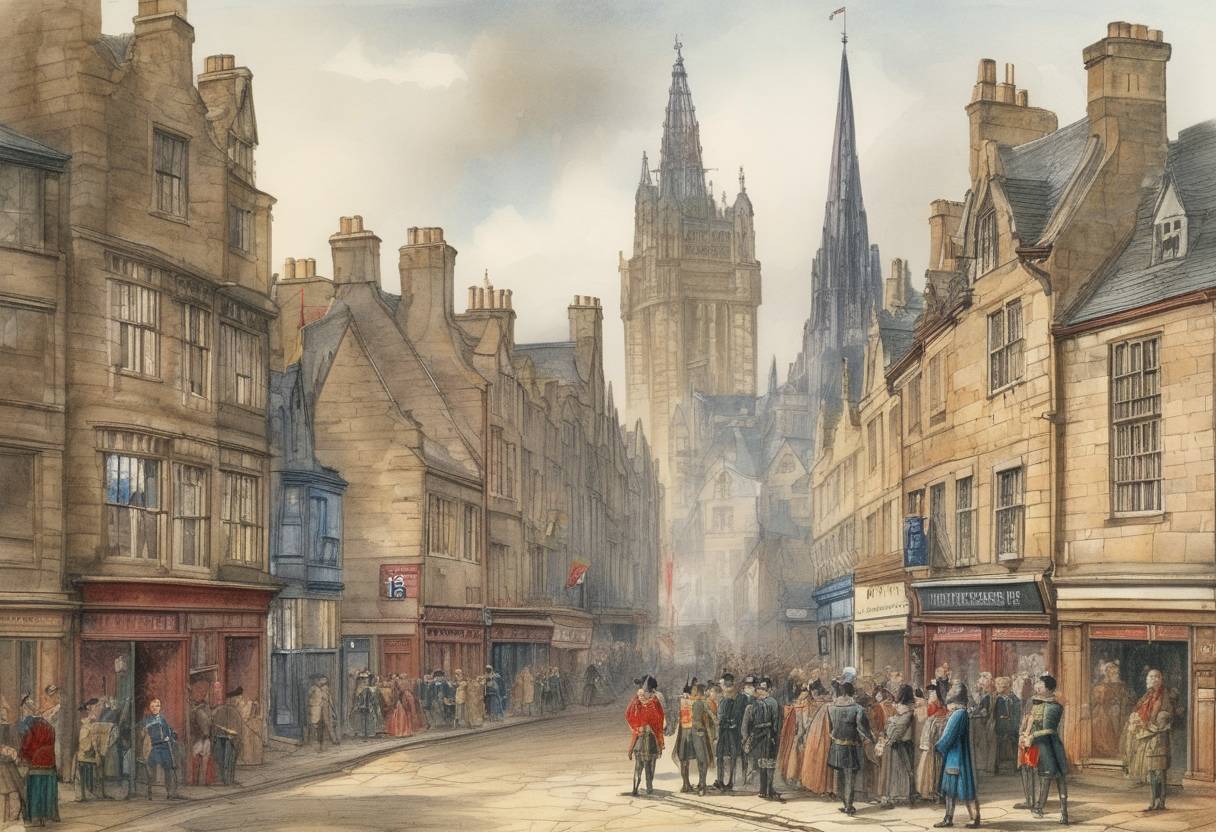
The Treaty of Edinburgh-Northampton: Ratification on May 26, 1328
On May 26, 1328, a significant milestone in the history of Scotland and England was achieved with the ratification of the Treaty of Edinburgh-Northampton. This treaty marked the formal recognition of Scotland’s independence from English claims, concluding a protracted period of conflict known as the First War of Scottish Independence.
Historical Context
The roots of the conflict date back to the late 13th century when the English crown sought to assert dominance over Scotland. The death of the Scottish king, Alexander III, in 1286 and the subsequent demise of his heir, Margaret, Maid of Norway, in 1290, left a power vacuum. This led to a succession crisis and provided an opportunity for King Edward I of England to intervene, eventually leading to the Wars of Scottish Independence.
The war saw significant figures such as William Wallace and Robert the Bruce emerge as leaders of the Scottish resistance. Robert the Bruce’s victory at the Battle of Bannockburn in 1314 was a pivotal moment that bolstered Scottish morale and weakened English control.
The Treaty
The Treaty of Edinburgh-Northampton was negotiated between the representatives of King Robert I of Scotland (Robert the Bruce) and King Edward III of England. The treaty was signed in Edinburgh in March 1328 and ratified by the English Parliament in Northampton on May 26, 1328.
Key Provisions
- Recognition of Independence: England formally recognized Scotland as an independent kingdom, and Robert the Bruce as its legitimate king.
- Borders: The treaty confirmed the borders between Scotland and England as they were before the outbreak of the war.
- Marriage Alliance: To solidify peace, a marriage was arranged between Robert the Bruce’s son, David, and Joan of the Tower, the sister of Edward III.
- Financial Compensation: England agreed to pay a substantial sum as reparations for the war.
Aftermath and Significance
The Treaty of Edinburgh-Northampton was a landmark in Scottish history, affirming its sovereignty after years of struggle. However, the peace was short-lived. The treaty was unpopular in England, and tensions persisted. In 1332, the Second War of Scottish Independence began, as Edward Balliol, with English support, attempted to claim the Scottish throne.
Despite its temporary nature, the treaty remains a symbol of Scotland’s enduring fight for self-determination and its impact on the national identity. It also highlights the complex and often contentious relationship between Scotland and England, which has evolved over centuries.
The Treaty of Edinburgh-Northampton is a testament to the resilience of the Scottish people and their leaders in the face of external pressures, and it laid the groundwork for future negotiations and treaties between the two nations.