Jesse James' First Confirmed Bank Robbery: Gallatin, Missouri, December 7, 1869
1869 · Gallatin, United States
American outlaw Jesse James commits his first confirmed bank robbery in Gallatin, Missouri.
April 3, 1882
Outlaw Jesse James was shot and killed by Robert Ford.
St. Joseph, United States | James-Younger Gang
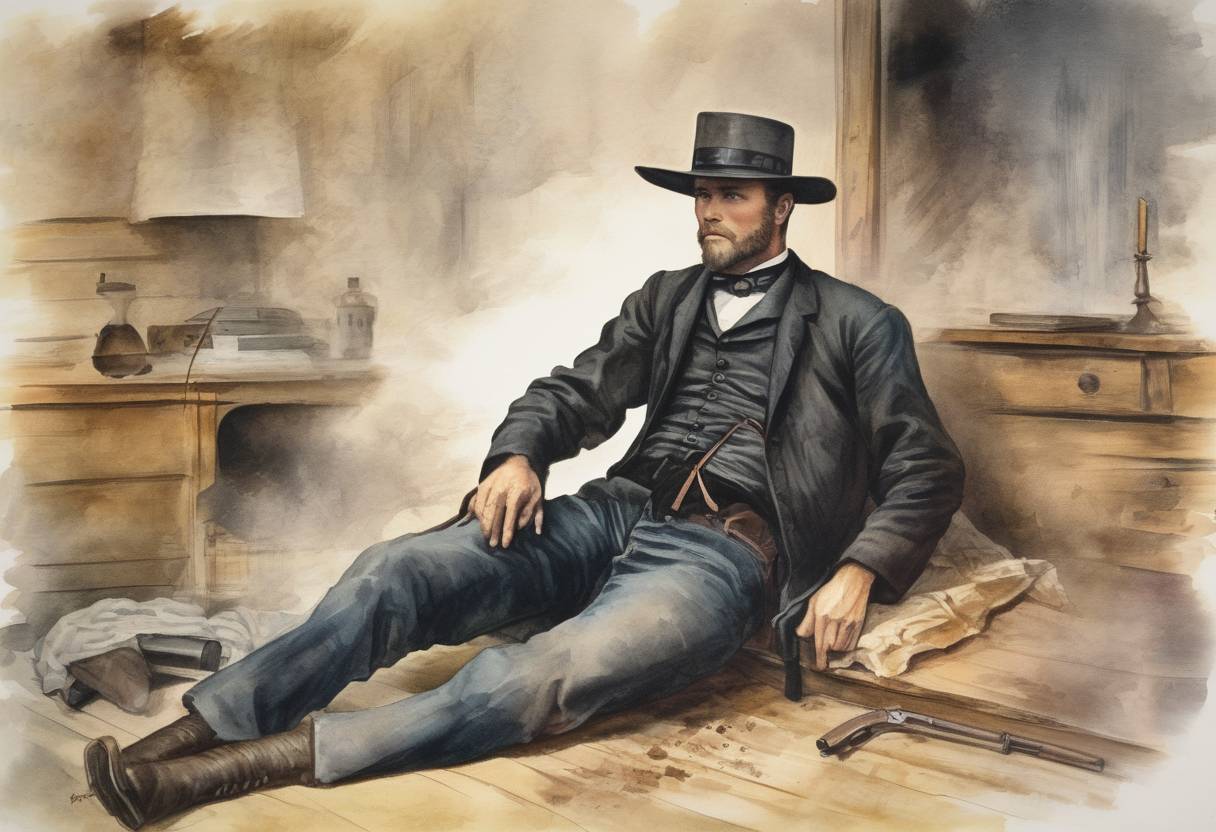
On April 3, 1882, the infamous American outlaw Jesse James was shot and killed by Robert Ford in St. Joseph, Missouri. This event marked the end of the notorious James-Younger Gang’s reign and has since become a significant moment in the folklore of the American West.
Jesse James, born on September 5, 1847, in Clay County, Missouri, became one of the most famous outlaws in American history. Along with his brother Frank James, Jesse led the James-Younger Gang, which was responsible for numerous bank and train robberies across the Midwest during the late 1860s and 1870s. The gang’s activities were partly fueled by Jesse’s Confederate sympathies, as he had fought as a guerrilla during the Civil War.
By the early 1880s, the gang’s numbers had dwindled due to arrests, deaths, and defections. The James brothers were living under assumed names, and Jesse, in particular, was growing increasingly paranoid about betrayal.
Robert Ford, along with his brother Charley, had joined the James Gang in 1881. However, Robert Ford had secretly made a deal with Missouri Governor Thomas T. Crittenden to capture or kill Jesse James in exchange for a reward and a promised pardon for his own criminal activities.
On the morning of April 3, 1882, Jesse James was at his home in St. Joseph, Missouri, with the Ford brothers. As the story goes, Jesse, perhaps sensing something amiss, removed his gun belt and turned to adjust a picture on the wall. Seizing the opportunity, Robert Ford shot Jesse in the back of the head with a .44 caliber revolver, killing him instantly.
The killing of Jesse James was met with mixed reactions. While some hailed Robert Ford as a hero for ending the career of a notorious outlaw, others viewed him as a coward for shooting James in the back. Ford’s actions earned him the nickname “The Coward Robert Ford,” a moniker that would follow him for the rest of his life.
Ford and his brother Charley were initially charged with murder but were quickly pardoned by Governor Crittenden. Despite the pardon and the reward money, Robert Ford struggled with his notoriety and was eventually killed in 1892 in a barroom brawl in Colorado.
The death of Jesse James marked the decline of the outlaw era in the American West. His life and death have been romanticized in numerous books, songs, and films, contributing to the mythos of the Wild West. The story of his assassination, in particular, has been immortalized in popular culture, most notably in the 2007 film “The Assassination of Jesse James by the Coward Robert Ford.”
Jesse James remains a complex figure in American history, symbolizing both the rebellious spirit of the frontier and the darker aspects of lawlessness and violence.
Source: www.history.com