The Jamestown Massacre of March 22, 1622
1622 · Jamestown, Colony of Virginia
The Jamestown massacre took place, where Algonquian warriors killed 347 English settlers, a third of the colony's population, in and around Jamestown, Virginia.
April 5, 1614
Pocahontas, daughter of the Powhatan chief, married English colonist John Rolfe in Virginia, which helped establish peace between the settlers and the Powhatan Confederacy.
Jamestown, United States | Powhatan Confederacy
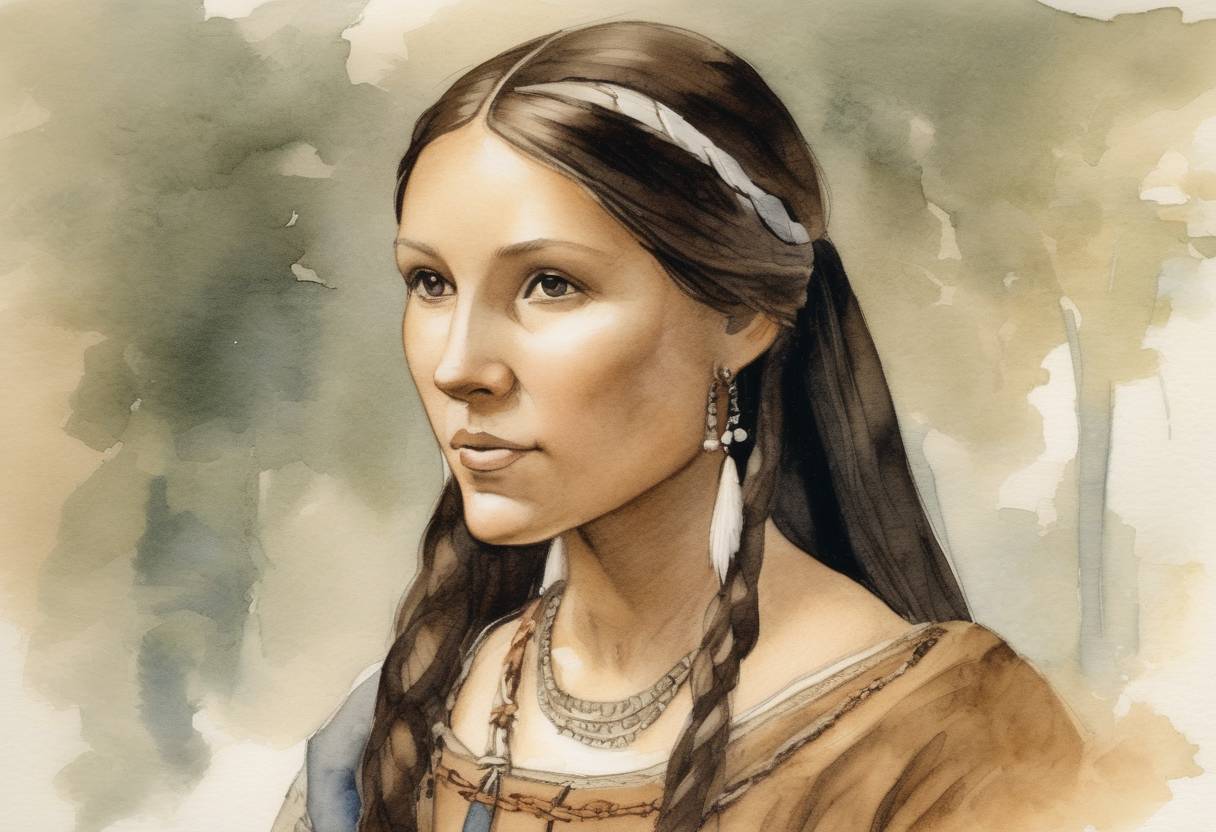
On April 5, 1614, a significant event took place in the early history of English colonization in North America: the marriage of Pocahontas, the daughter of Powhatan chief Wahunsenacawh, to English colonist John Rolfe. This union played a crucial role in establishing a period of peace between the English settlers at Jamestown, Virginia, and the Powhatan Confederacy.
Pocahontas, born around 1596, was the daughter of the paramount chief of the Powhatan Confederacy, a powerful alliance of Algonquian-speaking tribes in the Tidewater region of Virginia. Her real name was Amonute, and she also had the private name Matoaka. Pocahontas is best known for her association with the English colonists during the early years of the Jamestown settlement.
John Rolfe was an English settler who arrived in Jamestown in 1610. He is credited with the successful cultivation of tobacco as an export crop, which became a cornerstone of Virginia’s economy. Rolfe’s agricultural innovations helped ensure the colony’s economic survival.
The marriage between Pocahontas and John Rolfe was not merely a personal union but a strategic alliance. It followed Pocahontas’s capture by the English in 1613, during which she was held for ransom. During her captivity, she converted to Christianity and was baptized with the name Rebecca.
The marriage took place in Jamestown and was sanctioned by both the English and the Powhatan leadership. Chief Powhatan gave his consent, seeing the union as a means to establish a more stable and peaceful relationship with the English settlers.
The marriage initiated a period known as the “Peace of Pocahontas,” which lasted for several years. This peace was vital for the survival of the Jamestown colony, as it reduced hostilities and allowed for more secure trade and communication between the settlers and the Powhatan tribes.
The marriage symbolized a moment of cultural exchange and adaptation. Pocahontas’s conversion to Christianity and her adoption of English customs highlighted the complex interactions between the indigenous peoples and European settlers.
Pocahontas and John Rolfe had one son, Thomas Rolfe, who became an important figure in bridging the two cultures. Pocahontas’s story has been romanticized over the centuries, often overshadowing the historical realities of her life and the broader context of colonial expansion.
In 1616, Pocahontas traveled to England with Rolfe and their son, where she was presented to English society as an example of the “civilized savage.” Unfortunately, Pocahontas fell ill and died in March 1617 at the age of approximately 21. Her legacy, however, endures as a symbol of early American history and the complex dynamics of colonial and indigenous interactions.
The marriage of Pocahontas and John Rolfe remains a pivotal moment in the history of early America, illustrating both the potential for and the challenges of cross-cultural alliances during a time of significant change and conflict.
Source: en.wikipedia.org