Coup d'État in Mauritania - August 3, 2005
2005 · Nouakchott, Mauritania
Mauritania experiences a coup d'état, with President Maaouya Ould Sid'Ahmed Taya being overthrown while he was attending the funeral of King Fahd of Saudi Arabia.
August 4, 2005
The President of Mauritania, Maaouya Ould Sid'Ahmed Taya, was overthrown in a military coup while he was attending the funeral of King Fahd in Saudi Arabia.
Nouakchott, Mauritania | Mauritanian Military
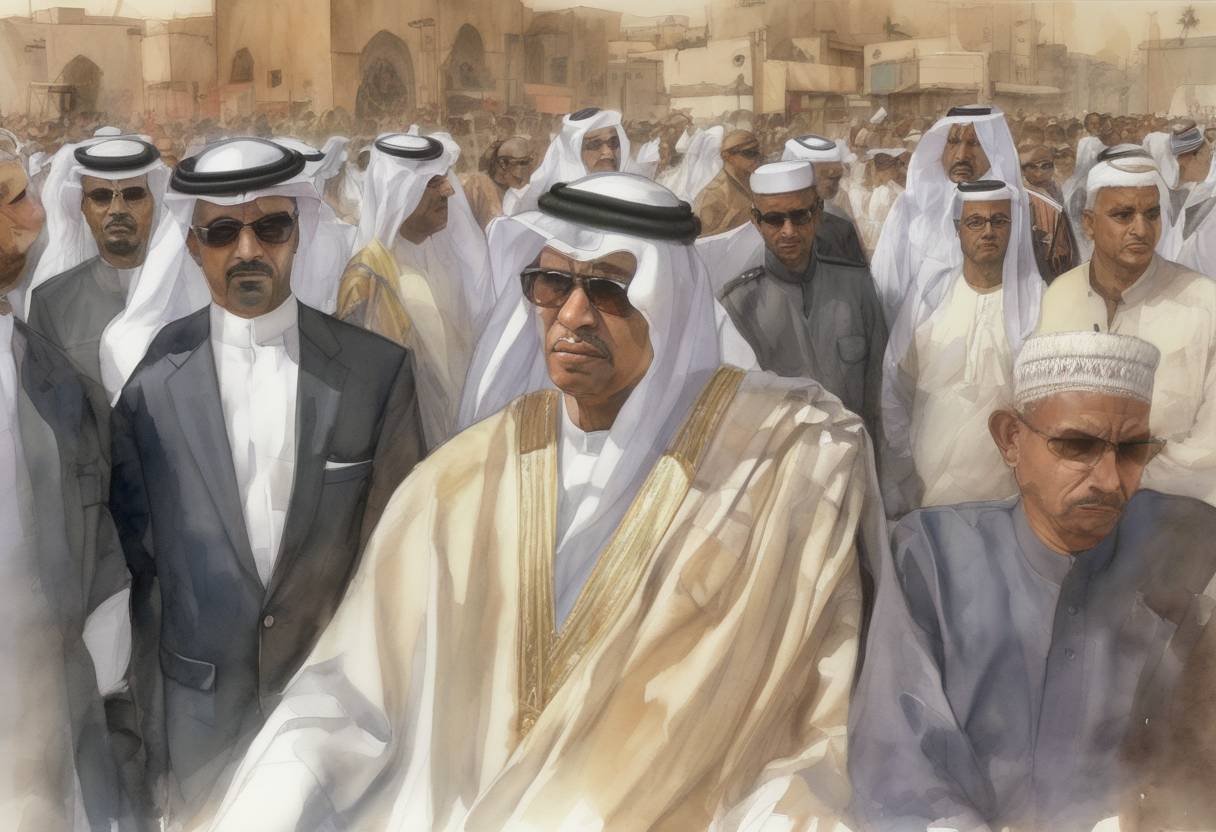
On August 3, 2005, while attending the funeral of King Fahd in Saudi Arabia, the President of Mauritania, Maaouya Ould Sid’Ahmed Taya, was overthrown in a military coup. This event marked a significant turning point in Mauritania’s political landscape.
Maaouya Ould Sid’Ahmed Taya came to power in Mauritania through a coup in December 1984. Over the next two decades, he established a regime characterized by authoritarian rule. His government faced criticism for its human rights record, suppression of political dissent, and alleged electoral fraud. Taya’s alignment with Western powers, particularly his support for the United States’ War on Terror, further polarized domestic opinion.
The coup on August 3, 2005, was orchestrated by a group of military officers who formed the Military Council for Justice and Democracy. The coup leaders, led by Colonel Ely Ould Mohamed Vall, took advantage of Taya’s absence from the country to seize control. The military swiftly took over key installations in the capital, Nouakchott, and announced the dissolution of the government and suspension of the constitution.
The coup was largely bloodless and met with minimal resistance. The new military rulers promised a return to democratic governance and pledged to hold elections. This promise was met with cautious optimism both domestically and internationally. Many Mauritanians, weary of Taya’s long rule, welcomed the change, hoping for political reform and greater freedoms.
The 2005 coup in Mauritania is significant for several reasons:
Transition to Democracy: The coup set the stage for a transition towards democratic governance. In 2007, Mauritania held presidential elections, which were deemed relatively free and fair, leading to the election of Sidi Ould Cheikh Abdallahi.
Military Influence: The event highlighted the persistent influence of the military in Mauritanian politics, a trend that has continued to shape the country’s political dynamics.
Regional Context: The coup occurred in a broader context of political instability in West Africa, where military interventions have been a recurring theme.
In conclusion, the overthrow of President Maaouya Ould Sid’Ahmed Taya in 2005 was a pivotal moment in Mauritania’s history, reflecting both the challenges and potential for democratic development in the region.
Source: www.bbc.com