Fidel Castro's Death: End of an Era in Cuban History
2016 · Havana, Cuba
Fidel Castro, the former President of Cuba and revolutionary leader, dies at the age of 90, marking the end of an era in Cuban history.
April 19, 2011
Fidel Castro resigned from the Central Committee of the Communist Party of Cuba, officially stepping down from his leadership role in the party.
Havana, Cuba | Communist Party of Cuba
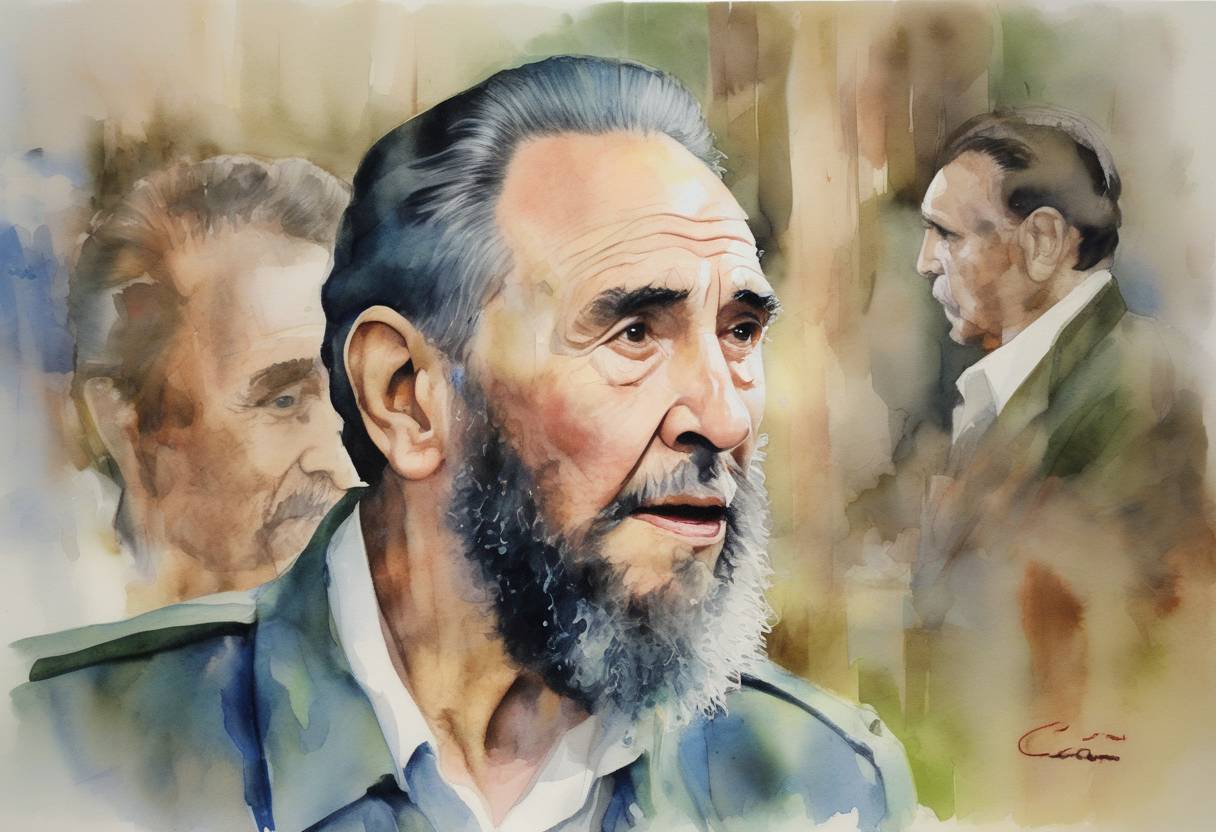
On April 19, 2011, Fidel Castro officially resigned from the Central Committee of the Communist Party of Cuba, marking the end of an era in Cuban politics. This event was significant as it represented the formal conclusion of Castro’s leadership role within the party, which he had held since its inception.
Fidel Castro had been a central figure in Cuban politics since the Cuban Revolution of 1959, which saw the overthrow of the Batista regime. As the leader of the revolutionary movement, Castro established a socialist state and aligned Cuba with the Soviet Union during the Cold War. He served as the Prime Minister of Cuba from 1959 to 1976 and then as President from 1976 until 2008. Additionally, he was the First Secretary of the Communist Party of Cuba from its founding in 1965.
Health Issues: In July 2006, Fidel Castro temporarily transferred power to his brother Raúl Castro due to severe health issues. This marked the beginning of a gradual transition of power.
Official Retirement: In February 2008, Fidel Castro announced that he would not accept another term as President, effectively retiring from his official governmental roles. Raúl Castro was elected as his successor.
Continued Influence: Despite stepping down from formal leadership roles, Fidel Castro continued to exert influence through his writings and public statements, often referred to as “Reflections of Fidel.”
On April 19, 2011, during the Sixth Congress of the Communist Party of Cuba, Fidel Castro announced his resignation from the Central Committee. This decision was part of a broader generational shift within the party, as Raúl Castro and other leaders sought to implement economic reforms and modernize the Cuban economy.
Raúl Castro’s Leadership: Raúl Castro continued to lead the party and the country, implementing a series of economic reforms aimed at increasing efficiency and productivity. These included allowing more private enterprise and reducing state control over certain sectors.
Generational Transition: Fidel’s resignation symbolized a shift towards a new generation of leadership within the Communist Party, although the Castro family remained influential in Cuban politics.
Legacy: Fidel Castro’s legacy remains a subject of debate. He is revered by some for his role in establishing a socialist state and providing social services, while others criticize his authoritarian rule and the economic hardships faced by the Cuban people.
In summary, Fidel Castro’s resignation from the Central Committee of the Communist Party of Cuba on April 19, 2011, was a pivotal moment in Cuban history, marking the end of his formal leadership and paving the way for new directions in Cuban governance and policy.
Source: www.bbc.com