Impeachment of Dilma Rousseff: August 31, 2016
2016 · Brasília, Brazil
Dilma Rousseff was impeached and removed from office as President of Brazil, following a controversial trial over accusations of fiscal mismanagement.
April 21, 1960
Brasília was officially inaugurated as the capital of Brazil, replacing Rio de Janeiro.
Brasília, Brazil | Brazilian Government
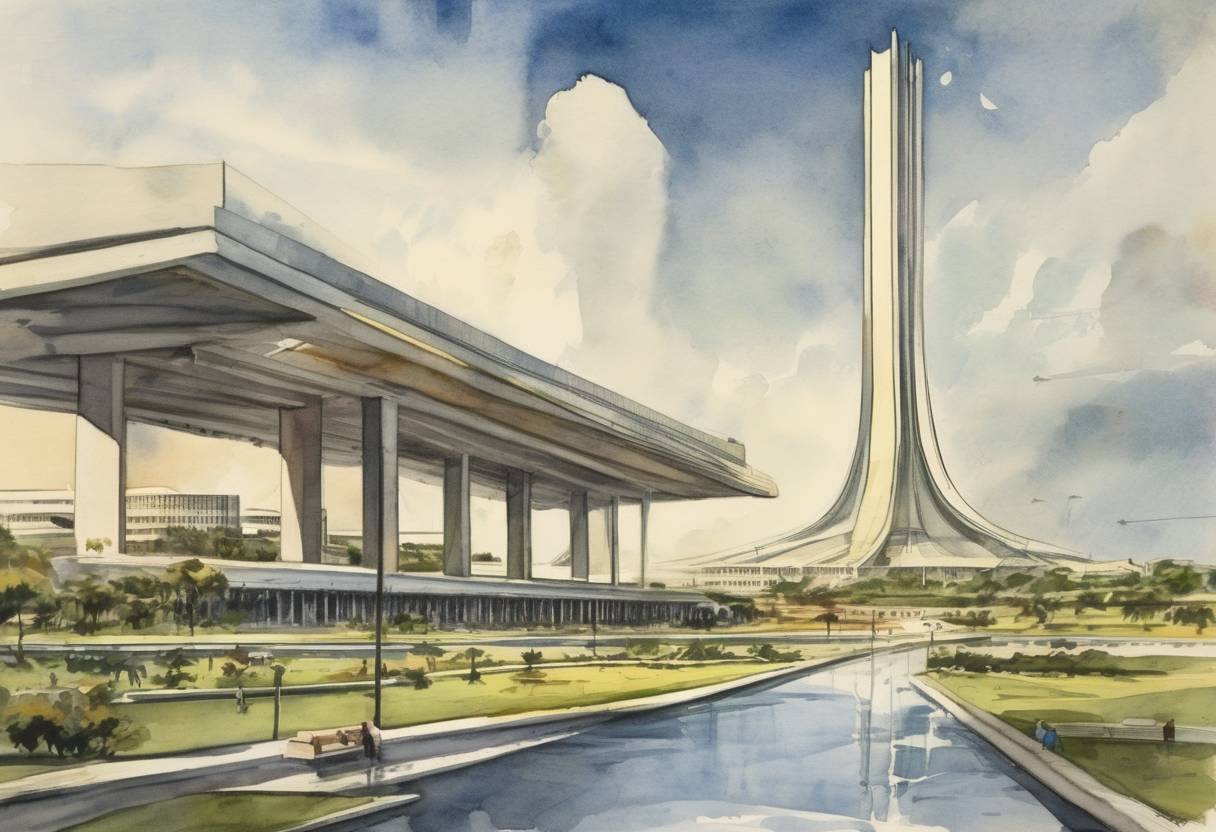
On April 21, 1960, Brasília was officially inaugurated as the capital of Brazil, marking a significant moment in the country’s history. This event was the culmination of a visionary project aimed at promoting economic growth and regional development by relocating the capital from the coastal city of Rio de Janeiro to a more central location within the country.
The idea of moving the capital to the interior of Brazil dates back to the colonial era, but it gained momentum in the 20th century. The primary motivations were to encourage the development of the interior regions, reduce the concentration of political and economic power in the coastal areas, and symbolize a new era of progress and modernization for Brazil.
The decision to build Brasília was made during the presidency of Juscelino Kubitschek (1956-1961), who embraced the project as part of his ambitious “Plano de Metas” (Goals Plan), which aimed to rapidly industrialize and modernize Brazil. Kubitschek famously promised “fifty years of progress in five” and saw the construction of Brasília as a key component of this vision.
The design of Brasília was the result of a national competition won by the Brazilian architect and urban planner Lúcio Costa. The city’s layout was based on a modernist plan resembling the shape of an airplane or bird, with distinct zones for government, residential, and commercial activities. The renowned architect Oscar Niemeyer was responsible for designing many of the city’s iconic buildings, including the National Congress, the Cathedral of Brasília, and the Palácio da Alvorada, the official residence of the President.
Construction of the city began in 1956 and was completed in an astonishingly short period of just over three years. The project involved massive logistical challenges, including building infrastructure in a remote and undeveloped area, but it was completed on schedule, demonstrating the determination and ambition of the Brazilian government.
The inauguration ceremony on April 21, 1960, was a grand affair attended by dignitaries from around the world. Brasília’s establishment as the capital was a powerful symbol of Brazil’s aspirations for growth and modernization. It represented a break from the colonial past and a step towards a more equitable distribution of development across the country.
Brasília’s creation also had significant cultural and political implications. It was one of the first planned cities of the 20th century and became a UNESCO World Heritage Site in 1987 due to its unique architecture and urban planning.
In the years following its inauguration, Brasília faced challenges, including criticism for its high construction costs and initial lack of infrastructure and services. However, over time, it grew into a vibrant city and an important political and administrative center.
Today, Brasília stands as a testament to Brazil’s mid-20th-century ambitions and remains a focal point of national identity. Its creation has had lasting impacts on the country’s development, influencing urban planning and architecture worldwide.
In summary, the inauguration of Brasília as the capital of Brazil on April 21, 1960, was a landmark event that reshaped the nation’s political and cultural landscape, embodying a vision of progress and unity for the future.
Source: www.britannica.com