Assassination of Martin Luther King Jr. - April 4, 1968
1968 · Memphis, United States
Civil rights leader Martin Luther King Jr. is assassinated at the Lorraine Motel in Memphis, Tennessee, leading to nationwide riots and a period of mourning.
January 15, 1929
Martin Luther King Jr., American civil rights leader, was born.
Atlanta, United States | Civil Rights Movement
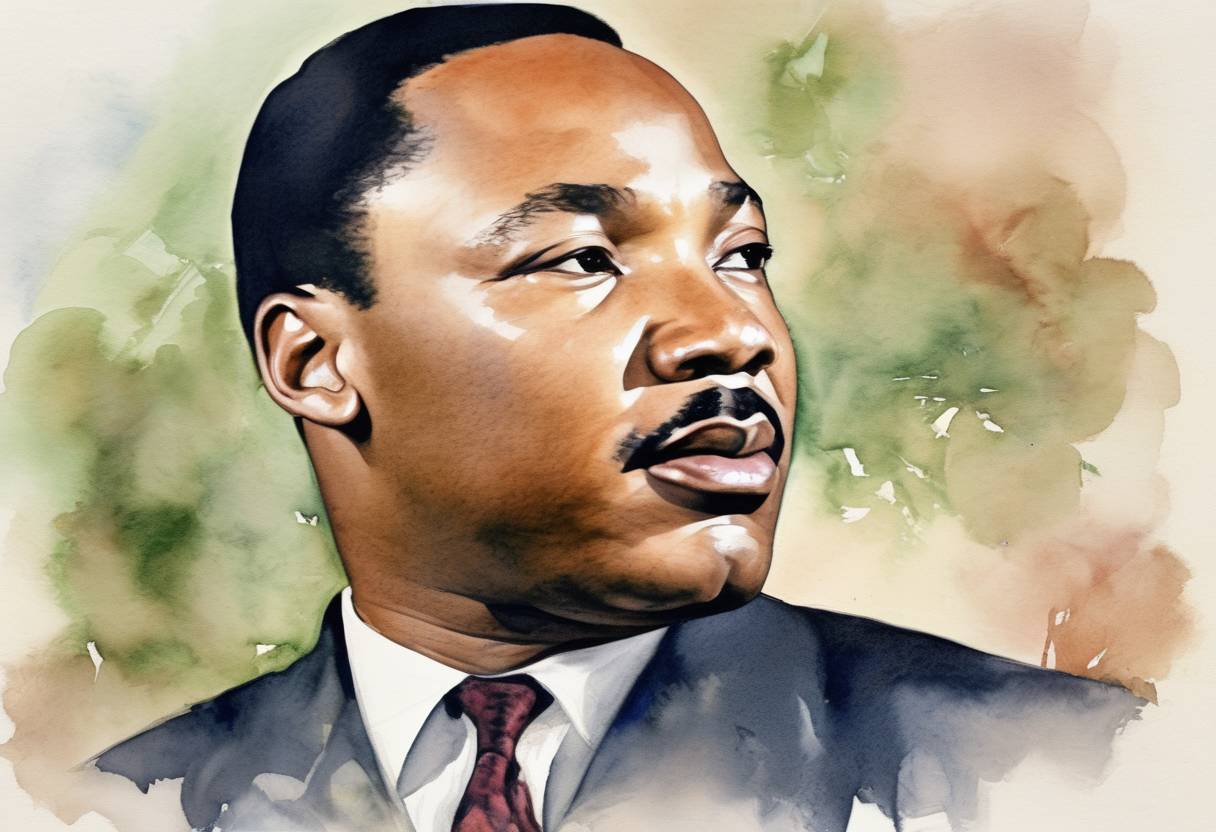
Martin Luther King Jr., one of the most prominent leaders of the American civil rights movement, was born on January 15, 1929, in Atlanta, Georgia. He was the second child of Reverend Martin Luther King Sr. and Alberta Williams King. His birth name was Michael King Jr., but his father later changed both their names to Martin Luther in honor of the Protestant Reformer Martin Luther.
King grew up in the Sweet Auburn neighborhood of Atlanta, which was a thriving African American community at the time. His father was a pastor at the Ebenezer Baptist Church, and his mother was a former schoolteacher. This environment instilled in him strong values of faith and education.
King attended Booker T. Washington High School, where he excelled in his studies and skipped two grades, entering Morehouse College at the age of 15. Morehouse was a historically black college, and it was there that King was mentored by the college president, Dr. Benjamin Mays, who was an influential figure in the civil rights movement.
After graduating from Morehouse in 1948 with a Bachelor of Arts in Sociology, King attended Crozer Theological Seminary in Pennsylvania, where he earned a Bachelor of Divinity degree. He then pursued doctoral studies at Boston University, receiving a Ph.D. in Systematic Theology in 1955.
During his time in Boston, King met Coretta Scott, a fellow student and aspiring singer. They married in 1953 and eventually had four children together.
Martin Luther King Jr.’s early life laid the foundation for his later work as a civil rights leader. His education and upbringing in a religious and socially conscious family equipped him with the tools to lead nonviolent protests and advocate for racial equality. His leadership in events such as the Montgomery Bus Boycott and the March on Washington, where he delivered his iconic “I Have a Dream” speech, were pivotal in advancing civil rights in the United States.
King’s legacy continues to influence movements for justice and equality worldwide, and his birthday is commemorated as a federal holiday in the United States, known as Martin Luther King Jr. Day, celebrated on the third Monday of January each year.
Source: en.wikipedia.org