Papal Bull 'Pastoralis Praeeminentiae'
1307 · Poitiers, France
Pope Clement V issued the papal bull 'Pastoralis Praeeminentiae,' which instructed the monarchs of Europe to arrest the Knights Templar and seize their assets.
January 14, 1129
The Council of Troyes opens, during which the Knights Templar are officially recognized and given a rule by Bernard of Clairvaux.
Troyes, France | Catholic Church
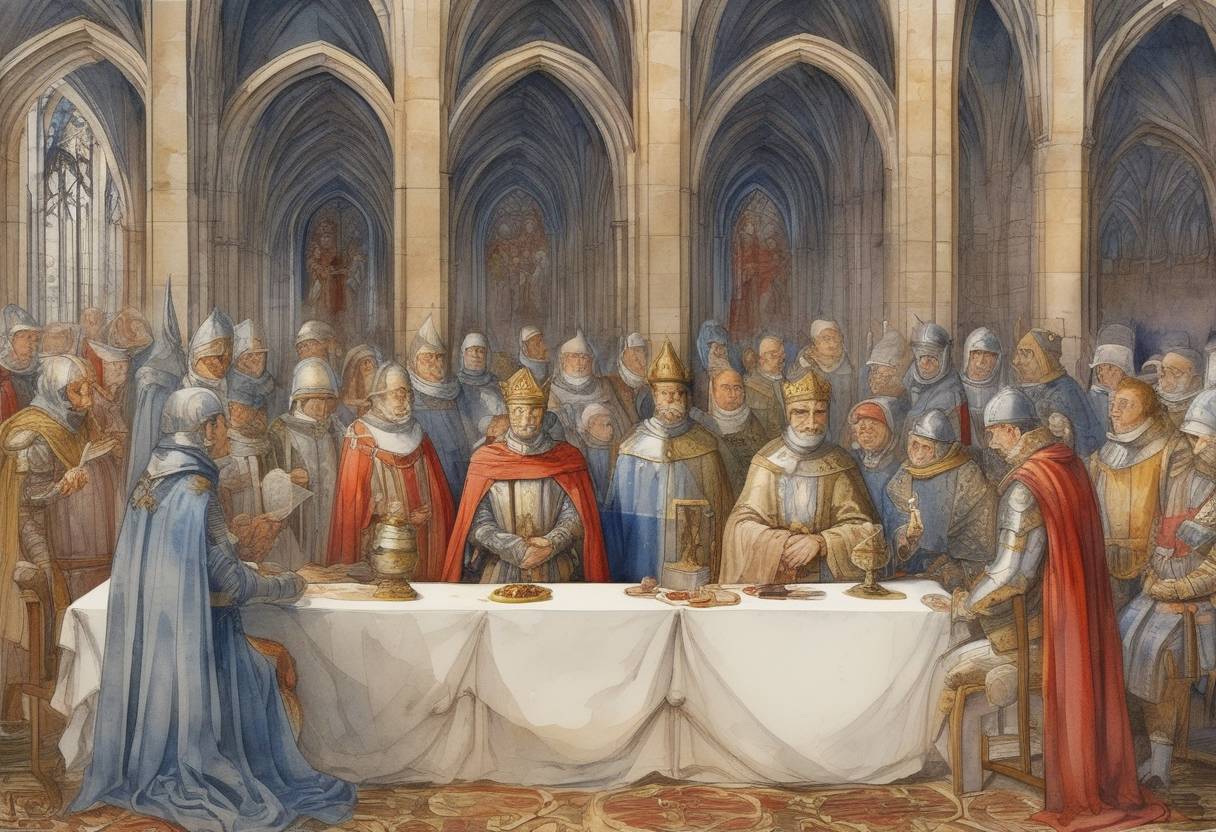
On January 14, 1129, a pivotal event in medieval history unfolded with the opening of the Council of Troyes. This council was instrumental in the formal recognition and establishment of the Knights Templar as a legitimate and organized military order within Christendom.
The Knights Templar, officially known as the Poor Fellow-Soldiers of Christ and of the Temple of Solomon, were founded around 1119 by a group of knights led by Hugues de Payens. Their initial mission was to protect Christian pilgrims traveling to the Holy Land in the aftermath of the First Crusade. Despite their noble intentions, the Templars struggled with limited resources and recognition in their early years.
The Council of Troyes was convened in the city of Troyes, located in the Champagne region of France. It was presided over by Pope Honorius II and attended by prominent ecclesiastical and secular leaders, including the influential Bernard of Clairvaux, a Cistercian abbot and a leading religious figure of the time.
Official Recognition: The council granted the Knights Templar official recognition as a religious military order. This endorsement was crucial for their legitimacy and future growth.
Rule of the Templars: Bernard of Clairvaux played a significant role in drafting the Latin Rule, a code of conduct and organizational structure for the Templars. This rule outlined their monastic lifestyle, emphasizing poverty, chastity, and obedience, while also detailing their military duties.
Support and Patronage: The council’s recognition attracted significant support and patronage from European nobility and clergy. This support was vital for the Templars’ expansion and the establishment of their network of commanderies across Europe and the Holy Land.
The formal establishment of the Knights Templar at the Council of Troyes marked the beginning of their rise as one of the most powerful and wealthy military orders of the medieval period. Their influence extended beyond military and religious spheres, as they became involved in banking and financial services, laying the groundwork for modern banking systems.
The Templars played a crucial role in the Crusades, serving as elite warriors and protectors of Christian interests in the Holy Land. Their legacy, however, is complex, as their eventual suppression in the early 14th century by King Philip IV of France led to enduring myths and legends about their secretive nature and supposed hidden treasures.
In summary, the Council of Troyes was a defining moment for the Knights Templar, setting the stage for their significant impact on medieval history and their enduring place in popular culture and historical discourse.
Source: en.wikipedia.org