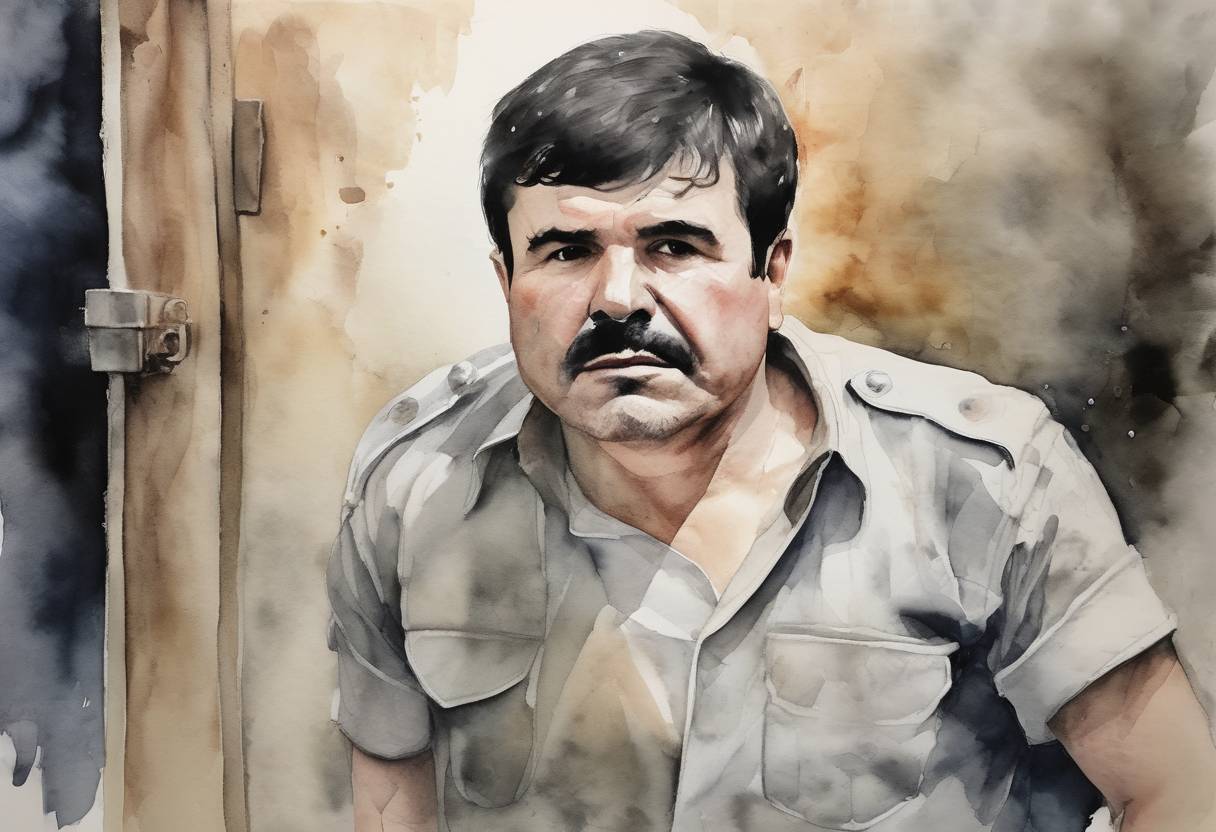
Joaquín ‘El Chapo’ Guzmán’s Escape on July 11, 2015
On July 11, 2015, Joaquín ‘El Chapo’ Guzmán, the notorious leader of the Sinaloa Cartel, executed a dramatic escape from the Altiplano maximum-security prison in Almoloya de Juárez, Mexico. This event marked his second successful prison escape, the first being in 2001.
Background
Joaquín Guzmán, known as ‘El Chapo’ due to his short stature, rose to infamy as the head of the Sinaloa Cartel, one of the most powerful drug trafficking organizations in the world. His operations extended globally, involving the trafficking of cocaine, heroin, methamphetamine, and marijuana. Guzmán’s first escape in 2001 from Puente Grande prison was achieved by hiding in a laundry cart, which allowed him to evade capture for over a decade.
The Escape
The escape on July 11, 2015, was meticulously planned and executed. Guzmán vanished from his cell at approximately 8:52 PM. Surveillance footage showed him heading to the shower area, which was the only part of his cell not visible to cameras. From there, he accessed a hole in the floor leading to a tunnel.
Tunnel Details
- Length and Construction: The tunnel stretched approximately 1.5 kilometers (about 1 mile) from the prison to a construction site outside the prison perimeter. It was equipped with lighting, ventilation, and a modified motorcycle on rails, likely used to transport materials and Guzmán himself.
- Engineering Feat: The tunnel’s construction demonstrated significant engineering expertise and resources, reflecting the Sinaloa Cartel’s vast capabilities and influence.
Aftermath and Recapture
Guzmán’s escape was a major embarrassment for the Mexican government, highlighting issues of corruption and security lapses within the prison system. A massive manhunt ensued, involving Mexican authorities and international agencies, including the U.S. Drug Enforcement Administration (DEA).
On January 8, 2016, after six months on the run, Guzmán was recaptured in Los Mochis, Sinaloa, following a shootout with Mexican marines. His recapture was partly facilitated by intelligence gathered from his attempts to produce a biographical film, which inadvertently exposed his location.
Broader Historical Significance
Guzmán’s escape and subsequent recapture underscored the challenges faced by Mexican authorities in combating drug cartels and highlighted the pervasive issue of corruption within the country’s institutions. His eventual extradition to the United States in January 2017 marked a significant moment in international cooperation against drug trafficking.
Guzmán’s life and criminal career continue to be subjects of extensive media coverage and public fascination, symbolizing the complex and ongoing battle against organized crime in Mexico and beyond.