Opportunity Rover Lands on Mars - January 25, 2004
2004 · Mars, N/A
The Opportunity rover lands on Mars as part of NASA's Mars Exploration Rover mission, beginning its exploration of the Martian surface.
January 3, 2004
NASA's Mars Exploration Rover Spirit successfully lands on Mars, beginning its mission to explore the Martian surface.
Mars, N/A | NASA
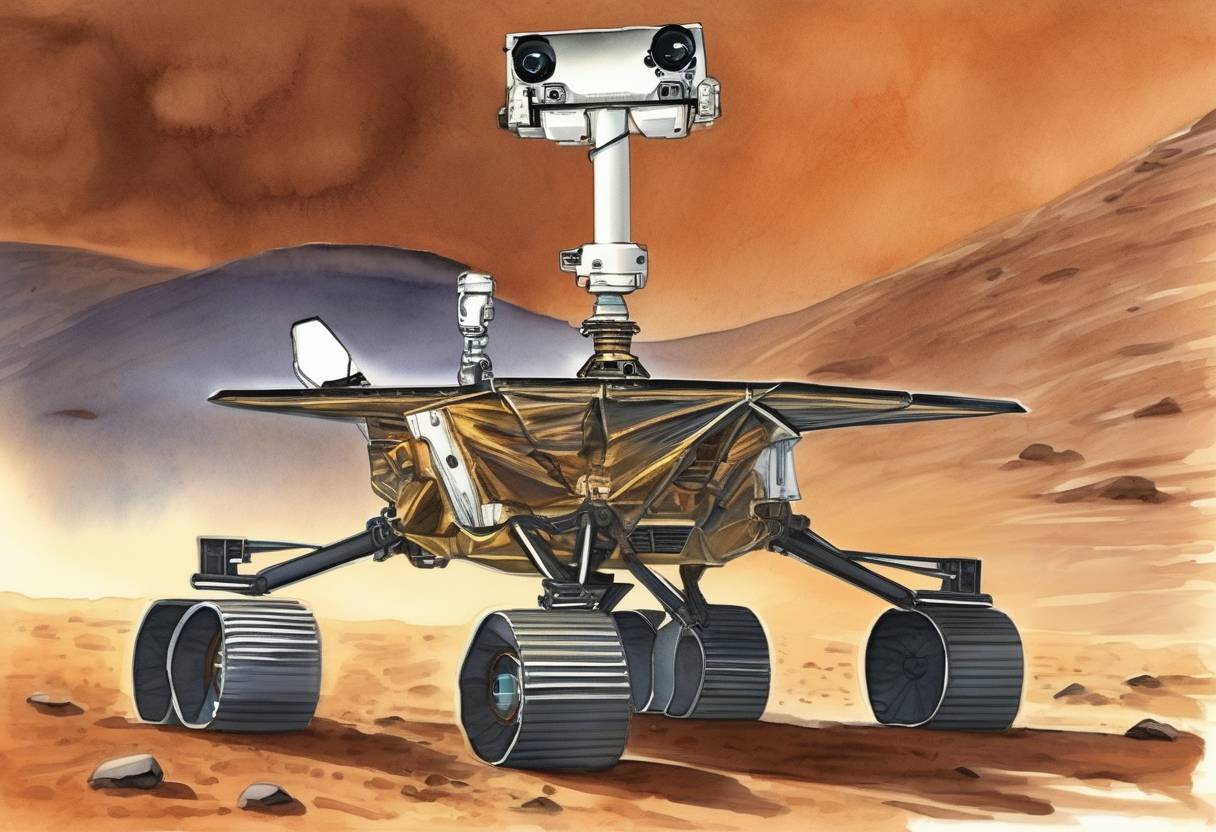
On January 3, 2004, NASA’s Mars Exploration Rover Spirit successfully landed on the Martian surface, marking the beginning of a groundbreaking mission to explore the Red Planet. This event was a significant milestone in space exploration, as it provided unprecedented insights into Mars’ geology and potential for past life.
The Mars Exploration Rover (MER) mission was part of NASA’s long-term effort to explore Mars and understand its environment. Spirit, along with its twin rover Opportunity, was launched to investigate the history of water on Mars, a key factor in assessing the planet’s habitability.
The primary objectives of the Spirit rover included:
Spirit landed in Gusev Crater, a site believed to have once held a lake, making it an ideal location to search for evidence of past water. The landing was executed using a complex system involving parachutes and airbags to cushion the impact, a technique that had been successfully used by the Mars Pathfinder mission in 1997.
Spirit’s mission significantly advanced our understanding of Mars. It provided compelling evidence that liquid water once existed on the planet’s surface, a crucial factor in the search for past life. The data collected by Spirit and its twin Opportunity laid the groundwork for future missions, including the Mars Science Laboratory rover, Curiosity, and the Perseverance rover.
Spirit’s successful landing and subsequent discoveries marked a pivotal moment in planetary exploration, demonstrating the potential for robotic missions to uncover the secrets of our solar system’s planets.
Source: mars.nasa.gov