Discovery of the Double-Helix Structure of DNA
1953 · Cambridge, United Kingdom
James Watson and Francis Crick announce that they have determined the double-helix structure of DNA, a pivotal moment in the field of genetics.
April 25, 1953
Francis Crick and James Watson published their paper on the structure of DNA in the journal Nature, marking a significant milestone in the field of genetics.
Cambridge, United Kingdom | University of Cambridge
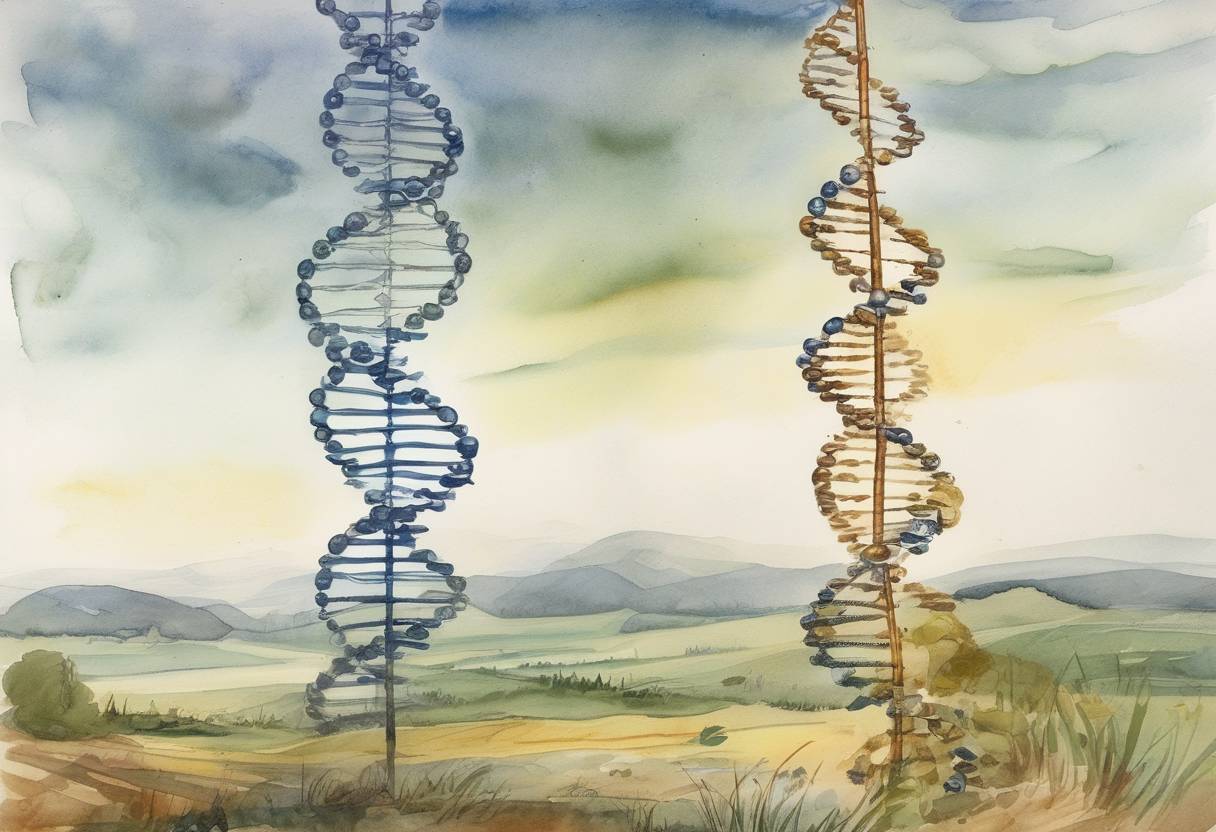
On April 25, 1953, a groundbreaking paper titled “Molecular Structure of Nucleic Acids: A Structure for Deoxyribose Nucleic Acid” was published in the journal Nature. This paper, authored by Francis Crick and James Watson, unveiled the double helix structure of DNA, marking a pivotal moment in the field of genetics and molecular biology.
Before this discovery, the understanding of genetic material was limited. DNA had been identified as a component of cells, but its structure and function remained elusive. The race to uncover the structure of DNA involved several scientists, including Rosalind Franklin and Maurice Wilkins, whose X-ray diffraction images of DNA were crucial to Watson and Crick’s model.
Double Helix Structure: Watson and Crick proposed that DNA is composed of two strands forming a double helix. The strands are made up of a sugar-phosphate backbone with nitrogenous bases (adenine, thymine, cytosine, and guanine) paired in the interior.
Base Pairing: They introduced the concept of complementary base pairing, where adenine pairs with thymine and cytosine pairs with guanine. This pairing is stabilized by hydrogen bonds and is crucial for DNA replication and function.
Implications for Genetic Replication: The model suggested a mechanism for DNA replication, as each strand could serve as a template for the creation of a new complementary strand, ensuring genetic continuity.
The discovery of the DNA double helix was a monumental advancement in understanding the molecular basis of heredity. It laid the foundation for modern genetics, leading to numerous scientific breakthroughs, including:
Genetic Engineering: Understanding DNA’s structure enabled the development of techniques to manipulate genetic material, leading to advances in biotechnology and medicine.
Human Genome Project: The elucidation of DNA’s structure was a precursor to mapping the entire human genome, which has had profound implications for biology and medicine.
Nobel Prize: In 1962, Watson, Crick, and Wilkins were awarded the Nobel Prize in Physiology or Medicine for their contributions to the discovery of the DNA structure. Rosalind Franklin, whose work was instrumental, had passed away in 1958 and was not eligible for the Nobel Prize posthumously.
The publication of Watson and Crick’s paper on April 25, 1953, is celebrated as a landmark event in science. It not only transformed our understanding of biology but also opened new avenues for research and innovation, influencing countless fields and improving human health and knowledge.
Source: en.wikipedia.org