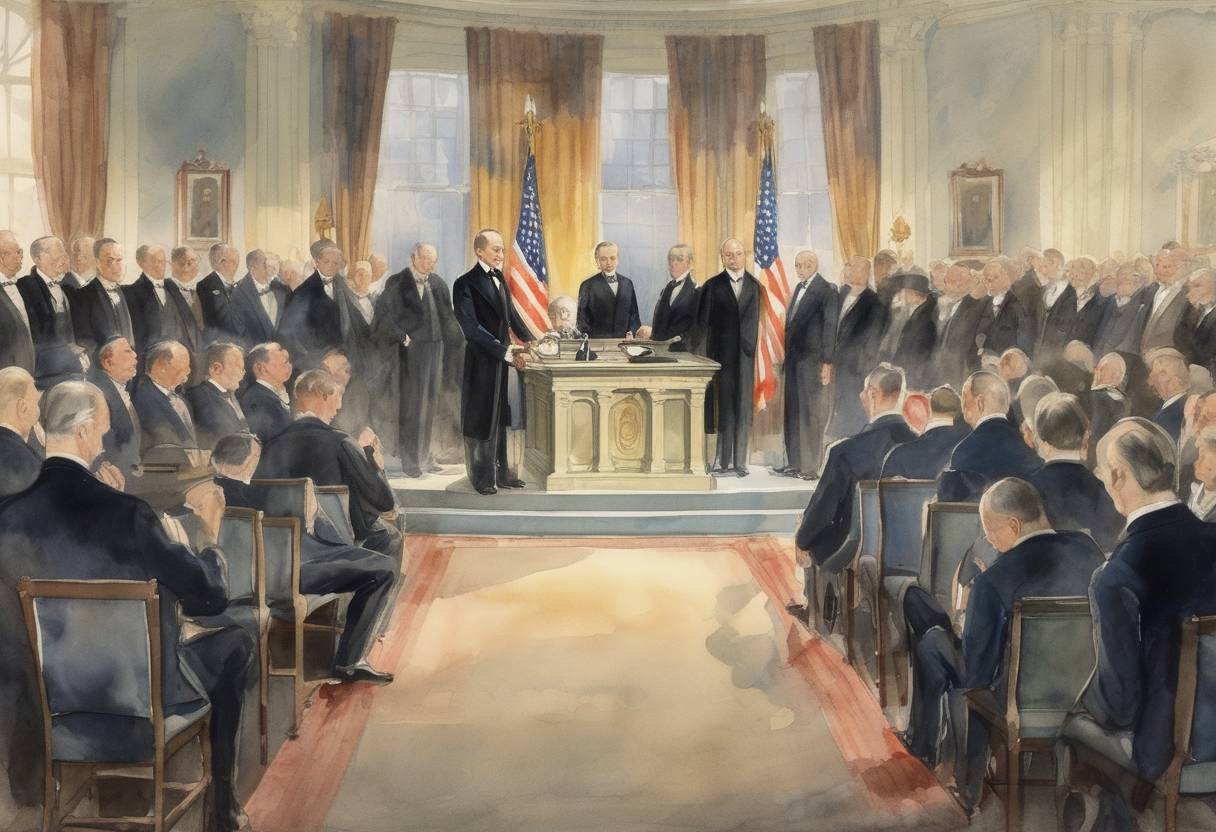
Calvin Coolidge Sworn in as the 30th President of the United States
On August 3, 1923, Calvin Coolidge was sworn in as the 30th President of the United States following the unexpected death of President Warren G. Harding. Harding passed away from a heart attack while on a speaking tour in San Francisco, California, leaving the presidency to his Vice President, Coolidge.
Context Leading Up to Coolidge’s Presidency
Warren G. Harding’s Administration: Harding’s presidency, beginning in 1921, was marred by scandals, most notably the Teapot Dome scandal, which involved the illegal leasing of federal oil reserves. Despite these issues, Harding was popular for his efforts to return the country to “normalcy” after World War I.
Calvin Coolidge’s Background: Before becoming Vice President, Coolidge served as the Governor of Massachusetts, where he gained national attention for his handling of the Boston Police Strike in 1919. His reputation for integrity and a no-nonsense approach to governance made him a suitable candidate for the vice presidency.
The Swearing-In Ceremony
- Location and Ceremony: Coolidge was at his family home in Plymouth Notch, Vermont, when he received the news of Harding’s death. In a unique and simple ceremony, he was sworn in by his father, John Calvin Coolidge Sr., who was a notary public. This took place in the early hours of the morning, by the light of a kerosene lamp.
Coolidge’s Presidency and the Roaring Twenties
Economic Prosperity: Coolidge’s presidency coincided with a period of significant economic growth known as the “Roaring Twenties.” This era was characterized by industrial expansion, technological innovation, and a booming stock market. Coolidge’s policies favored business and economic growth, with a focus on reducing taxes and government regulation.
Laissez-Faire Governance: Coolidge believed in limited government intervention in the economy. His administration cut taxes and reduced federal spending, which contributed to the economic boom but also laid the groundwork for the economic disparities that would later contribute to the Great Depression.
Cultural and Social Changes: The 1920s saw significant cultural shifts, including the rise of jazz music, the flapper culture, and changes in social norms. The period also witnessed the Harlem Renaissance, a flourishing of African American culture and arts.
Aftermath and Historical Significance
Legacy: Coolidge’s presidency is often remembered for its economic policies and the prosperity of the 1920s. However, his laissez-faire approach has been critiqued for failing to address the economic imbalances that contributed to the Great Depression.
Impact on Future Policies: Coolidge’s tenure set a precedent for future Republican administrations that favored business-friendly policies and limited government intervention in the economy.
Calvin Coolidge’s presidency remains a significant period in American history, reflecting both the prosperity and the challenges of the 1920s. His leadership style and policies continue to be studied for their impact on the nation’s economic and political landscape.