The Founding of Santiago, Chile - September 13, 1541
1541 · Santiago, Chile
Santiago, Chile, was officially founded by Spanish conquistador Pedro de Valdivia's expedition.
January 18, 1535
Spanish conquistador Francisco Pizarro founded the city of Lima, which would become the capital of Peru.
Lima, Peru | Spanish Empire
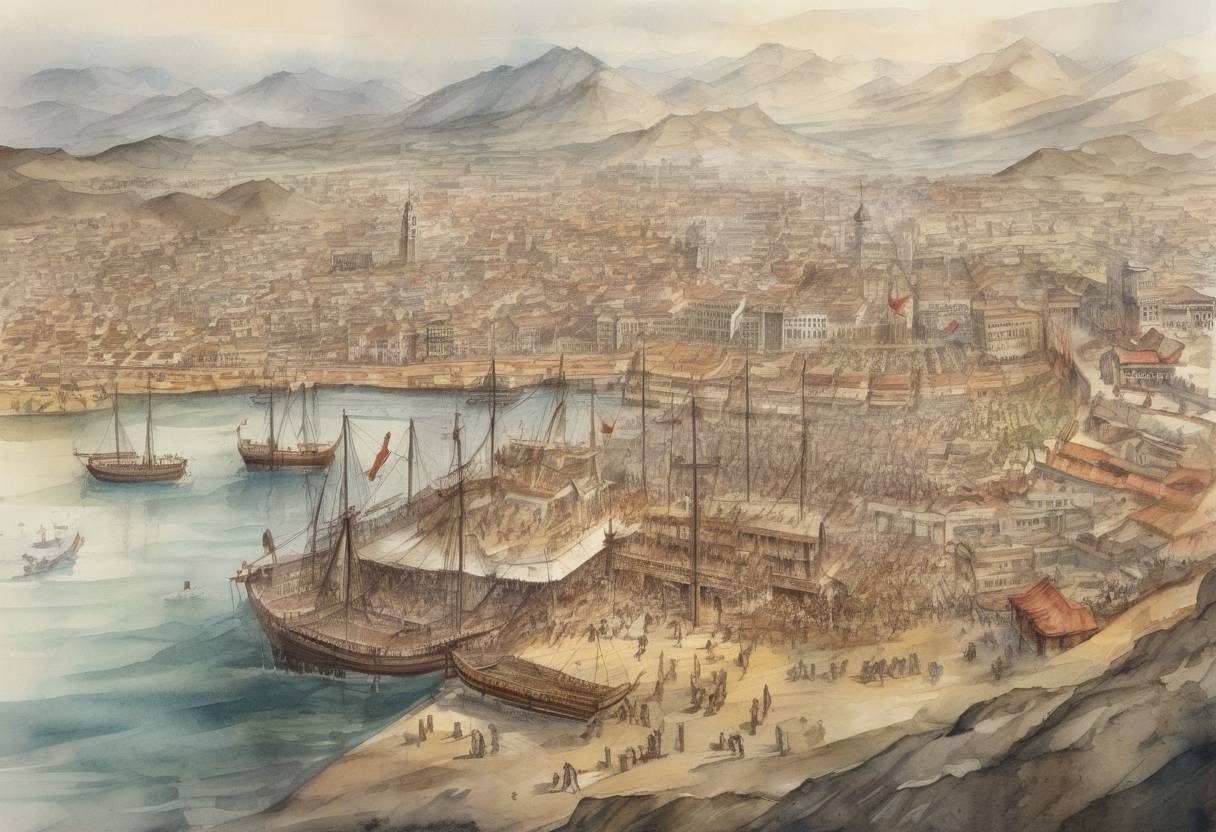
On January 18, 1535, the Spanish conquistador Francisco Pizarro founded the city of Lima, which would eventually become the capital of Peru. This event marked a significant moment in the Spanish colonization of South America and the expansion of the Spanish Empire.
Francisco Pizarro: Pizarro was a Spanish explorer and conquistador who played a pivotal role in the Spanish conquest of the Inca Empire. Born around 1478 in Trujillo, Spain, Pizarro embarked on several expeditions to the New World, eventually leading to his encounter with the Inca civilization.
Conquest of the Inca Empire: In 1532, Pizarro and his small band of soldiers captured the Inca emperor Atahualpa, leading to the eventual downfall of the Inca Empire. The conquest was marked by strategic alliances with local tribes, superior weaponry, and the spread of European diseases, which devastated the indigenous population.
Strategic Location: Pizarro chose the location for Lima due to its proximity to the coast, which facilitated communication and trade with Spain, and its fertile valley, which was suitable for agriculture. The site was also strategically positioned between the Andes and the Pacific Ocean.
Naming the City: Initially named “Ciudad de los Reyes” (City of the Kings) in honor of the biblical Magi, the city was later commonly referred to as Lima, derived from the native Quechua name “Rímac,” meaning “talker,” referring to the nearby Rímac River.
Urban Planning: The city was designed following the Spanish colonial grid pattern, with a central plaza surrounded by important buildings such as the cathedral and government offices. This layout became a model for other colonial cities in the Americas.
Capital of the Viceroyalty of Peru: Lima quickly grew in importance and became the capital of the Viceroyalty of Peru, the most significant administrative division of the Spanish Empire in South America. It served as a major political, economic, and cultural center.
Cultural and Economic Hub: During the colonial period, Lima became a melting pot of cultures, with a diverse population of Spanish settlers, indigenous peoples, and African slaves. It was also a key node in the trans-Pacific trade, connecting the Americas with Asia.
Legacy: Today, Lima is the capital and largest city of Peru, reflecting its historical significance as a center of Spanish colonial power. Its rich history is evident in its architecture, cultural institutions, and diverse population.
The founding of Lima by Francisco Pizarro was a crucial step in the Spanish colonization of South America, shaping the region’s history and leaving a lasting legacy that continues to influence Peru’s cultural and political landscape.
Source: en.wikipedia.org