Assassination of Indira Gandhi - October 31, 1984
1984 · New Delhi, India
Indian Prime Minister Indira Gandhi is assassinated by her bodyguards in New Delhi.
January 19, 1966
Indira Gandhi was elected as the first female Prime Minister of India.
New Delhi, India | Indian National Congress
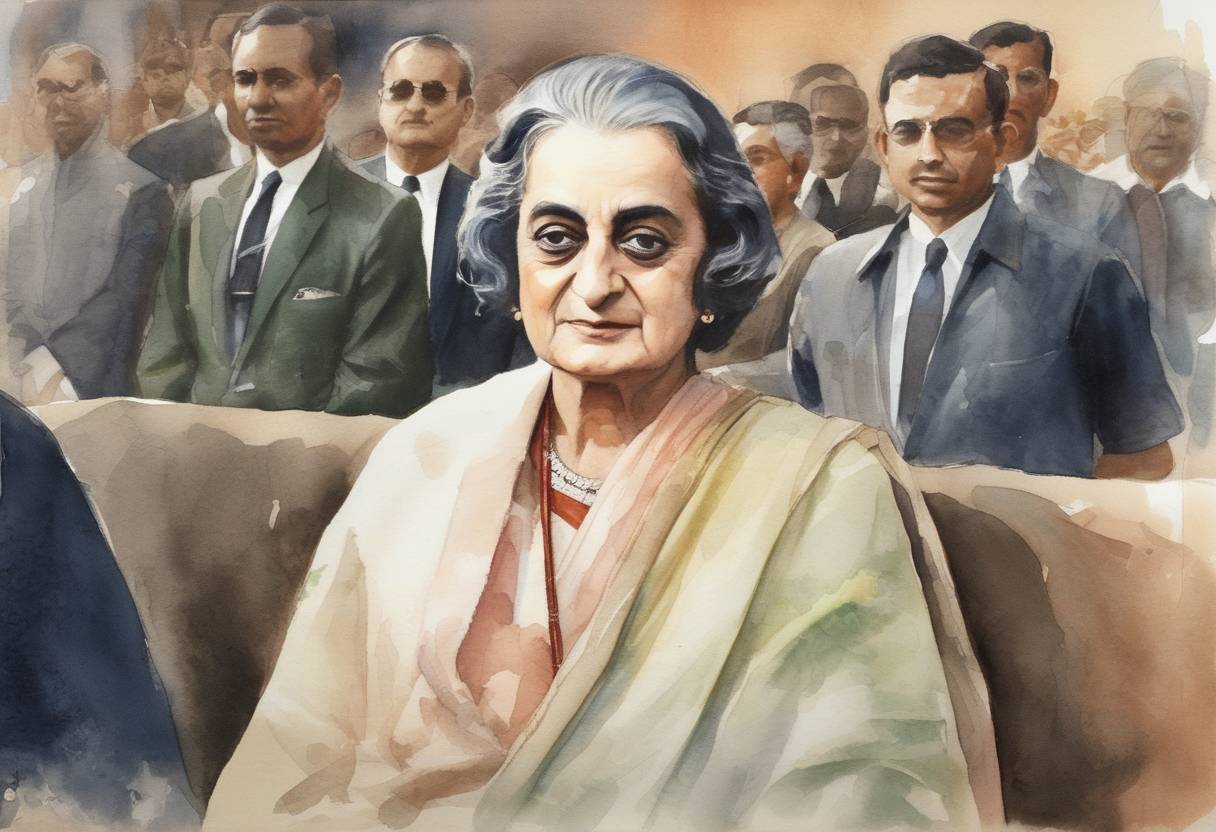
On January 19, 1966, Indira Gandhi was elected as the first female Prime Minister of India, marking a significant milestone in the country’s political history. Her election followed the sudden demise of Prime Minister Lal Bahadur Shastri, who passed away on January 11, 1966, in Tashkent, Uzbekistan, after signing the Tashkent Agreement with Pakistan.
Indira Gandhi, the daughter of Jawaharlal Nehru, India’s first Prime Minister, was a prominent figure in Indian politics. She had served as the Minister of Information and Broadcasting in Shastri’s cabinet and was known for her strong political lineage and experience. Her leadership qualities and political acumen were recognized within the Indian National Congress, the dominant political party at the time.
Following Shastri’s death, the Congress Party faced the challenge of selecting a new leader. The party was divided between two main candidates: Indira Gandhi and Morarji Desai, a senior party leader and former Finance Minister. The Congress Parliamentary Party held a vote to decide the new leader. Indira Gandhi emerged victorious, securing the position with significant support from party members.
Indira Gandhi’s election as Prime Minister was a groundbreaking event, as she became the first woman to hold the office in India. Her leadership marked the beginning of a new era in Indian politics, characterized by her assertive policies and centralization of power.
During her tenure, Indira Gandhi implemented several significant policies and initiatives:
Indira Gandhi’s leadership had a profound impact on India’s political landscape. She served as Prime Minister from 1966 to 1977 and again from 1980 until her assassination in 1984. Her tenure was marked by both significant achievements and controversies, shaping the course of Indian politics for decades.
Her election as the first female Prime Minister not only broke gender barriers but also set a precedent for women’s leadership in India and around the world.
Source: en.wikipedia.org