Introduction of the Bikini: July 5, 1946
1946 · Paris, France
The bikini, a modern two-piece swimsuit, was introduced by French designer Louis Réard at a fashion event in Paris.
February 12, 1947
Christian Dior unveils his first collection in Paris, which includes the 'New Look' that revolutionizes women's fashion.
Paris, France | Christian Dior
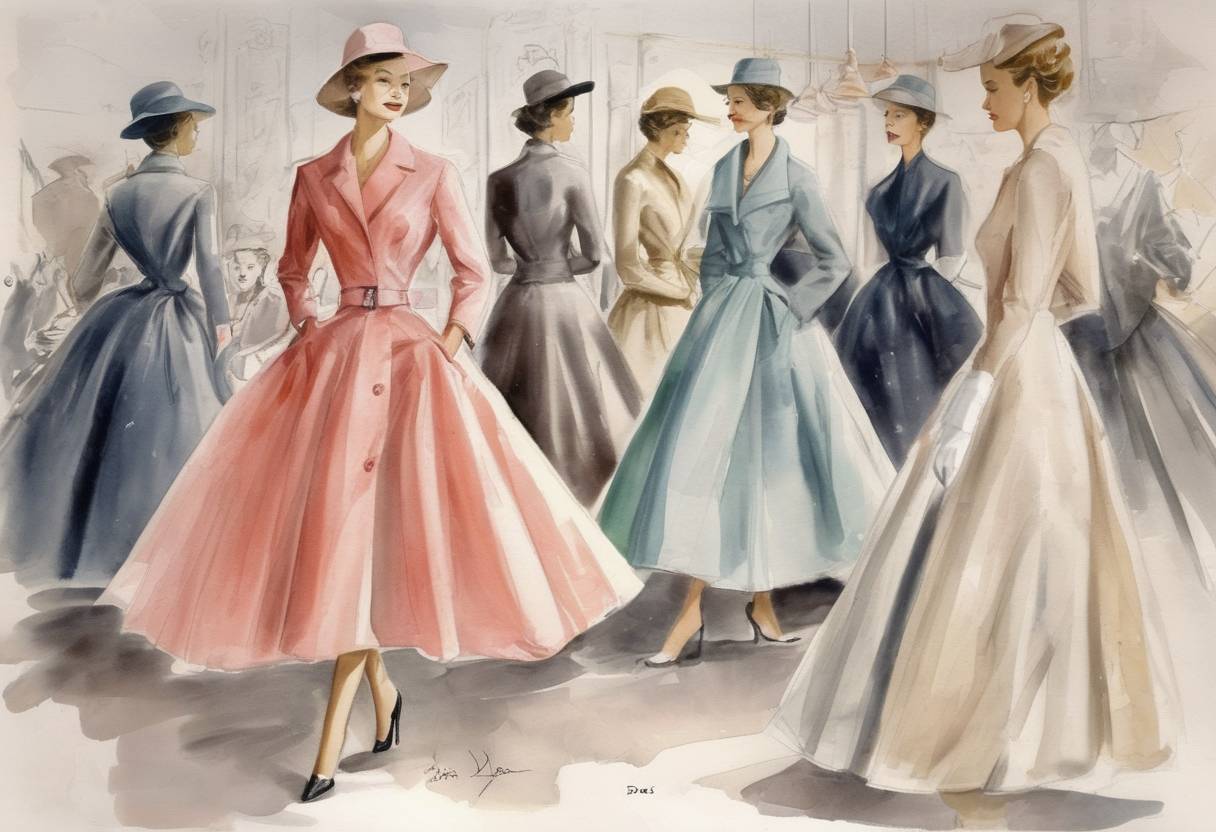
On February 12, 1947, Christian Dior, a relatively unknown French fashion designer at the time, unveiled his first collection in Paris. This event marked a pivotal moment in fashion history, as Dior introduced what would become famously known as the “New Look.” This collection not only revolutionized women’s fashion but also had a lasting impact on the post-war fashion industry.
Post-War Fashion Climate: The world was emerging from the austerity of World War II, which had imposed strict rationing on fabrics and materials. Women’s fashion during the war was characterized by practicality and simplicity, with shorter skirts and boxy silhouettes.
Dior’s Vision: Christian Dior aimed to revive the elegance and luxury of pre-war fashion. He sought to create designs that celebrated femininity and opulence, contrasting sharply with the utilitarian styles of the wartime era.
Key Features: The “New Look” was characterized by its voluptuous silhouettes, featuring rounded shoulders, a cinched waist, and a full, flowing skirt that fell below the mid-calf. This design emphasized an hourglass figure, which was a stark departure from the straight, fabric-conserving lines of the 1940s.
Materials and Craftsmanship: Dior’s collection utilized luxurious fabrics such as silk, taffeta, and wool, showcasing intricate craftsmanship and attention to detail. The use of ample fabric was a bold statement in itself, given the recent end of wartime rationing.
Impact on Fashion: The “New Look” was both revolutionary and controversial. While it was celebrated for its elegance and femininity, it also faced criticism for its perceived extravagance and the amount of fabric used. Despite this, it quickly gained popularity and set the tone for fashion in the 1950s.
Economic and Cultural Influence: Dior’s collection played a significant role in revitalizing the French fashion industry, which had suffered during the war. It helped re-establish Paris as the epicenter of haute couture.
Influence on Designers: The “New Look” inspired a generation of designers and became a template for fashion houses worldwide. It marked the beginning of Dior’s illustrious career and established his brand as a symbol of luxury and innovation.
Legacy: The “New Look” remains one of the most iconic moments in fashion history. It not only transformed women’s fashion but also reflected broader societal shifts towards prosperity and optimism in the post-war era.
Christian Dior’s debut collection on February 12, 1947, was more than just a fashion show; it was a cultural milestone that redefined women’s fashion and left an indelible mark on the industry.
Source: en.wikipedia.org