The Slavery Abolition Act of 1833
1833 · London, United Kingdom
The Slavery Abolition Act receives Royal Assent, abolishing slavery throughout the British Empire.
July 20, 1715
The Riot Act received royal assent in Great Britain, allowing local authorities to declare any group of 12 or more people unlawfully assembled and to disperse them.
London, United Kingdom | British Parliament
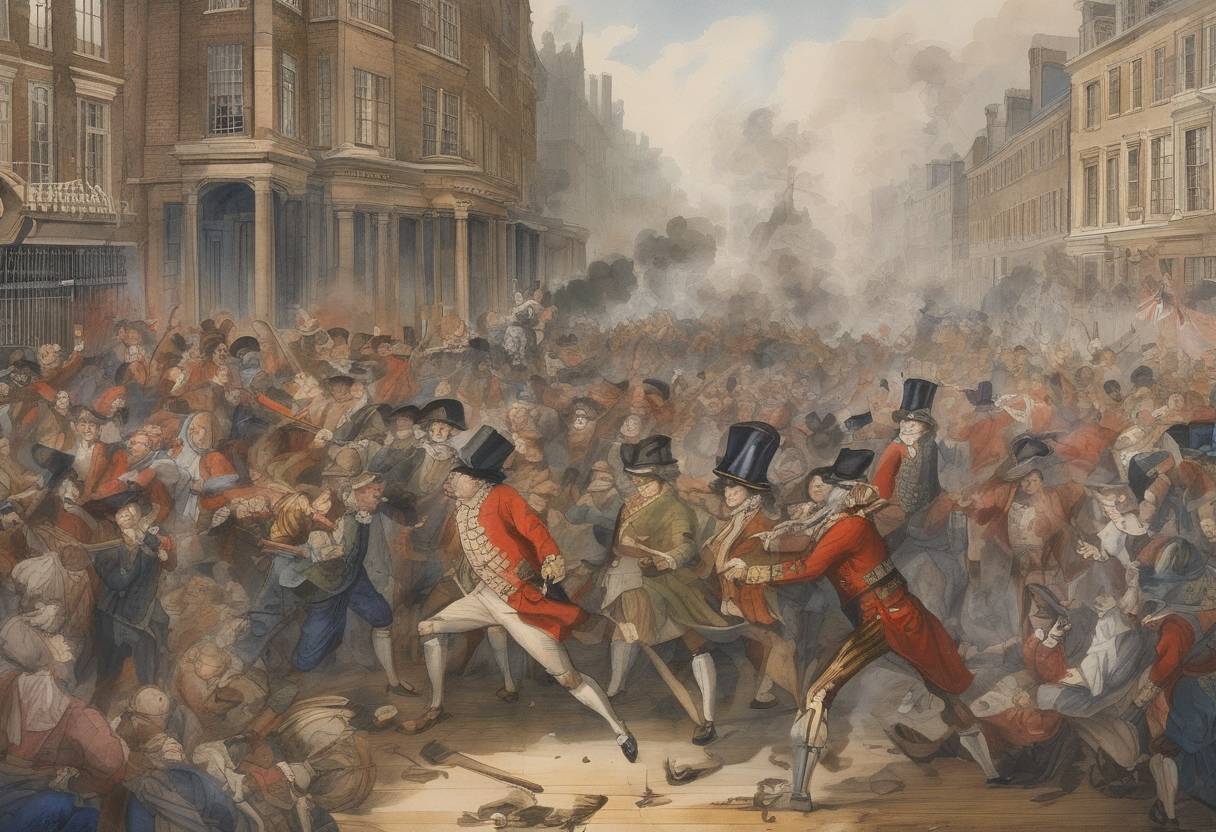
On July 20, 1715, the Riot Act received royal assent in Great Britain, marking a significant development in the legal framework for maintaining public order. This legislation was enacted during a period of considerable social and political unrest, as the country faced tensions following the accession of King George I and the ongoing Jacobite threats.
The early 18th century in Britain was a time of political instability. The death of Queen Anne in 1714 led to the succession of George I, the first monarch of the House of Hanover. His accession was not universally accepted, particularly by supporters of the Stuart claim to the throne, known as Jacobites. This period saw frequent public disturbances and riots, often fueled by political, economic, and religious grievances.
The Riot Act was introduced as a means to empower local authorities to maintain public order more effectively. Key provisions included:
Authority to Disperse Crowds: The Act allowed a magistrate to declare any assembly of 12 or more people as unlawful. Upon reading a specific proclamation, the crowd was required to disperse within an hour.
Legal Consequences: Failure to disperse after the proclamation was read made individuals liable to arrest and prosecution, with severe penalties, including the possibility of capital punishment.
Standardized Procedure: The Act provided a standardized legal procedure for dealing with riots, which was intended to prevent the escalation of violence and disorder.
The Riot Act is notable for its role in shaping public order laws in Britain. It reflected the government’s need to assert control during a volatile period and set a precedent for future legislation concerning public assemblies and protests.
Impact on Civil Liberties: While it aimed to maintain order, the Act also raised concerns about civil liberties, as it granted significant power to authorities to disperse gatherings, potentially suppressing legitimate dissent.
Legacy: The phrase “reading the Riot Act” has entered common parlance, symbolizing a stern warning or reprimand. The Act itself remained in force until it was repealed in 1973, although its practical application had diminished over time.
The Riot Act’s introduction did not immediately quell unrest, as the Jacobite uprisings continued, notably with the 1715 rebellion. However, it provided a legal tool for authorities to manage public order and was part of broader efforts to stabilize the nation under the new Hanoverian regime.
In summary, the Riot Act of 1715 was a pivotal piece of legislation in British history, reflecting the challenges of governance during a period of transition and conflict. Its legacy continues to be felt in discussions about the balance between security and civil liberties.
Source: en.wikipedia.org