The 1383–1385 Crisis in Portugal
1383 · Lisbon, Portugal
The 1383–1385 Crisis in Portugal begins with the death of King Ferdinand I, leading to a period of civil war and political instability.
December 5, 1496
King Manuel I of Portugal issues an edict mandating that all Jews convert to Christianity or leave the country.
, Portugal | Portuguese monarchy
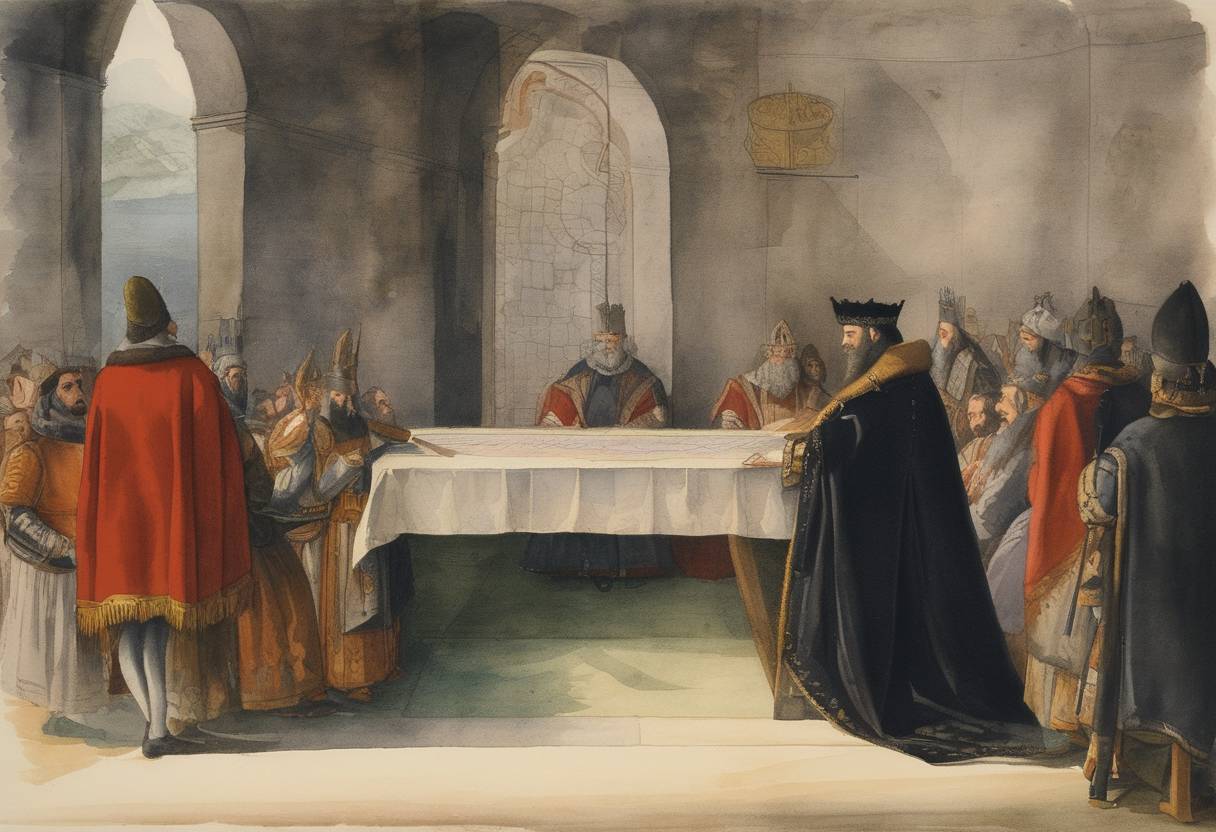
On December 5, 1496, King Manuel I of Portugal issued a significant edict mandating that all Jews in Portugal convert to Christianity or face expulsion from the country. This sweeping decree was part of a broader historical period marked by religious intolerance and persecution across Europe.
Iberian Peninsula: By the late 15th century, Spain had already carried out the Alhambra Decree of 1492, forcing Jews to convert to Christianity or leave. The Spanish monarchs, Ferdinand and Isabella, aimed to create a uniform Christian kingdom, setting a precedent for other European nations.
Marriage Alliance: King Manuel I’s decision was largely influenced by his desire to marry Infanta Isabella of Aragon, the daughter of Ferdinand and Isabella. Part of the marriage negotiations required Manuel to expel or convert Portuguese Jews, as the Spanish monarchy was staunchly Catholic and opposed significant Jewish presence in neighboring regions.
Conversion or Expulsion: All Jews were required either to convert to Christianity, thus becoming “New Christians” or to leave Portugal by October 1497.
Property and Assets: The edict allowed Christians to seize property and assets left by Jews who chose expulsion over forced conversion.
Time Constraint: The short time frame imposed by the edict placed immense pressure on Jewish communities, compelling many to convert under duress rather than face expulsion.
Conversions and Secret Practices: A large number of Jews converted, but many continued to practice Judaism in secret, leading to the phenomenon of “Crypto-Judaism.” These “conversos” or “Marranos” faced continued scrutiny and were at times targeted by the Portuguese Inquisition, which sought out heretics and backsliders.
Cultural Impact: The expulsion and forced conversions severely disrupted Jewish cultural and economic life in Portugal. However, many conversos went on to play significant roles in Portuguese society, including professions such as banking, trade, and sciences.
Diaspora: The Jewish expulsion contributed to the wider Sephardic Jewish diaspora, with many settling in North Africa, the Ottoman Empire, and parts of Europe where they could practice Judaism more freely.
The edict of King Manuel I highlights the era’s intertwining of politics and religion, as well as the broader dynamics of religious intolerance in pre-modern Europe. It underscores how political alliances and power shifts often came at severe human and cultural costs, with rippling effects on Jewish communities that are still felt in history’s narrative.
Source: www.britannica.com