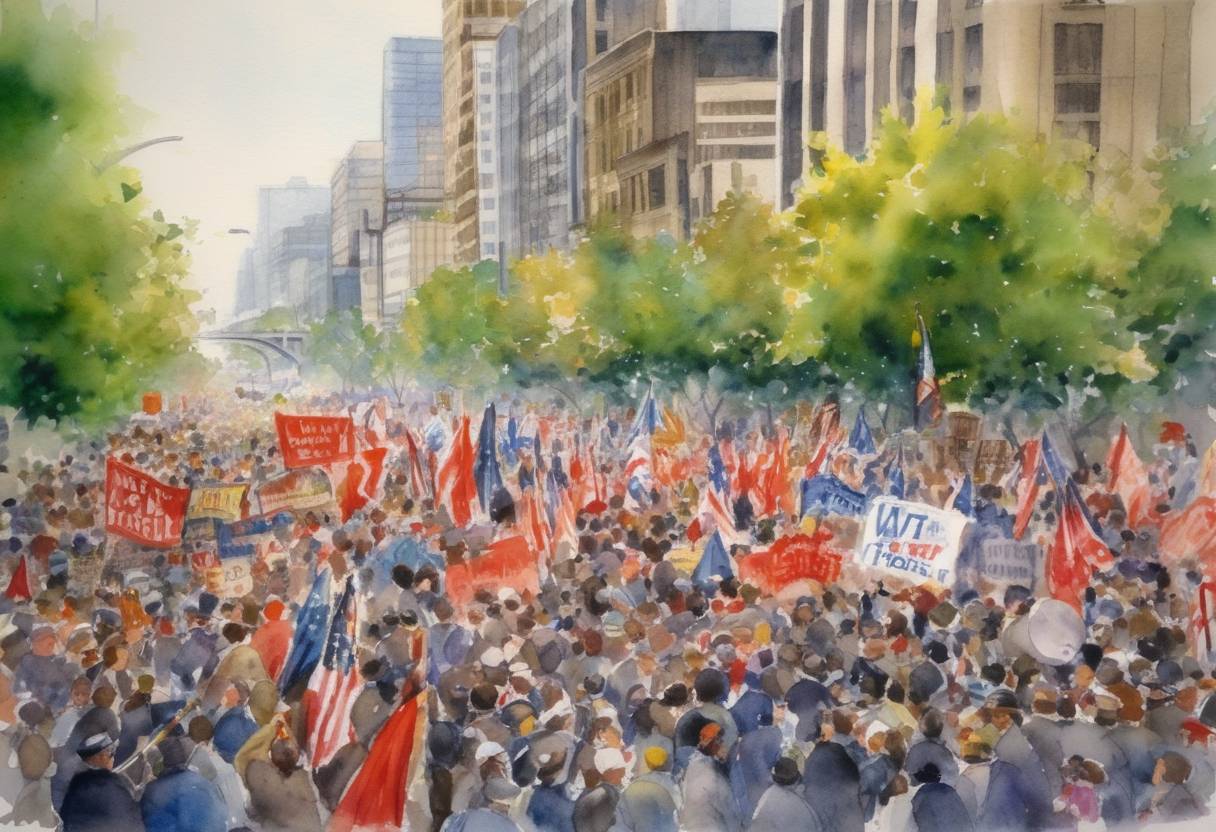
The Battle of Seattle: WTO Protests on November 30, 1999
On November 30, 1999, Seattle became the epicenter of a significant global protest movement as tens of thousands of demonstrators gathered to protest the World Trade Organization’s (WTO) Ministerial Conference. This event, often referred to as the “Battle of Seattle,” marked a pivotal moment in the history of globalization and public demonstrations against global economic policies.
Background
The World Trade Organization, established in 1995, aimed to create a more integrated global economy by reducing trade barriers and establishing standardized international trading rules. However, it faced criticism for allegedly prioritizing corporate interests over environmental and labor rights, contributing to widening economic inequality and undermining national sovereignty.
The Protests
The protests in Seattle were a convergence of diverse groups including environmental activists, labor unions, student organizations, and representatives from non-governmental organizations. Their collective aim was to challenge the legitimacy of the WTO and draw attention to its perceived shortcomings:
- Environmental Concerns: Activists argued that WTO policies ignored environmental standards and facilitated ecologically harmful practices.
- Labor Rights: Labor organizations protested against poor working conditions and the erosion of labor rights due to trade agreements benefiting multinational corporations.
- Social Justice: Groups highlighted the issue of economic inequality and the adverse impacts of globalization on developing nations.
Key Events
- Demonstration and Disruption: Protesters adopted various tactics including peaceful marches, sit-ins, and acts of civil disobedience, aiming to shut down the conference.
- Police Response: The scale and intensity of the protests led to a large police presence. Despite attempts at peaceful protest by many, clashes between some protestors and police escalated, resulting in the use of tear gas, pepper spray, and arrests.
- Impact on WTO Sessions: The protests succeeded in disrupting the WTO meetings, making it difficult for delegates to reach agreements. As a result, the ministerial talks ended without any resolutions or accords, spotlighting global dissent toward the organization’s policies.
Aftermath and Significance
The “Battle of Seattle” had far-reaching implications:
- Global Awareness and Mobilization: This event brought international attention to anti-globalization sentiments and inspired subsequent protests against similar institutions and policies.
- Policy Reevaluation: The failure of the WTO conference underscored the need for the organization to reevaluate its approach towards global trade, considering broader social and environmental concerns.
- Formation of New Alliances: The protests forged new alliances between various groups advocating for environmental, labor, and social justice, strengthening the global movement against unchecked globalization practices.
The events in Seattle in 1999 marked a transformative moment in global activism, highlighting the complexity and contentiousness of modern trade and economic policies and shaping discourse around globalization in the new millennium.